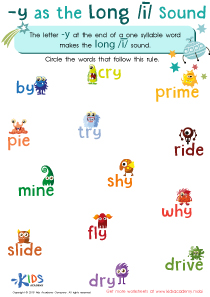
Normal Silent Vowels Worksheets for Ages 7-9
5 filtered results
-
From - To
Discover our engaging Normal Silent Vowels Worksheets designed specifically for children aged 7-9. These worksheets focus on enhancing phonetic awareness and understanding of silent vowels, a crucial aspect of reading and spelling. With interactive exercises, fun activities, and colorful illustrations, students can improve their skills while enjoying the learning process. Perfect for classroom use or at-home practice, these resources promote critical thinking and reinforce vocabulary development. Support your child's literacy journey with our user-friendly and educational silent vowel worksheets, ensuring they grasp the intricacies of language in a fun and effective way. Start building their confidence in reading today!
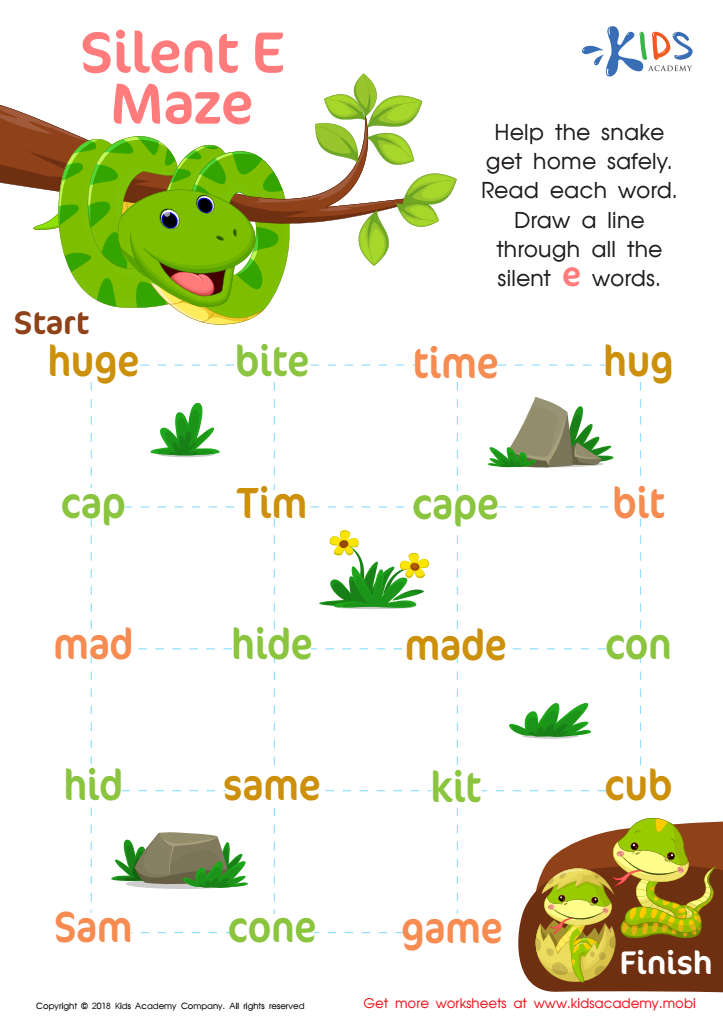
Silent E Maze Worksheet
 Assign to My Students
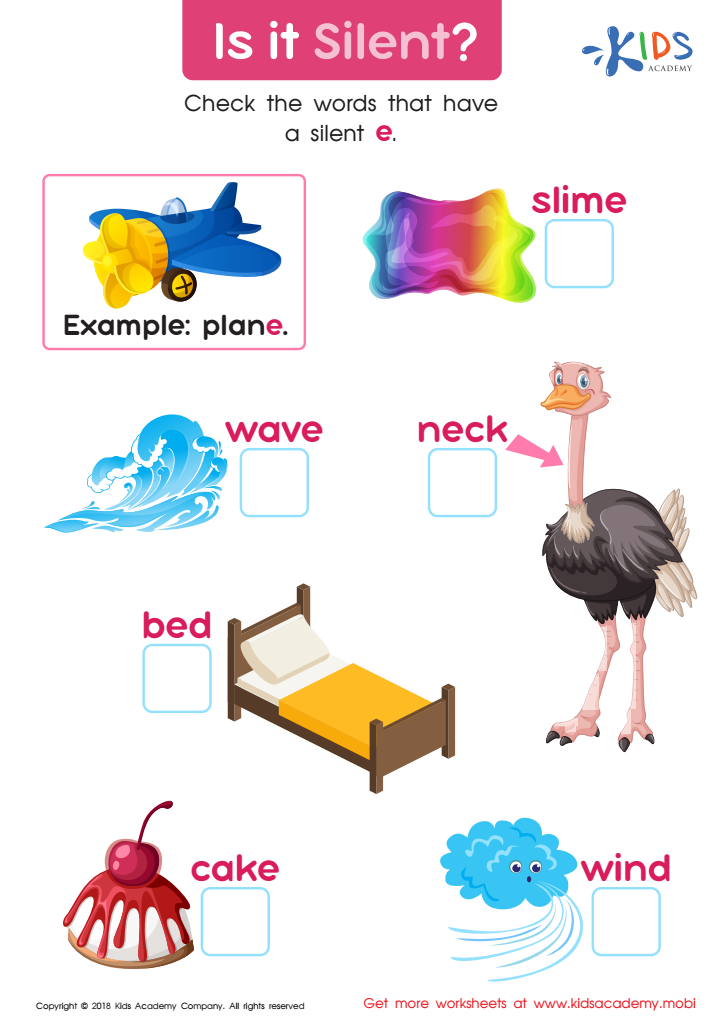
Is It Silent? Worksheet
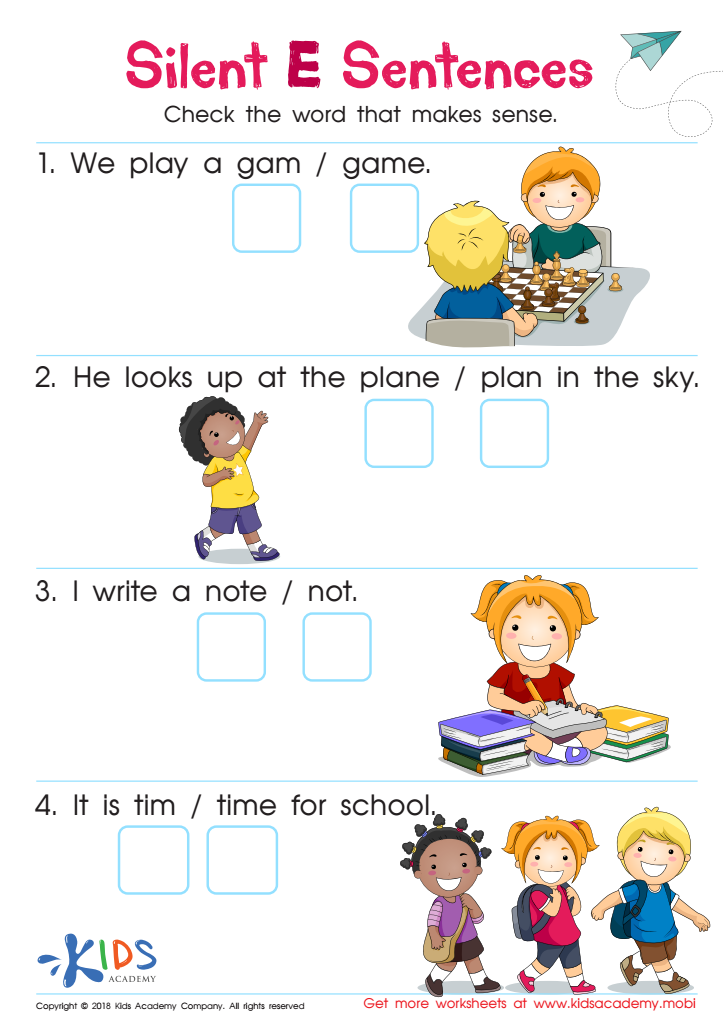
Silent E Sentences Worksheet
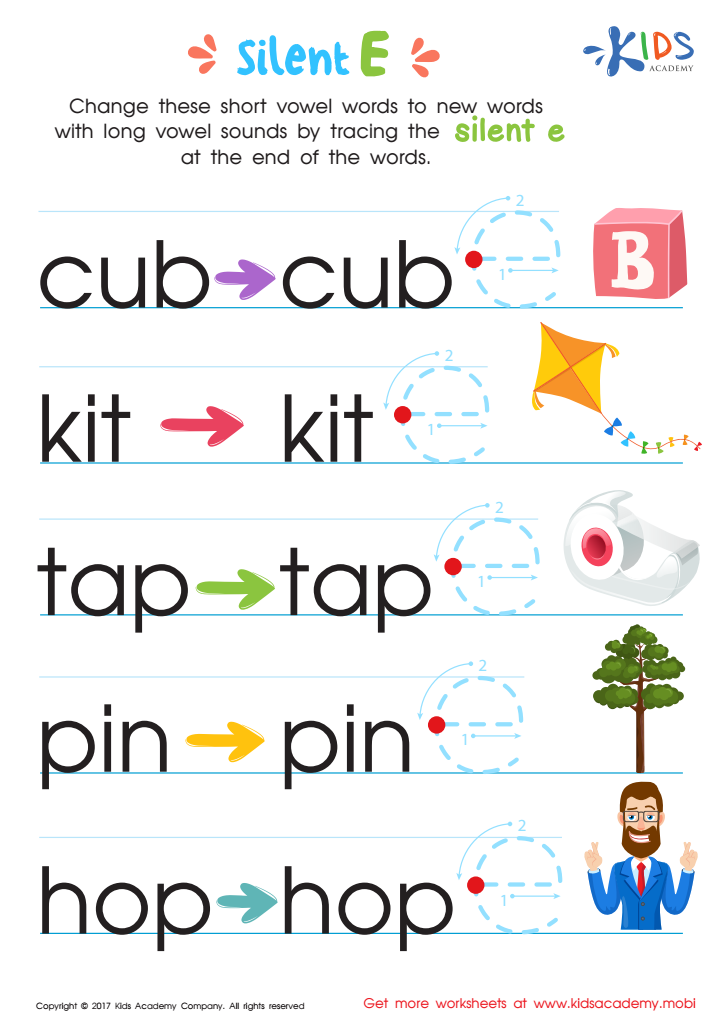
Silent E Words Worksheet
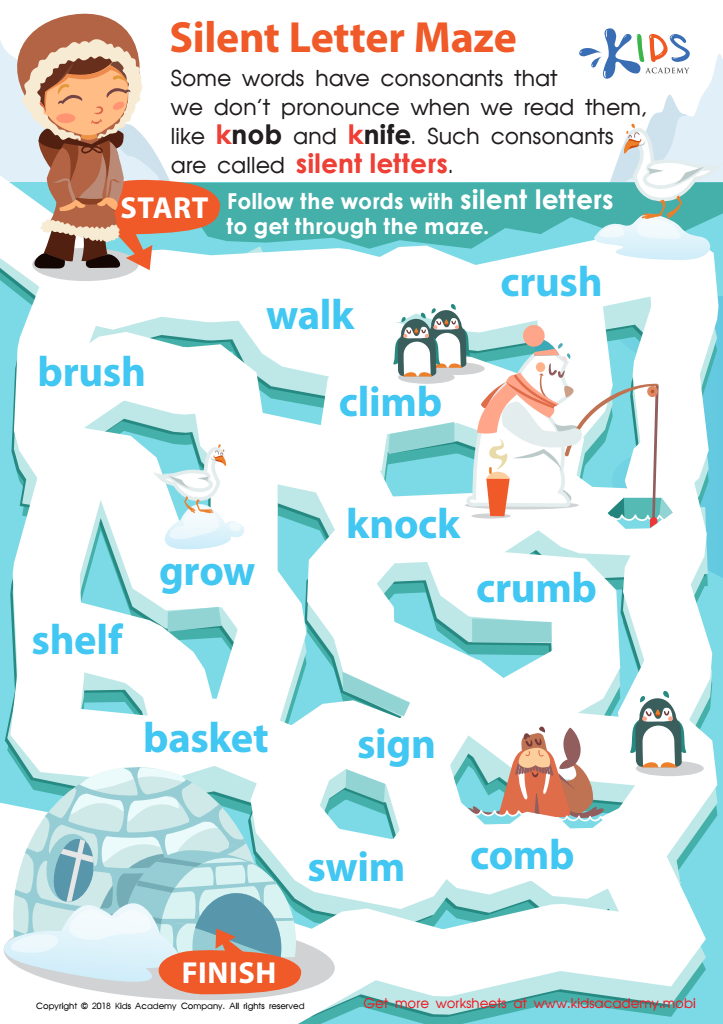
Silent Letter Maze Worksheet


Parents and teachers should care about normal silent vowels because they play a crucial role in helping children aged 7-9 develop their reading and writing skills. Silent vowels, such as those found in words like "queue," "time," and "bake," help students understand the structure and pronunciation of words, which is essential for literacy development. Recognizing silent vowels enhances phonemic awareness and spelling accuracy, both of which are foundational skills for effective communication.
Additionally, mastering silent vowels can significantly boost a child’s confidence in their reading abilities. When children are able to decode challenging words, they are more likely to engage with texts and develop a love for reading. This enthusiasm can translating into better academic performance across subjects.
Moreover, the exploration of silent vowels is a fun and interactive way to strengthen vocabulary. Activities like word games or spelling challenges can make learning engaging and memorable. Teachers and parents who focus on this aspect of language contribute positively to a child’s overall educational experience, fostering critical thinking and problem-solving skills. Therefore, understanding normal silent vowels is an essential component of literacy that helps children navigate the complexities of the English language effectively.