Reading comprehension Normal Vowels and Consonants Worksheets for Ages 7-9
8 filtered results
-
From - To
Improve your child's reading comprehension with our engaging Normal Vowels and Consonants Worksheets tailored for ages 7-9. These worksheets focus on distinguishing between vowels and consonants, helping young learners enhance their phonetic skills and understand word structures. Designed to make learning fun, each activity supports vocabulary building, sentence formation, and reading fluency. Perfect for teachers and parents alike, our resources foster critical thinking and independent reading. Encourage your child's love for reading while mastering essential language concepts with our age-appropriate, interactive worksheets. Cultivate confident readers equipped for academic success through enjoyable and educational practice. Discover the joy of learning today!
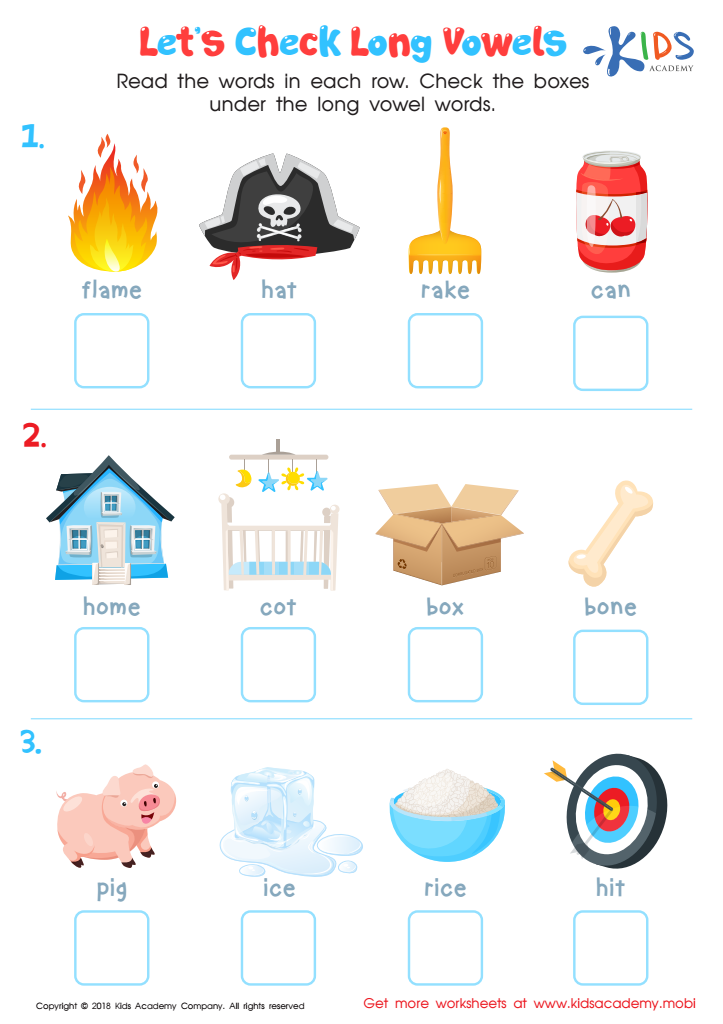
Let's Check Long Vowels: Assessment Worksheet
 Assign to My Students
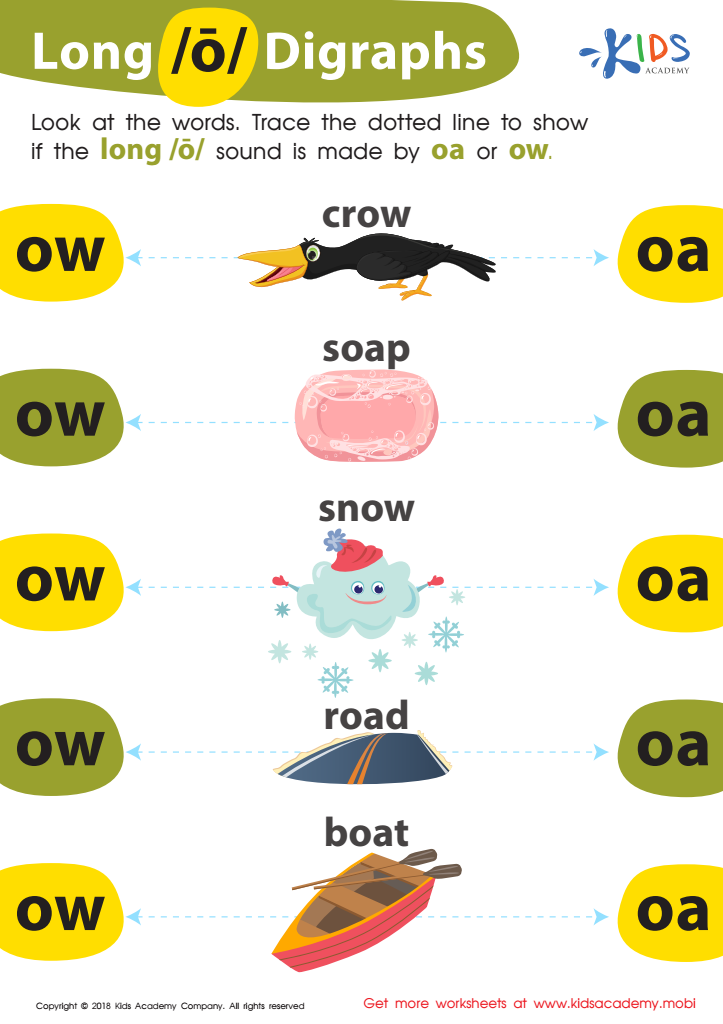
Reading: Long O Digraphs Worksheet
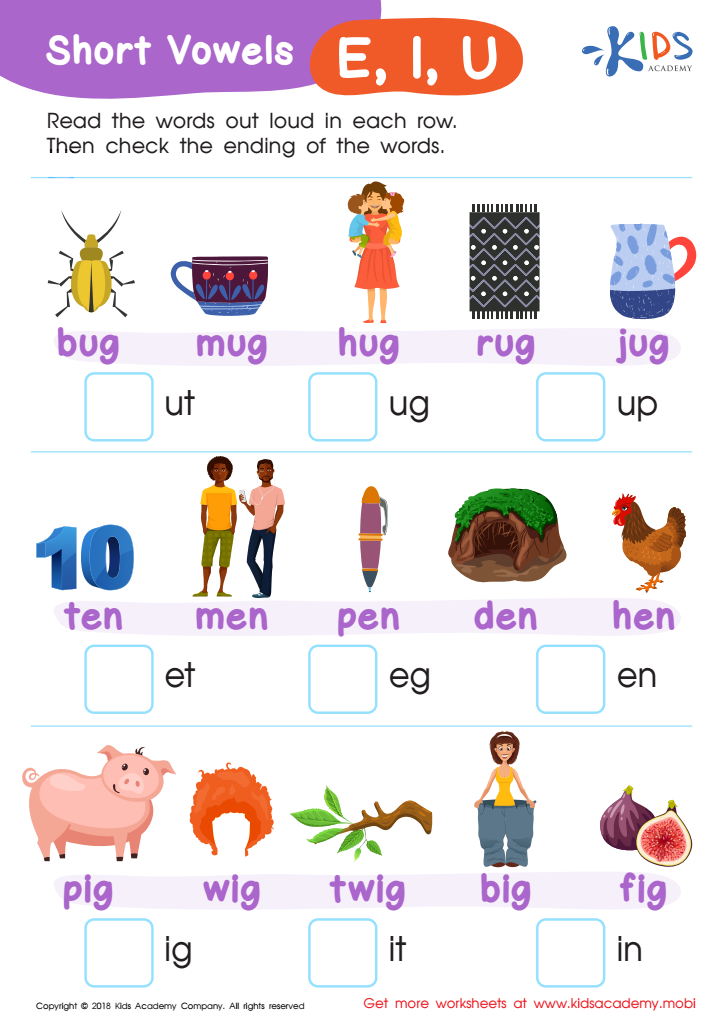
Short Vowels /e/, /i/, and /u/ Worksheet
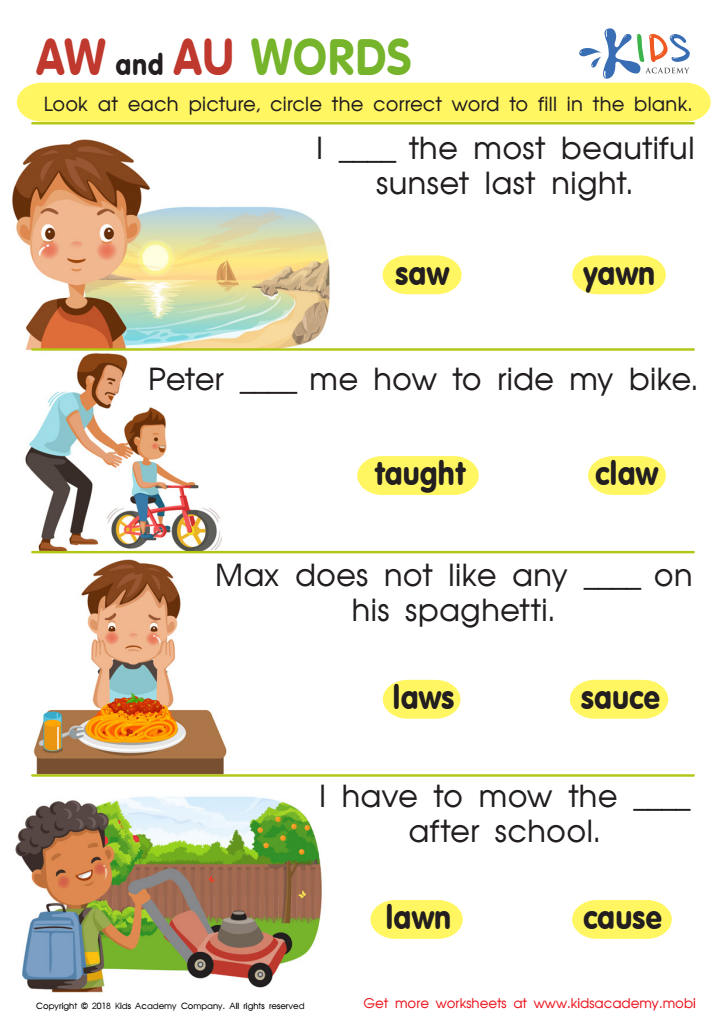
Reading: AW and AU Words Worksheet
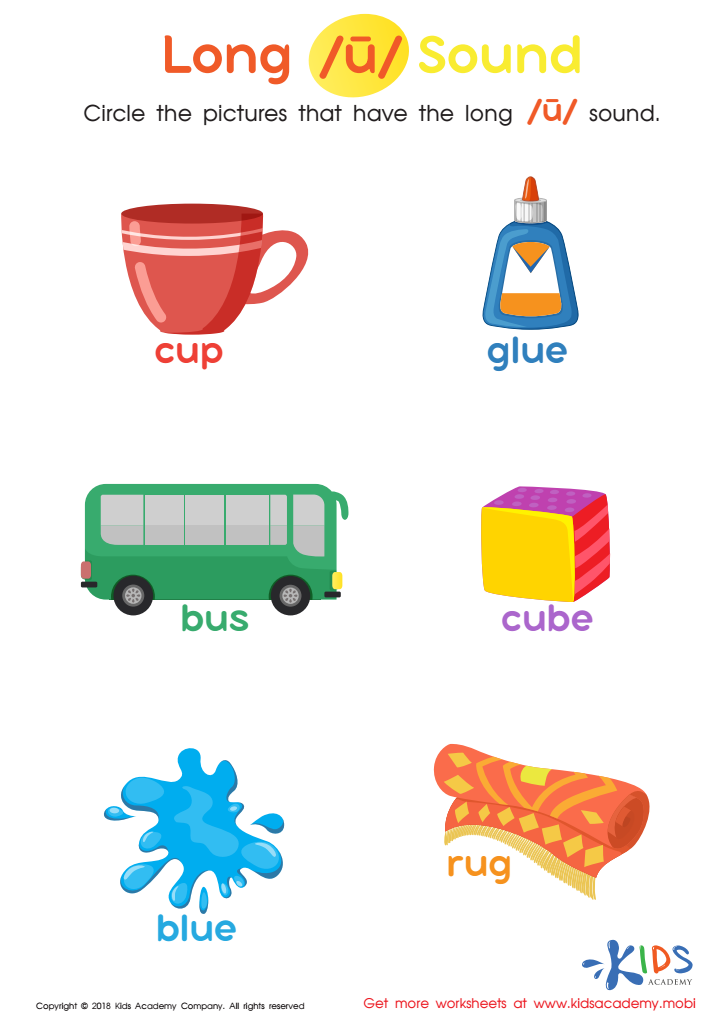
Long «u» Sound Worksheet
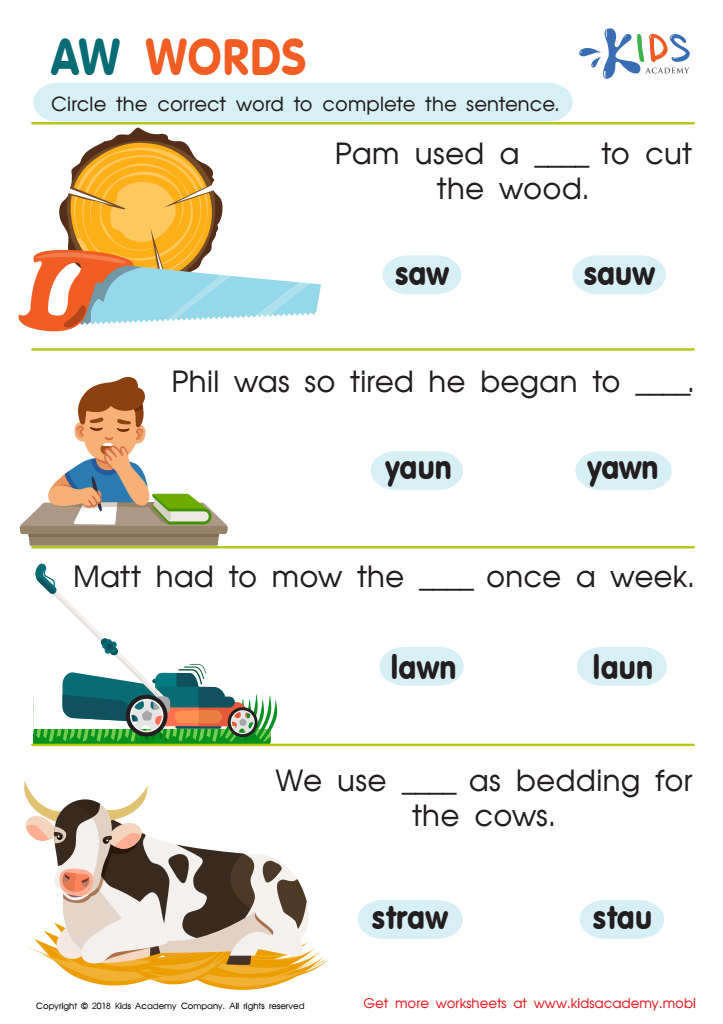
Reading: AW Words Worksheet
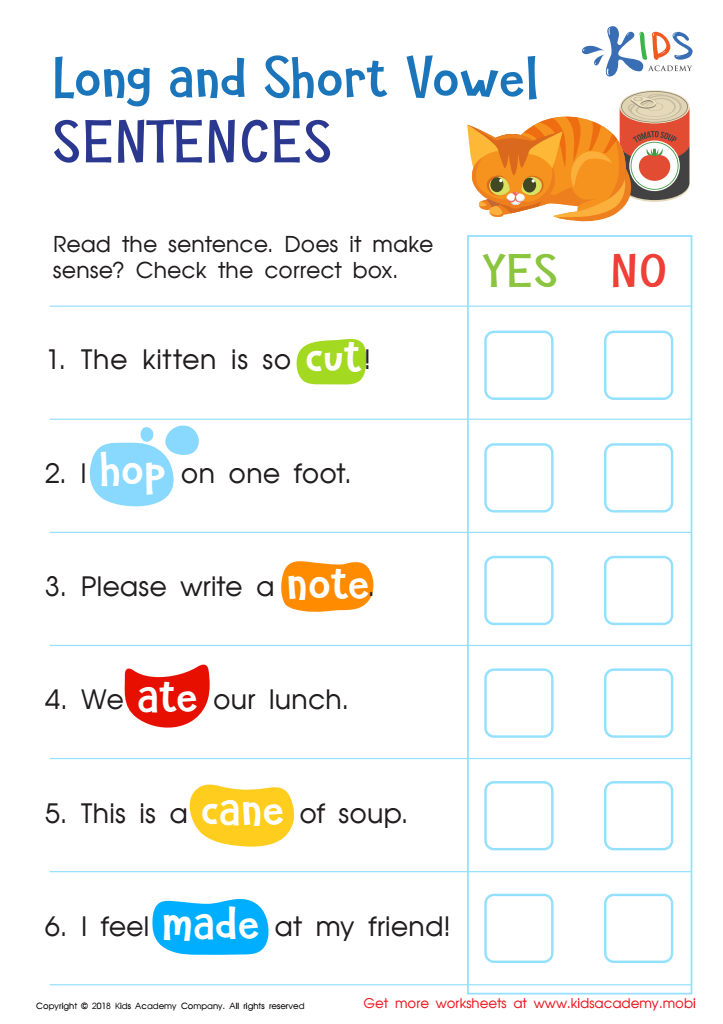
Long and Short Vowel Sentences: Assessment Worksheet
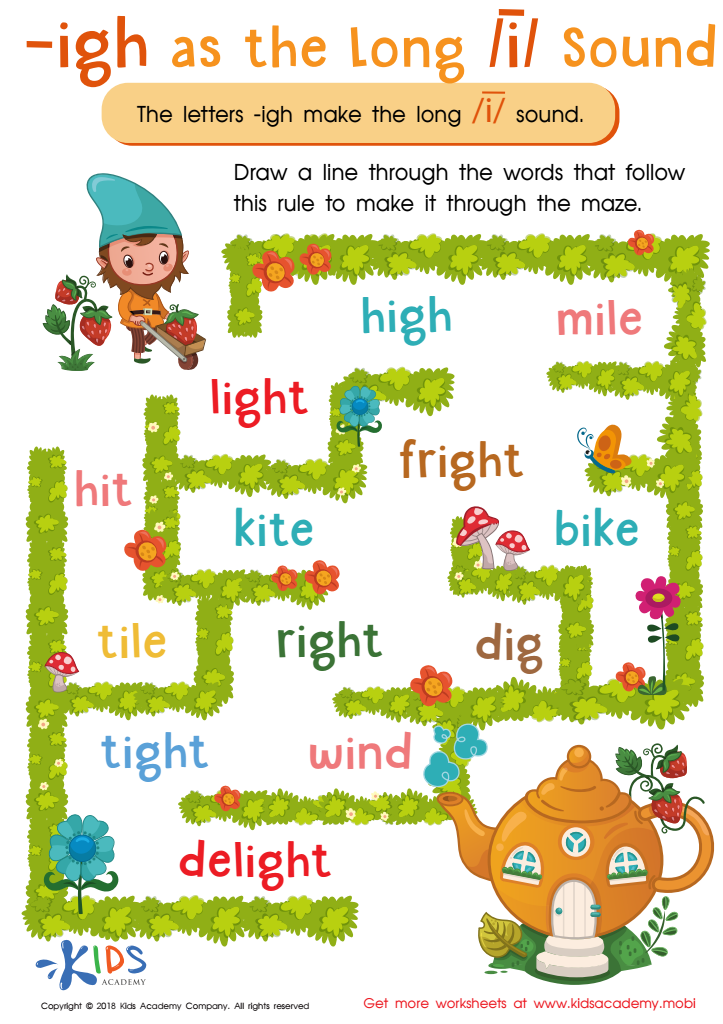
Reading: IGH as Long I Worksheet



Reading comprehension is crucial for children aged 7-9 as it is the foundation for academic success and critical life skills. Understanding normal vowels and consonants is integral to this process. At this developmental stage, children transitioning from learning to read to reading to learn need to master phonics—the building blocks of words.
When parents or teachers emphasize vowels and consonants, they help children decode words, recognize patterns, and improve fluency. Strong skills in identifying normal vowels and consonants facilitate better understanding of texts, allowing children to grasp deeper meanings, make inferences, and recall information more effectively. This, in turn, boosts their confidence and motivation in reading, leading to a lifelong love of literature.
Moreover, strong reading comprehension skills significantly contribute to overall academic performance across subjects. Children with a solid grasp of phonics are more likely to excel in writing, spelling, and even numeracy as they can understand word problems more effectively. Supporting children's reading development during this critical age fosters not only cognitive skills but also enhances social and emotional growth, allowing them to express ideas, engage in discussions, and build empathy through storytelling. Consequently, prioritizing reading comprehension is essential for nurturing well-rounded, capable learners.






