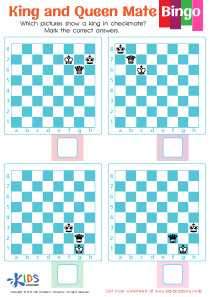
Memory enhancement Normal Chess Worksheets for Ages 7-9
3 filtered results
Difficulty Level
Grade
Age
-
From - To
Subject
Activity
Standards
Boost your child's cognitive skills with our engaging Memory Enhancement Normal Chess Worksheets designed for ages 7-9! These worksheets not only introduce the fundamentals of chess but also focus on improving memory and concentration. Each activity is fun and interactive, encouraging young learners to recall chess pieces, develop strategies, and think critically. Perfect for both classroom and at-home use, our resources cater to various learning styles, helping children enhance their memorization skills while enjoying the game. Unlock your child's potential in a fun and educational way with our carefully crafted worksheets that combine the two vital skills of memory and chess!
Favorites
With answer key
Interactive
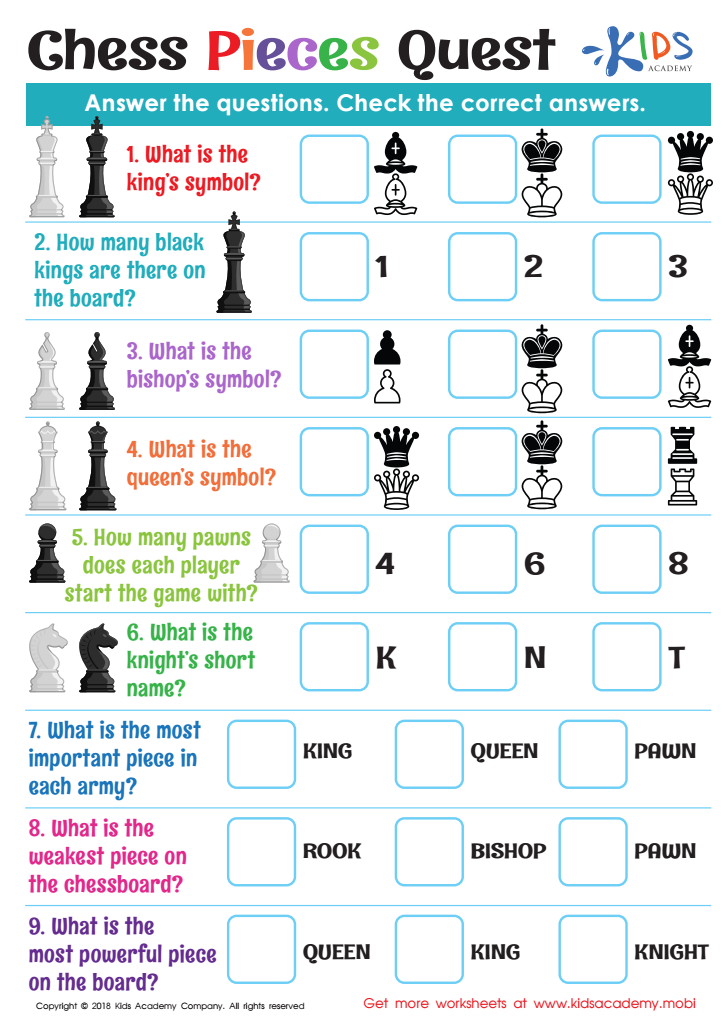
Chess Pieces Quest Worksheet
Help your child prepare for the chess quest by refreshing their knowledge of the symbols and characteristics of each chess piece. Then, have them try the 9 questions on this worksheet. These questions will assess their understanding of the symbols and how many pieces each player starts with.
 Assign to My Students
Chess Pieces Quest Worksheet
Worksheet
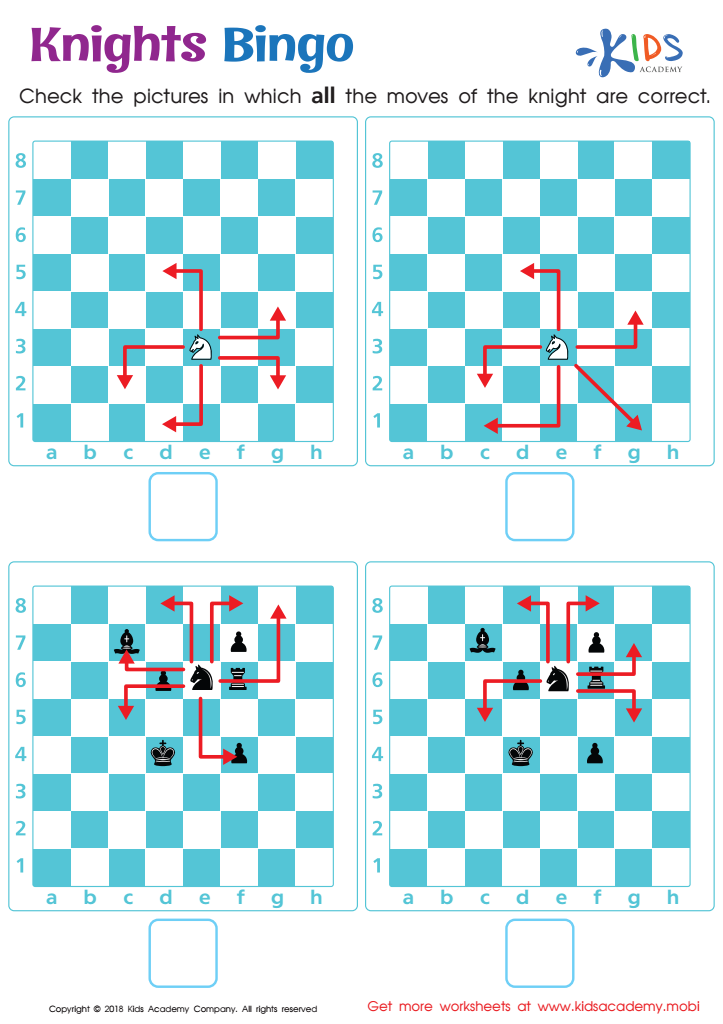
Knights Bingo Worksheet
Help your child identify legal knight moves in this easy worksheet. Review each picture with them, questioning if the knight moves are correct. Then have them verify pictures with correct moves.
Knights Bingo Worksheet
Worksheet
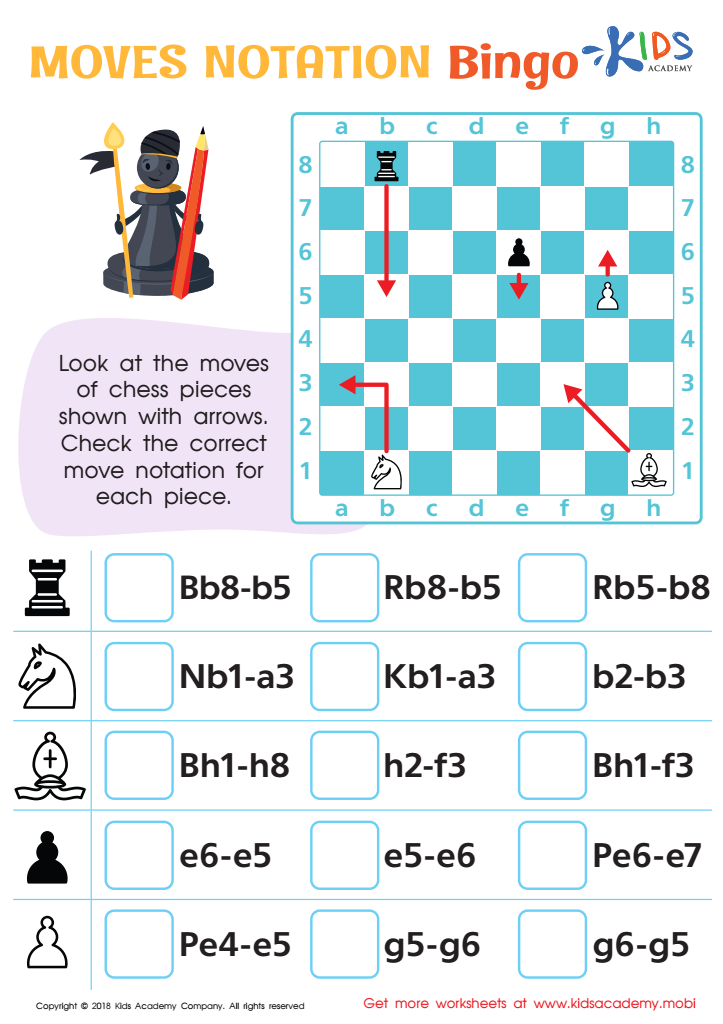
Moves Notation Bingo Worksheet
Test your child's chess notation skills with this simple worksheet. Download the PDF which shows a chess board and arrows pointing to pieces. Ask your child to identify the moves and note them down correctly. The notations needed are for bishop, pawn, rook and knight. Up to 80 words.
Moves Notation Bingo Worksheet
Worksheet
Join Kids Academy for Free
Who is primarily going to use this learning content?



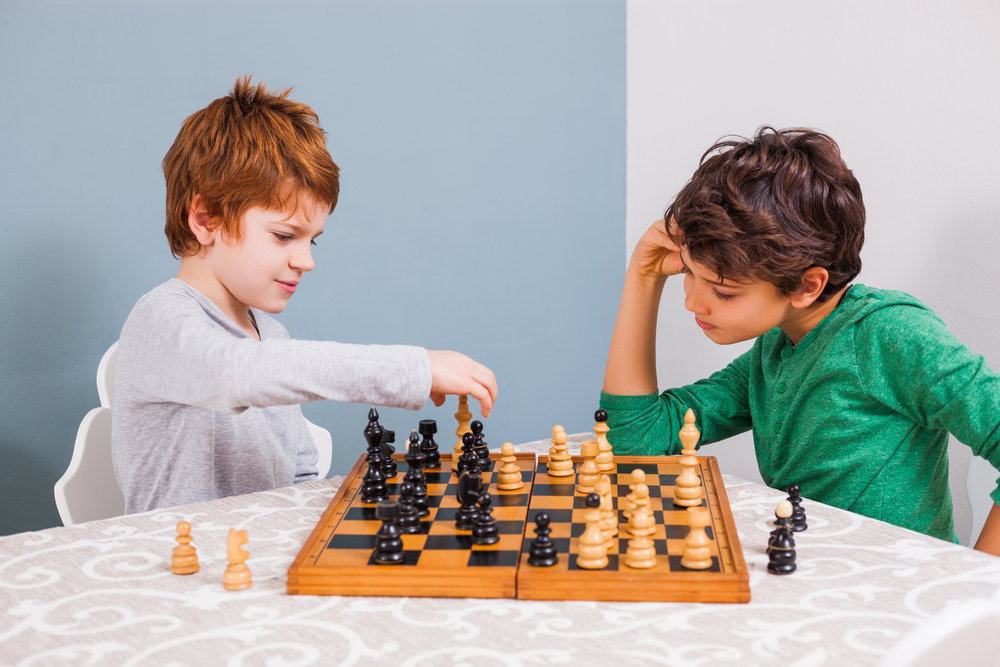




Memory enhancement through activities like chess can play a crucial role in the cognitive development of children aged 7 to 9. At this stage, children's brains are highly adaptable and receptive to learning, making it an ideal time to introduce strategies that foster memory retention and critical thinking skills. Chess, a game grounded in strategy, requiring focus and foresight, encourages children to remember their moves, anticipate their opponent's strategies, and keep track of the game's progression, all of which significantly enhance memory capabilities.
Furthermore, chess teaches kids how to adapt and think ahead, skills vital for academic success in other subjects. Developing these cognitive skills early on not only supports learning but also builds confidence and promotes emotional maturity. Parents and teachers should recognize that engaging in chess and similar memory-enhancing activities can cultivate better concentration, problem-solving skills, and increased academic performance.
Additionally, chess offers a social component, providing children with opportunities to interact with peers, learning to respect opponents, and accept both wins and losses gracefully. Overall, employing chess as a memory enhancement tool prepares children for future challenges, making it a valuable addition to their educational experience.