
Animal Classification Normal Worksheets for Ages 7-9
5 filtered results
Difficulty Level
Grade
Age
-
From - To
Subject
Activity
Standards
Unlock your child's curiosity with our Animal Classification worksheets, designed specifically for ages 7-9. These engaging activities help young learners differentiate and classify animals based on characteristics and habitats. Through fun and interactive exercises, kids develop key learning skills such as critical thinking, observation, and scientific reasoning. Our printable worksheets make it easy to practice at home or in the classroom, offering a hands-on approach that fosters an appreciation for zoology and the natural world. Start your child’s journey into animal classification today and watch as they explore, learn, and grow with confidence.
Favorites
With answer key
Interactive
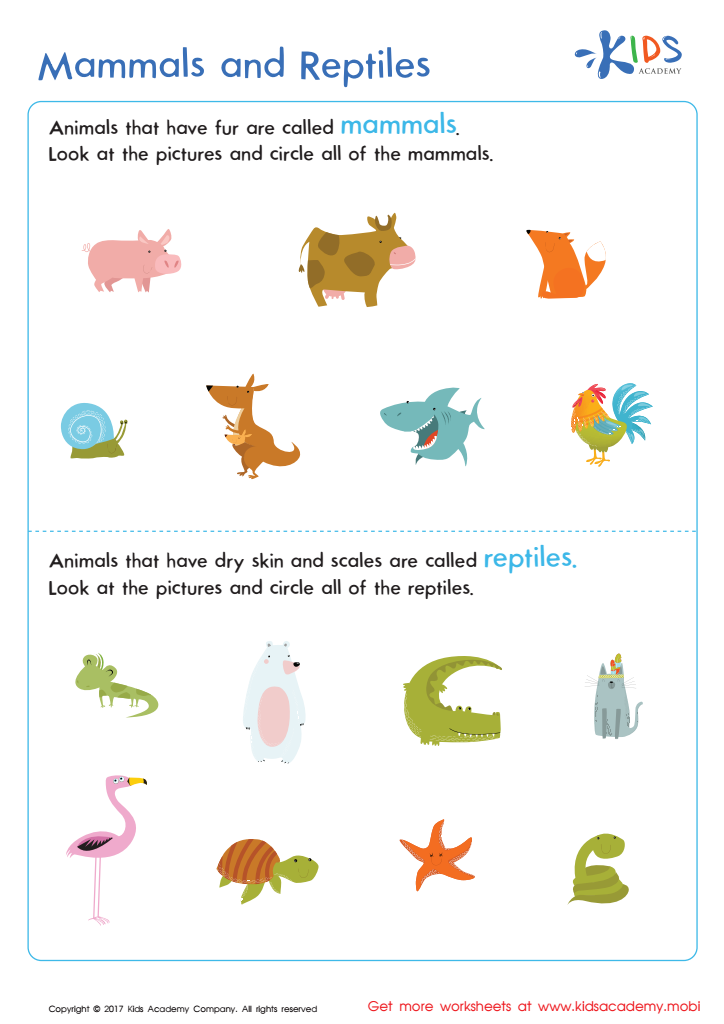
Mammals and Reptiles Worksheet
Challenge your child to identify mammals and reptiles with this worksheet. It's a great way to help them recognize the differences between these two types of animals.
 Assign to My Students
Mammals and Reptiles Worksheet
Worksheet
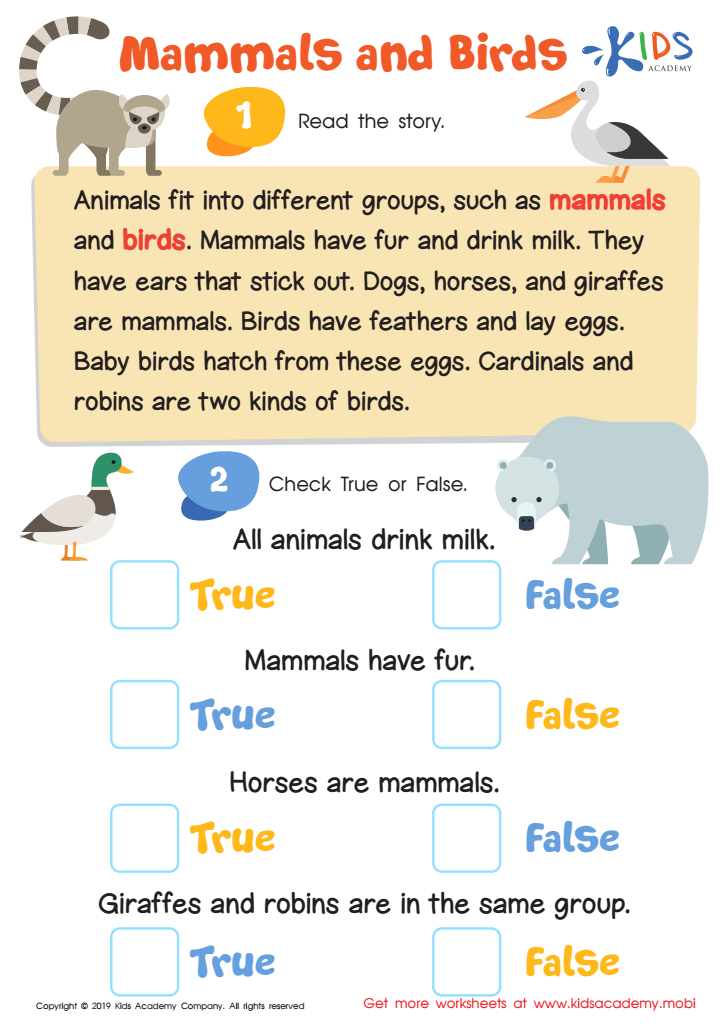
Mammals and Birds Worksheet
This worksheet challenges kids to read an informational text and review science facts about mammals and birds. Have them read the passage then mark statements true or false. Remind them to go back to the text if they get stuck! Get started now and help your child enhance multiple skills in one go!
Mammals and Birds Worksheet
Worksheet
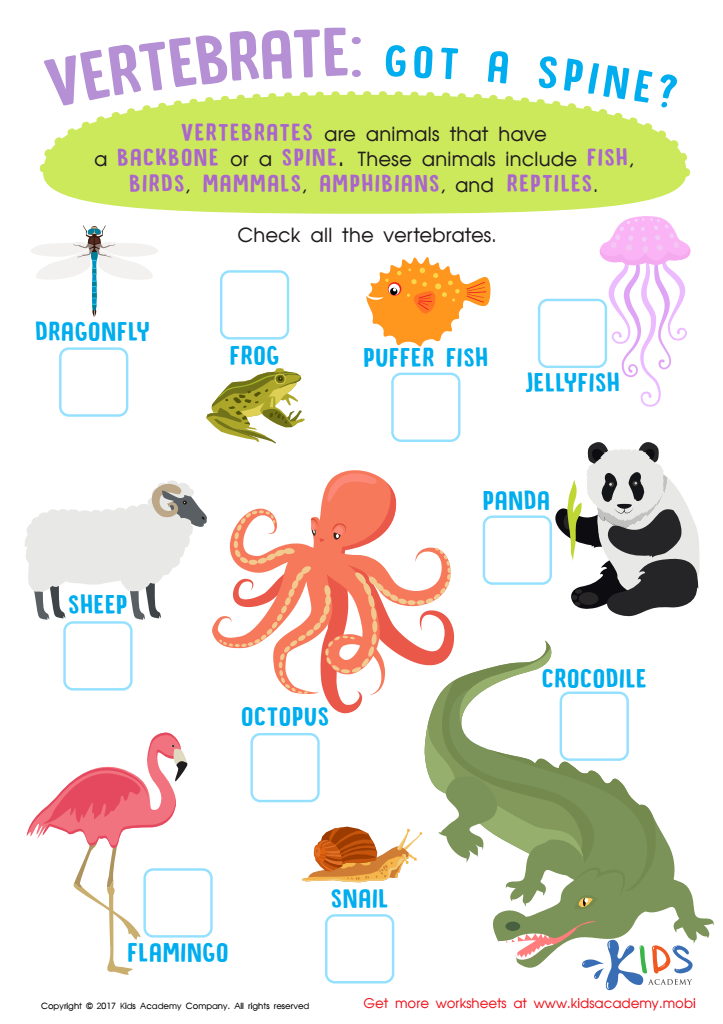
Vertebrates Animals Worksheet for 3rd Grade
This 3rd grade worksheet introduces your child to the wonders of vertebrate animals. They will have fun sorting them from those without a spine, while learning more about the animal kingdom!
Vertebrates Animals Worksheet for 3rd Grade
Worksheet
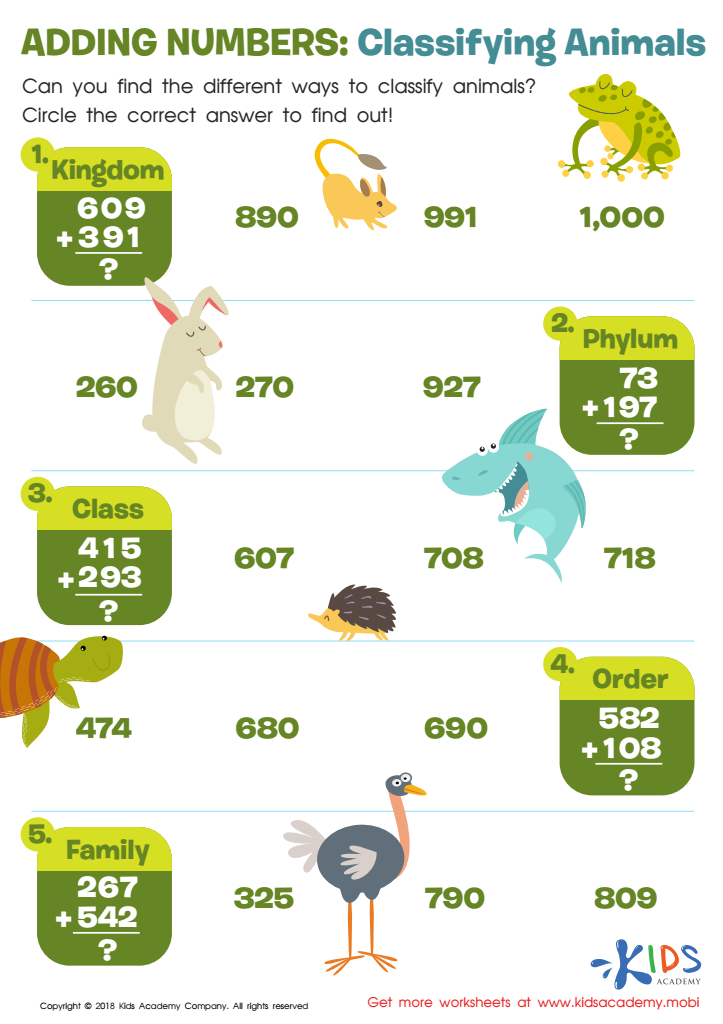
Adding Numbers: Classifying Animals Worksheet
Your kids can learn to classify animals in Biology. This worksheet helps them do this by solving 5 equations. Circle the right answer to complete the task.
Adding Numbers: Classifying Animals Worksheet
Worksheet
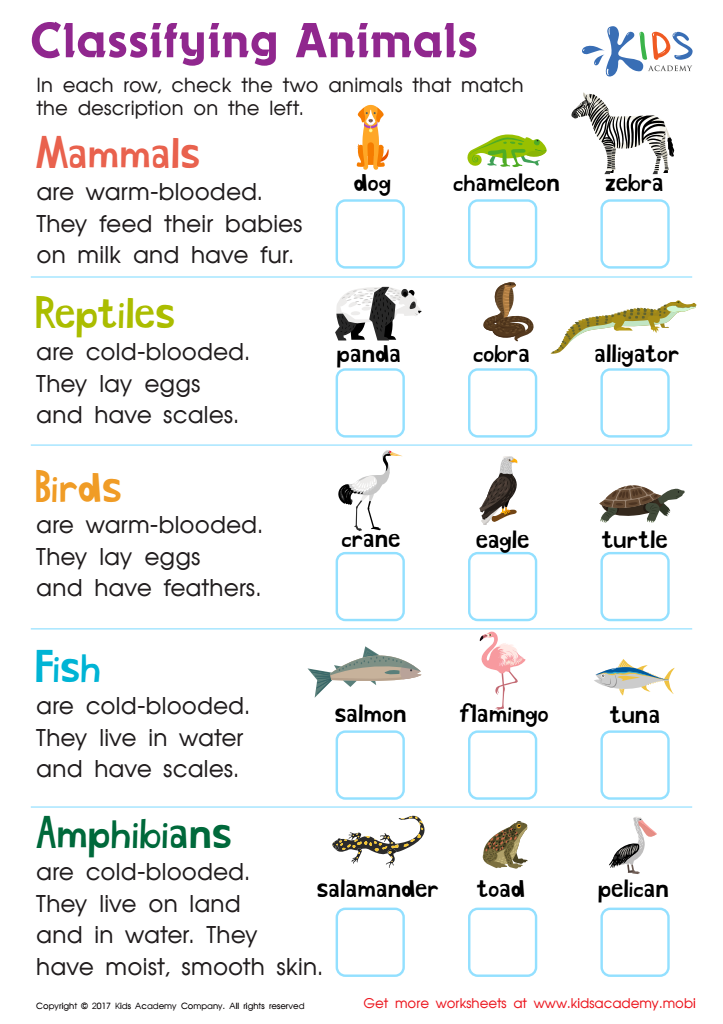
Classifying Animals Worksheet
Print the 2nd grade animal classification worksheet and help kids study the differences between mammals, reptiles, birds, fish and amphibians. Let them pick two examples from the options given.
Classifying Animals Worksheet
Worksheet
Learning Skills
Join Kids Academy for Free
Who is primarily going to use this learning content?








Parents and teachers should care about teaching animal classification to children ages 7-9 because it nurtures curiosity, critical thinking, and a love for science. At this age, children are naturally curious about the world around them, and learning about how animals are grouped into categories makes them more observant and inquisitive. By understanding common characteristics shared by animals within a group, children enhance their ability to recognize patterns, an important skill across various subjects.
Animal classification also introduces children to basic scientific principles and vocabulary, laying a foundation for future learning in biology and other sciences. It helps them develop important cognitive skills such as sorting, categorizing, and understanding relationships, which are applicable in everyday problem-solving situations.
Additionally, learning about diverse animal habitats and behaviors promotes environmental awareness and compassion. Children begin to appreciate biodiversity and the importance of conserving wildlife and natural habitats. This early exposure to ecosystems can foster respect and responsibility towards the environment.
Engaging young learners in such topics can be fun and interactive, using games, stories, and hands-on activities that make education both enjoyable and meaningful. Overall, animal classification serves as a gateway to broader scientific understanding and environmental stewardship.








