
Animal recognition Normal Worksheets for Ages 7-9
3 filtered results
Difficulty Level
Grade
Age
-
From - To
Subject
Activity
Standards
Discover our engaging Animal Recognition Normal Worksheets designed specifically for children ages 7-9! These worksheets offer a fun and educational way for young learners to identify and understand various animals and their characteristics. Perfect for enhancing observational skills, these activities include matching animals to their habitats, identifying unique features, and exploring diverse species. Each worksheet is crafted to encourage independent learning and critical thinking, making them an ideal addition to your teaching toolkit. With colorful illustrations and relatable content, kids will build their knowledge of the animal kingdom while having a blast. Get ready for an adventurous learning experience!
Favorites
With answer key
Interactive
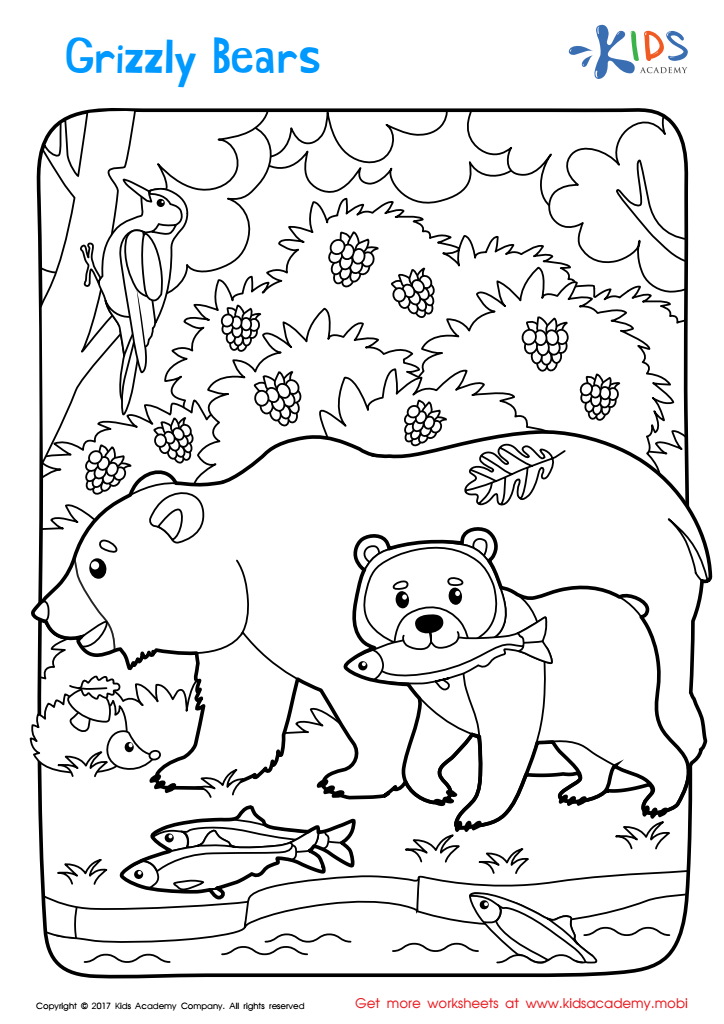
Free Printable Grizzly Bear Coloring Page
Today we're exploring the Great Plains and its most popular inhabitant: the grizzly bear! Our free printable coloring page introduces kids to the bear's natural habitat and food, like salmon and berries. Join us for a fun and educational experience!
Download (PDF)
 Assign to My Students
Assign to My Students
Free Printable Grizzly Bear Coloring Page
Worksheet
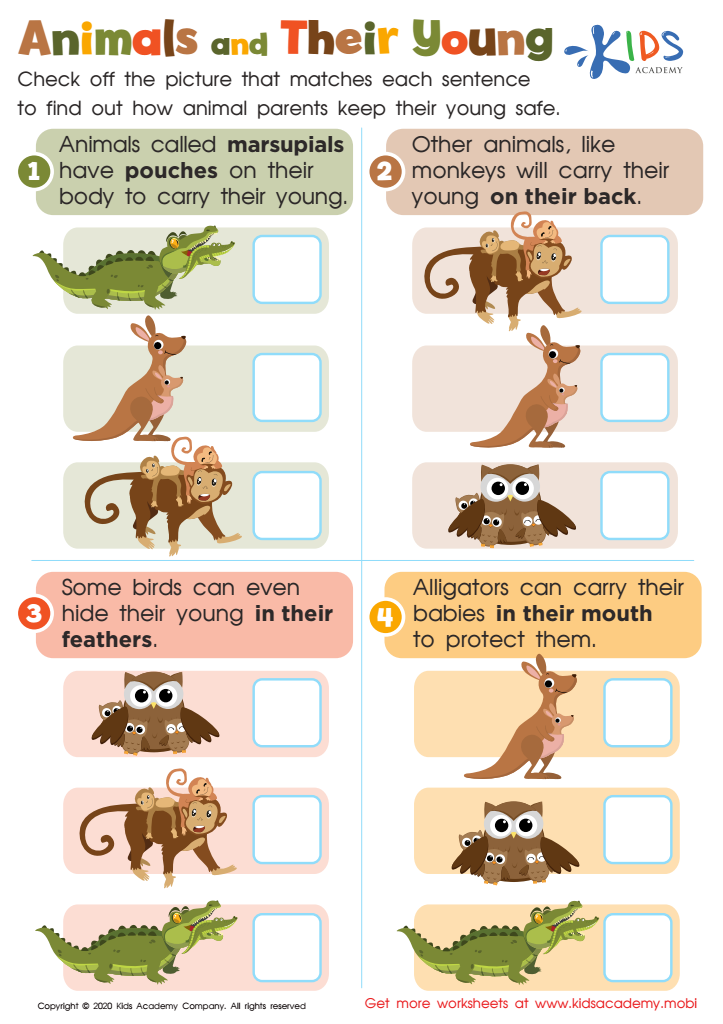
Animals and Their Young Worksheet
Help your child learn more about the animal kingdom with this cute science worksheet! They'll find out how animals protect and keep their babies close. From pouches to hitching a ride on mama’s back, they'll read the sentence above each illustration and select the description that fits. Check off the correct description as they go - a fun and educational activity!
Animals and Their Young Worksheet
Worksheet
Join Kids Academy for Free
Who is primarily going to use this learning content?








Animal recognition is a crucial aspect of learning for children ages 7-9 that has far-reaching benefits for both parents and teachers. At this developmental stage, children are naturally curious about the world around them, making it the perfect time to introduce them to various animal species. Understanding animal recognition not only enhances their knowledge of biodiversity but also fosters a sense of empathy towards living beings. This can cultivate a compassion for wildlife and environmental stewardship, encouraging students to care more about conservation efforts as they grow.
Moreover, animal recognition supports the development of critical thinking and problem-solving skills. Identifying animals and understanding their habitats, behaviors, and ecological roles enhances cognitive abilities and scientific understanding. Engaging activities related to animal recognition, such as games, crafts, or field trips, also provide opportunities for hands-on learning, cooperation, and social interaction.
For parents and teachers, promoting animal recognition helps to create a supportive learning environment where children feel safe to explore their interests. By nurturing this knowledge and curiosity, both parents and educators can inspire a lifelong appreciation for nature, paving the way for responsible individuals in our increasingly interconnected world. Overall, animal recognition contributes profoundly to children’s social, emotional, and cognitive development.








