Historical Knowledge Normal Worksheets for Ages 7-9 - Page 2
27 filtered results
-
From - To
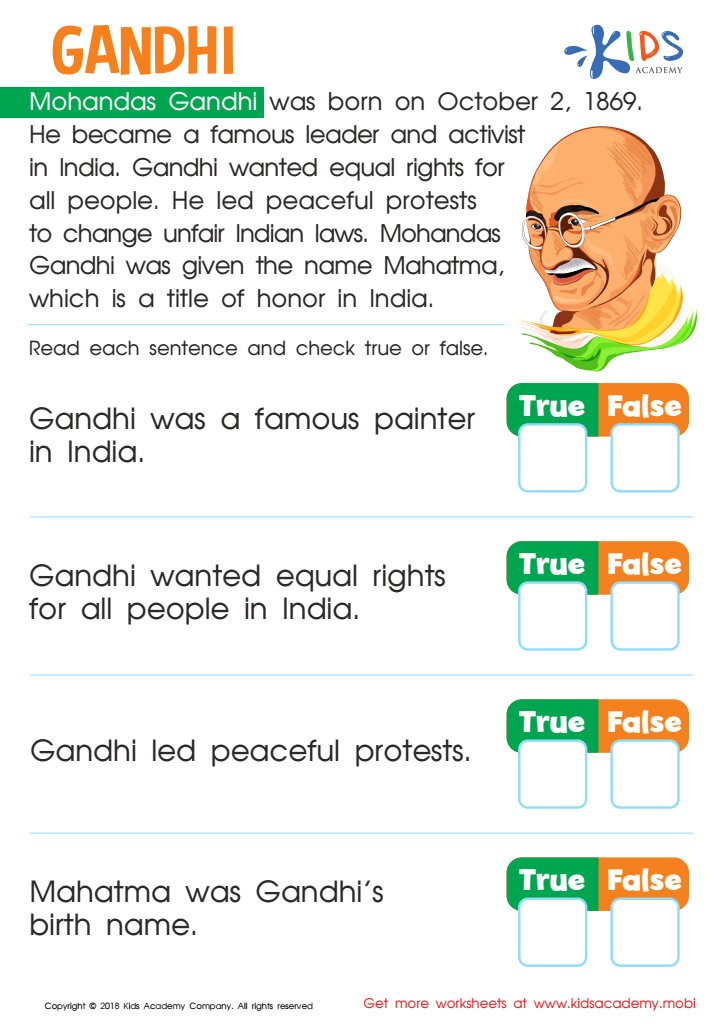
Gandhi Worksheet
 Assign to My Students
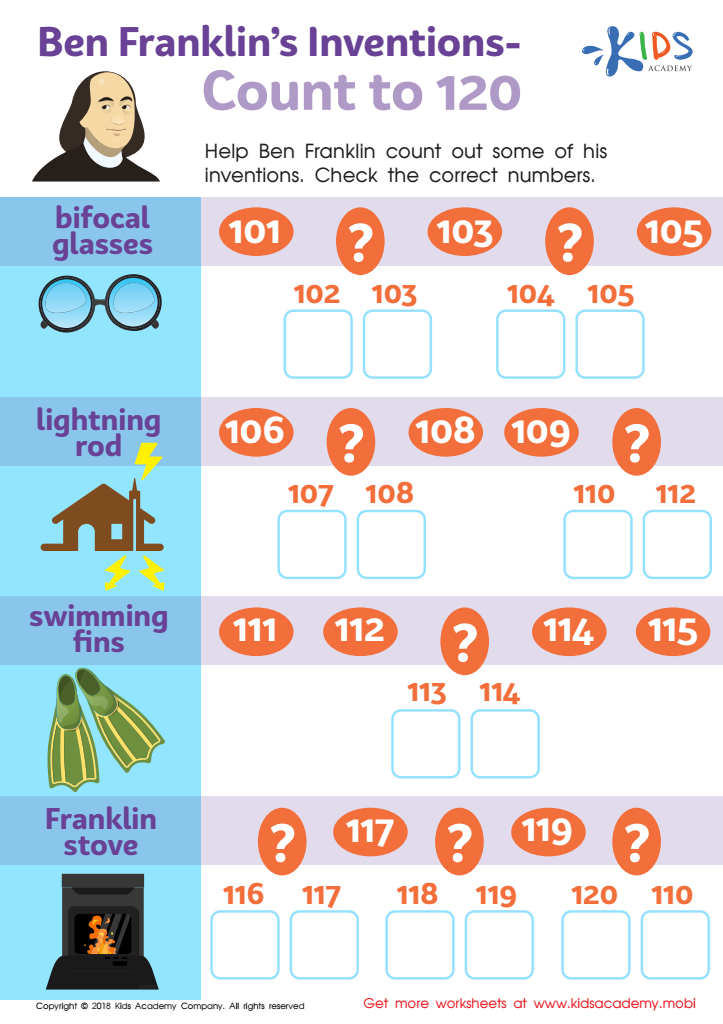
Ben Franklin’s Inventions – Count to 120 Worksheet
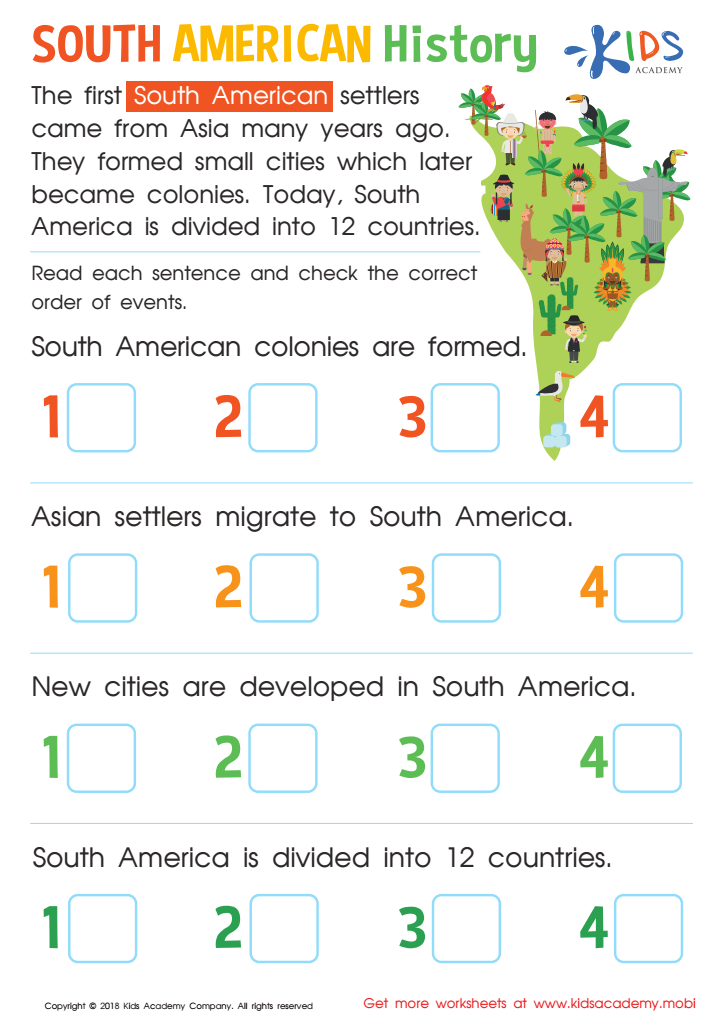
South American History Worksheet







It's important for parents and teachers to foster historical knowledge in children aged 7-9 to build a strong educational foundation. At this age, children are highly inquisitive and capable of understanding basic historical concepts. Introducing them to history enhances their understanding of how the past shapes the present and future, offering context to current events. Developing historical knowledge at an early age also helps in cultivating critical thinking and analytical skills. Children learn to compare, contrast, and question information, essential skills for all areas of learning.
Moreover, storytelling elements in history—battles, discoveries, cultural shifts—capture young imaginations and make learning enjoyable. Engaging stories from history can inspire a lifelong love of learning and curiosity about the world. Additionally, historical awareness fosters empathy and citizenship by helping children understand different cultures, perspectives, and the importance of ethical behavior through historical examples.
By teaching history early, parents and teachers lay a crucial groundwork that supports more complex learning processes in later years. A well-rounded historical education helps students navigate societal complexities, understand diverse worldviews, and become informed, responsible citizens. Therefore, emphasizing historical knowledge from an early age is instrumental in developing well-rounded, critical thinkers and enlightened future citizens.








