Identifying Animals Normal Worksheets for Ages 7-9
3 filtered results
-
From - To
Welcome to our "Identifying Animals Normal Worksheets" specifically designed for children aged 7-9. These engaging printable worksheets enhance young learners' observational and analytical skills as they explore various animal species. From matching animals with their habitats to recognizing different characteristics, our thoughtfully crafted activities promote critical thinking and boost confidence in animal identification. Perfect for classroom use or homeschooling, these worksheets provide a fun, educational experience for children. Discover the joy of learning about animals and encourage curiosity about the natural world with our age-appropriate resources. Start nurturing your child's love for animals today!
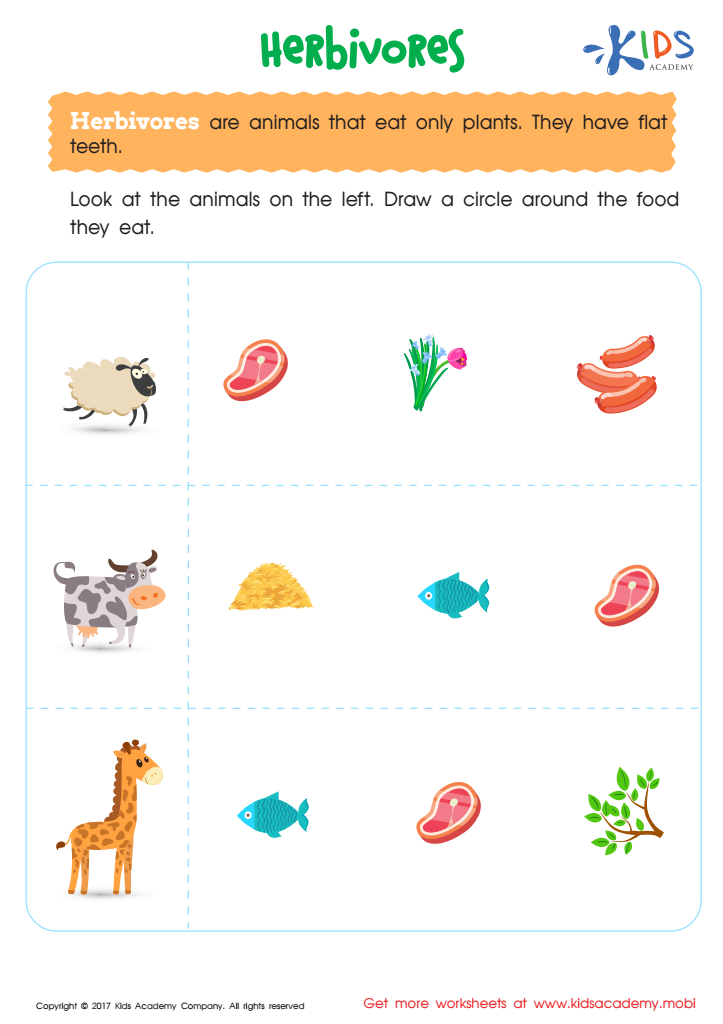
Herbivores Printable
 Assign to My Students
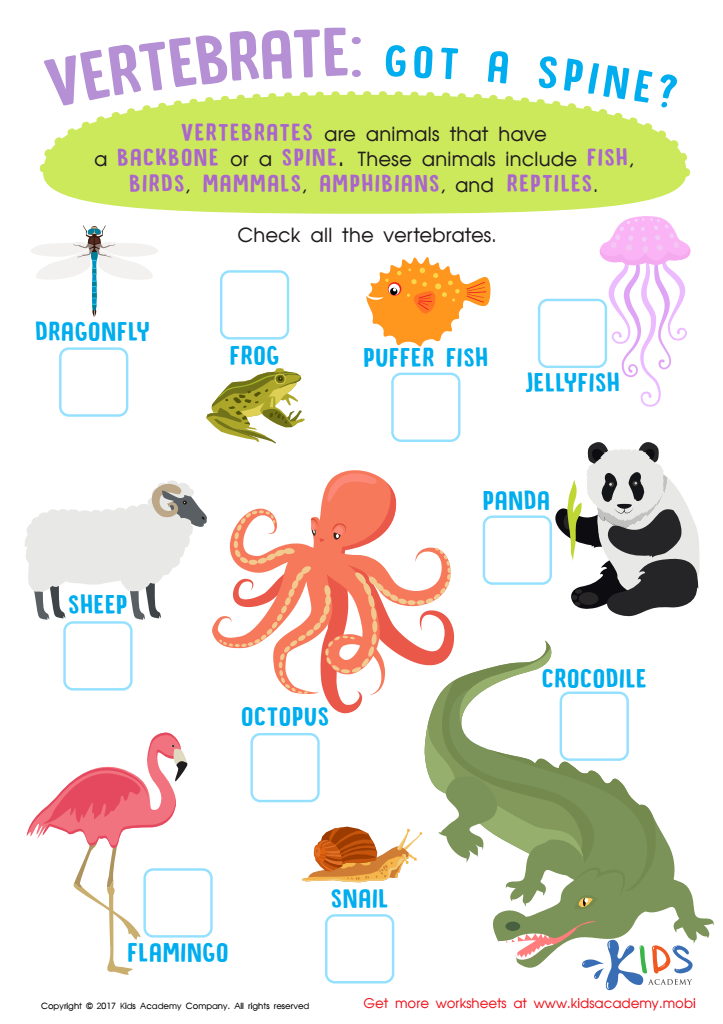
Vertebrates Animals Worksheet for 3rd Grade
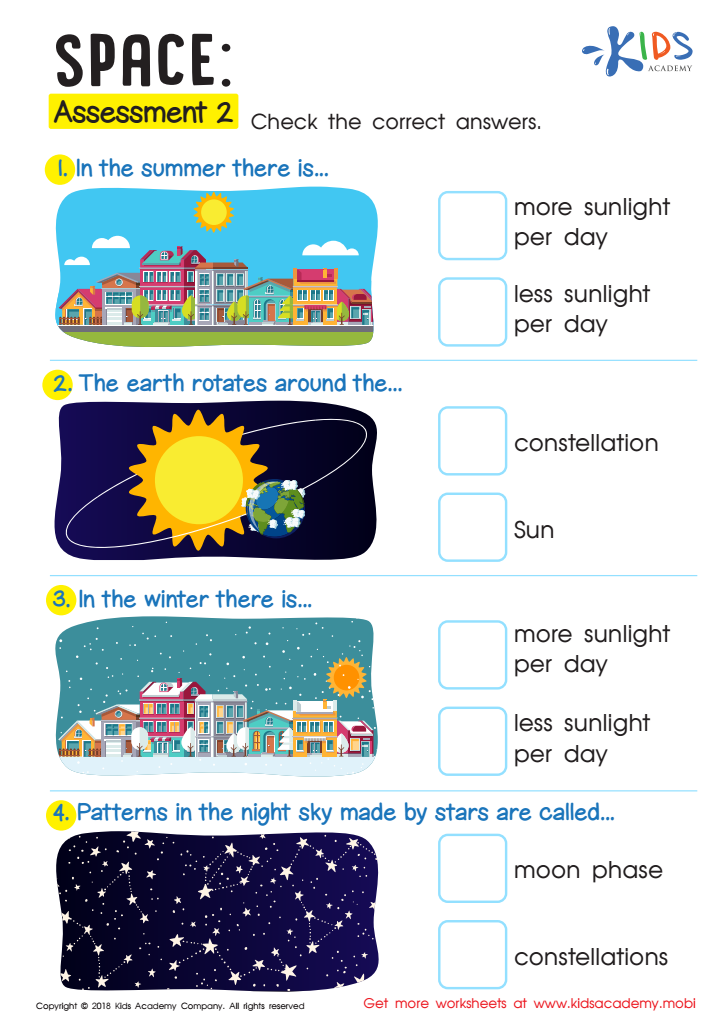
Space: Assessment 2 Worksheet








Identifying animals is an essential skill for children aged 7-9, and both parents and teachers play a vital role in fostering this knowledge. Familiarity with various species helps children develop a strong sense of biodiversity and environmental appreciation. This age group is particularly curious, making it a prime time to spark interest in nature and science.
Understanding animal identification promotes critical thinking and observation skills in young learners. Children learn to classify animals based on characteristics such as size, habitat, and behavior, laying a foundation for broader scientific concepts. Moreover, this knowledge enhances literacy skills as children engage with books and resources, expanding their vocabulary related to the natural world.
Parents and teachers can use animal identification as a gateway to discussions on ecology, conservation, and the importance of protecting wildlife. Encouraging outdoor exploration allows children to connect with their environment, igniting a sense of responsibility for the Earth. Additionally, activities centered around identifying animals promote collaborative and interactive learning, fostering teamwork and social skills. By prioritizing this skill, adults can cultivate a generation that respects wildlife, values learning, and advocates for the natural world. Emphasizing animal identification ultimately contributes to well-rounded development in young learners.








