Identifying story elements Normal Worksheets for Ages 7-9
3 filtered results
-
From - To
Welcome to our "Identifying Story Elements Normal Worksheets" designed specifically for children aged 7-9! These engaging worksheets are crafted to enhance your child's understanding of literature by focusing on key story elements such as characters, setting, plot, and theme. With interactive activities, colorful illustrations, and age-appropriate challenges, children will develop essential reading comprehension skills while enjoying the process. Perfect for both classroom and at-home learning, our worksheets encourage critical thinking and creative expression. Equip your young learners with the skills they need to become confident readers and budding storytellers. Explore the joy of storytelling today!
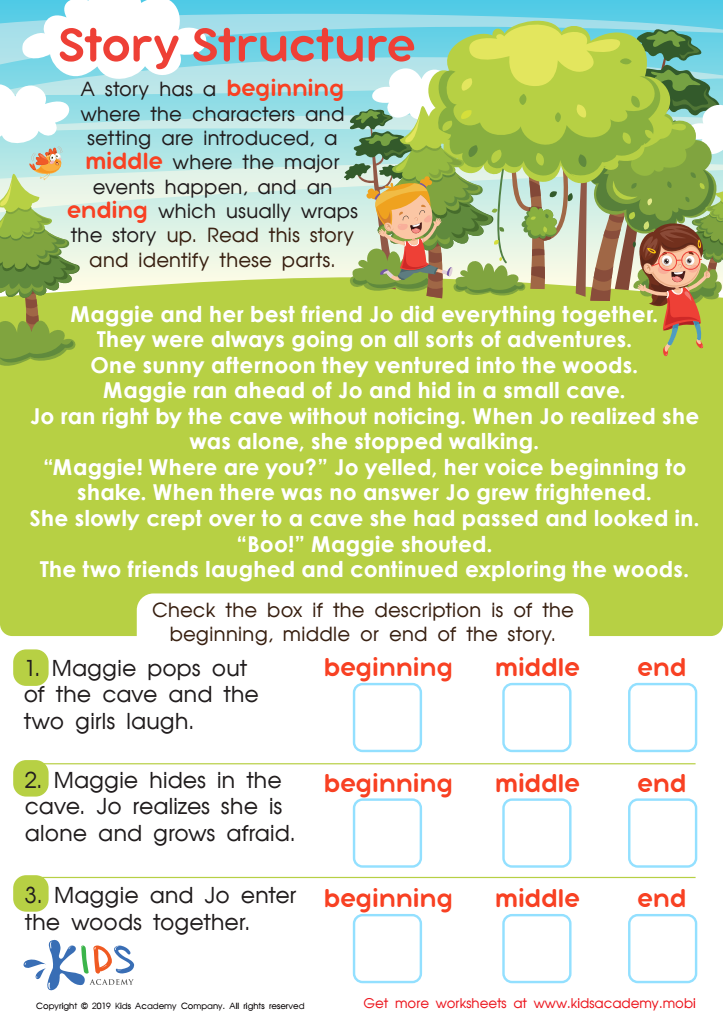
Story Structure Worksheet
 Assign to My Students
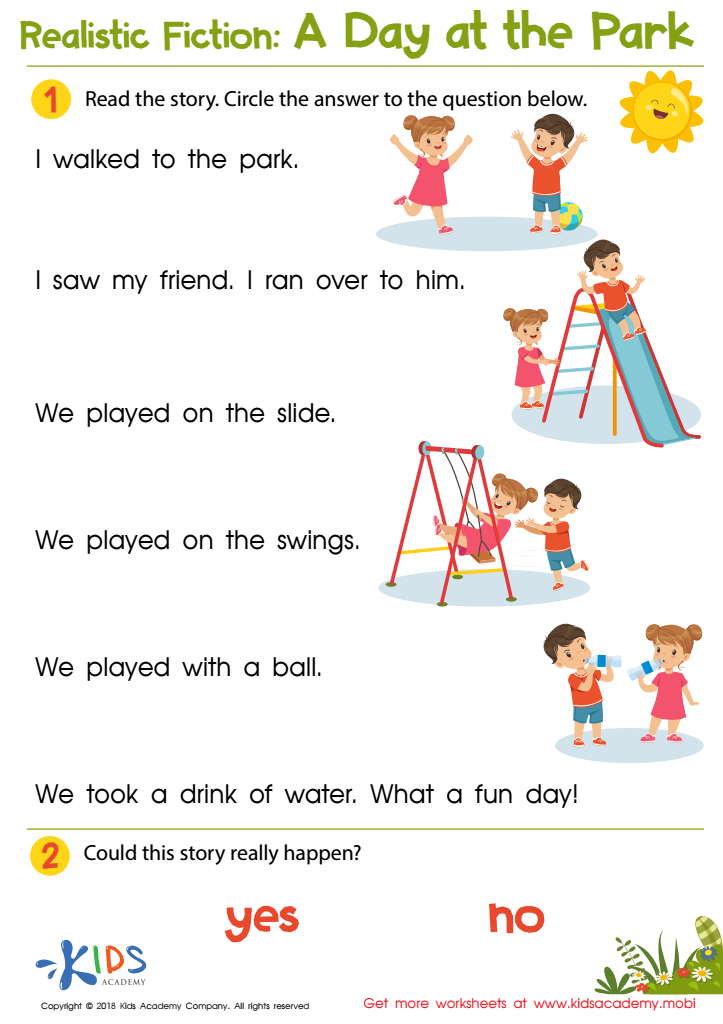
A Day at the Park Worksheet
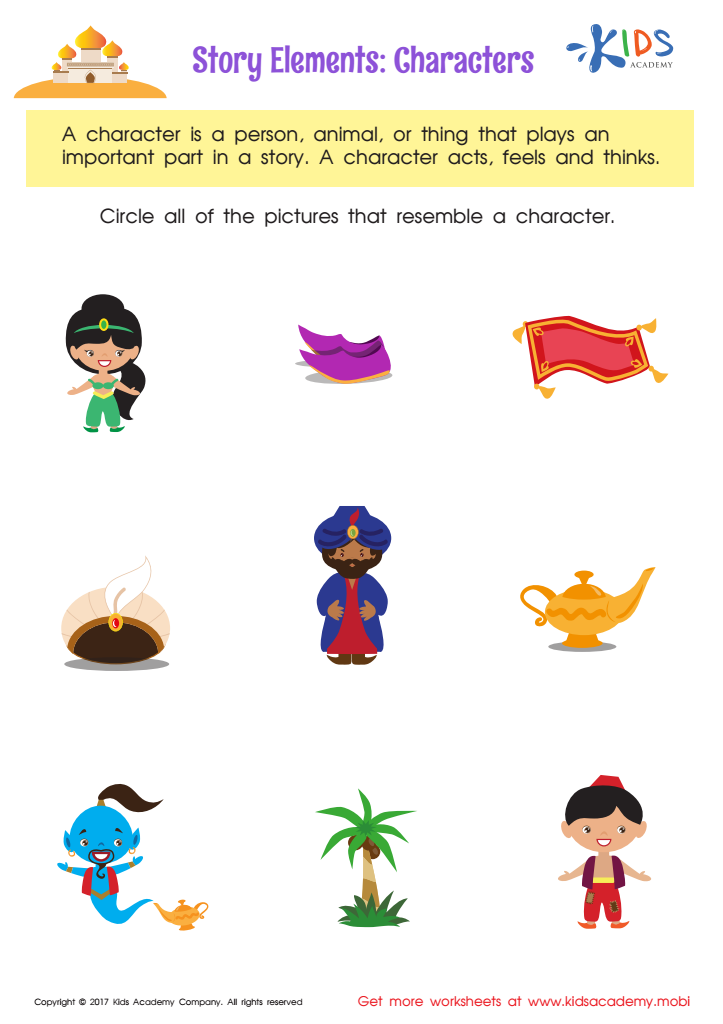
Story Elements Printable






Identifying story elements is crucial for children ages 7-9 as it lays the foundation for their reading comprehension and critical thinking skills. At this developmental stage, children are transitioning from learning to read to reading to learn. Understanding story elements—such as character, setting, plot, conflict, and resolution—enables them to grasp the structure of a narrative, making reading more engaging and enjoyable.
When parents and teachers encourage children to identify these elements, they help them make connections between different stories and the real world. Discussing characters’ motivations and emotions fosters empathy and enhances social skills. Recognizing the setting allows children to envision diverse contexts and cultures, promoting open-mindedness.
Moreover, identifying the plot and conflict teaches children to anticipate outcomes and explore themes, honing their analytical skills. As they become adept at dissecting stories, they are more likely to express their interpretations clearly, enhancing both their writing and verbal skills.
By actively participating in this process, parents and teachers play a pivotal role in cultivating a lifelong love for reading and learning, equipping children with essential tools for academic and personal growth.








