Letter recognition Normal Worksheets for Ages 7-9 - Page 2
25 filtered results
-
From - To
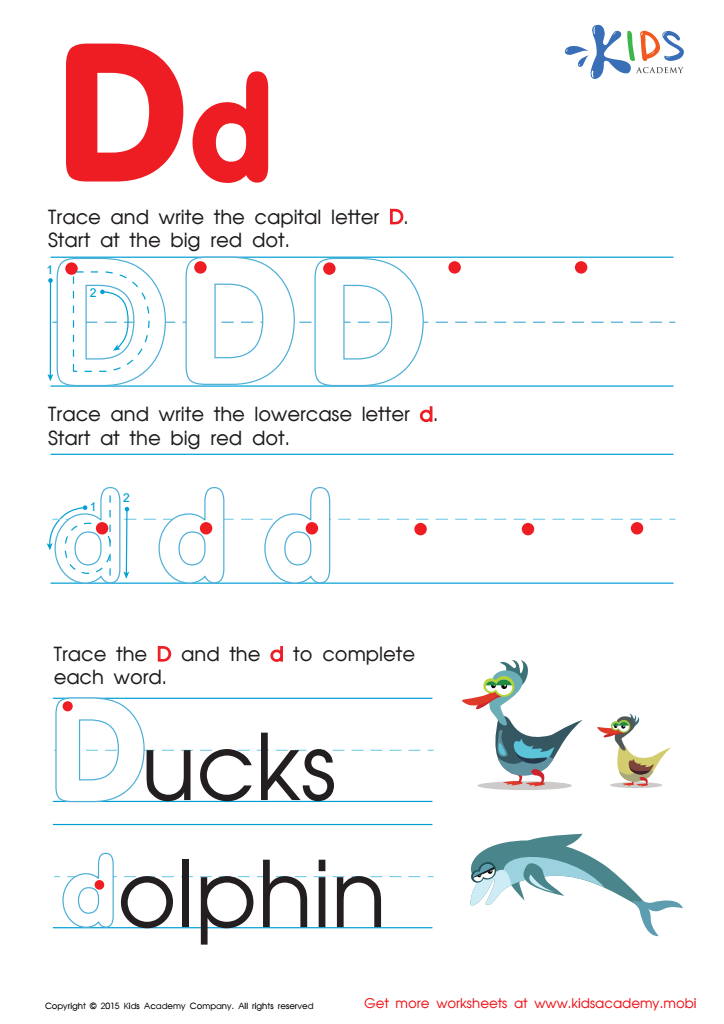
Letter D Tracing Page
 Assign to My Students








Letter recognition is a fundamental skill crucial for children aged 7 to 9, as it serves as the foundation for future reading, writing, and overall literacy development. At this age, students are transitioning from learning to read to reading to learn, making proficiency in letter recognition essential. Parents and teachers should prioritize this skill to ensure children can identify letters quickly and accurately, facilitating smoother reading experiences and building confidence.
Strong letter recognition contributes to phonemic awareness—the ability to hear, identify, and manipulate sounds—which is vital for phonics and spelling. Without a solid grasp of letter recognition, children may struggle with basic reading skills, leading to potential difficulties in more advanced literacy tasks. Additionally, early intervention can prevent these struggles from exacerbating as they progress in school.
Furthermore, mastery of letter recognition can enhance a child's enjoyment of reading. When learners can recognize letters and words effortlessly, they are more likely to engage with texts, cultivate a love for reading, and develop their comprehensive cognitive skills. In essence, fostering letter recognition in this critical developmental stage helps ensure children have the necessary tools for academic success and lifelong literacy. Parents and educators play an essential role in supporting and nurturing this skill.








