Multiplication practice Normal Worksheets for Ages 7-9 - Page 2
30 filtered results
-
From - To
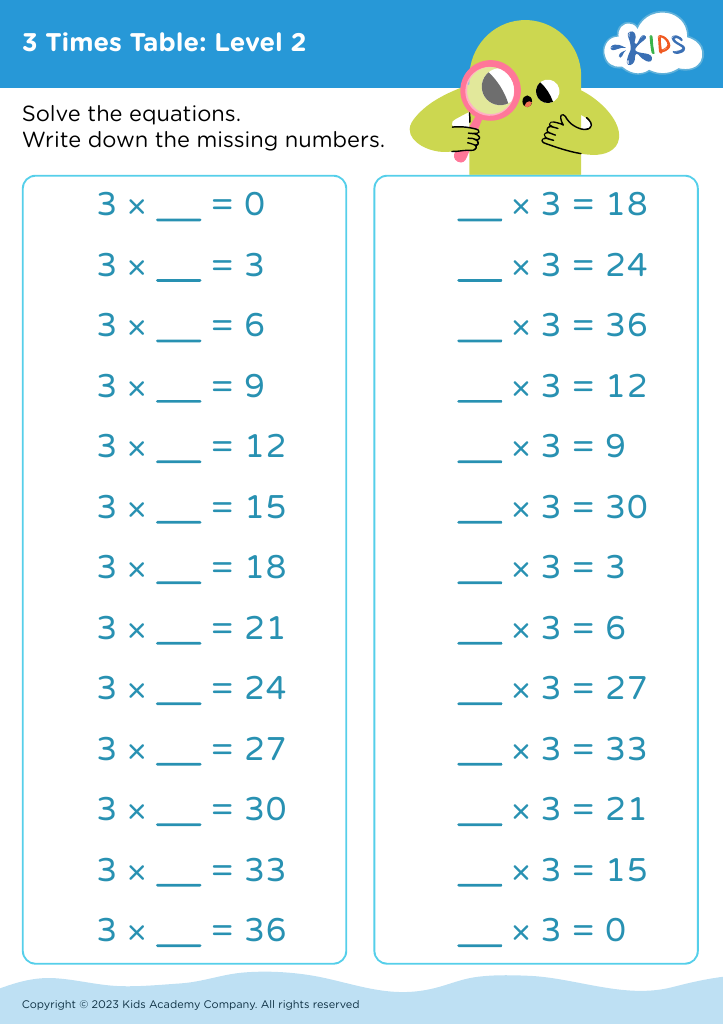
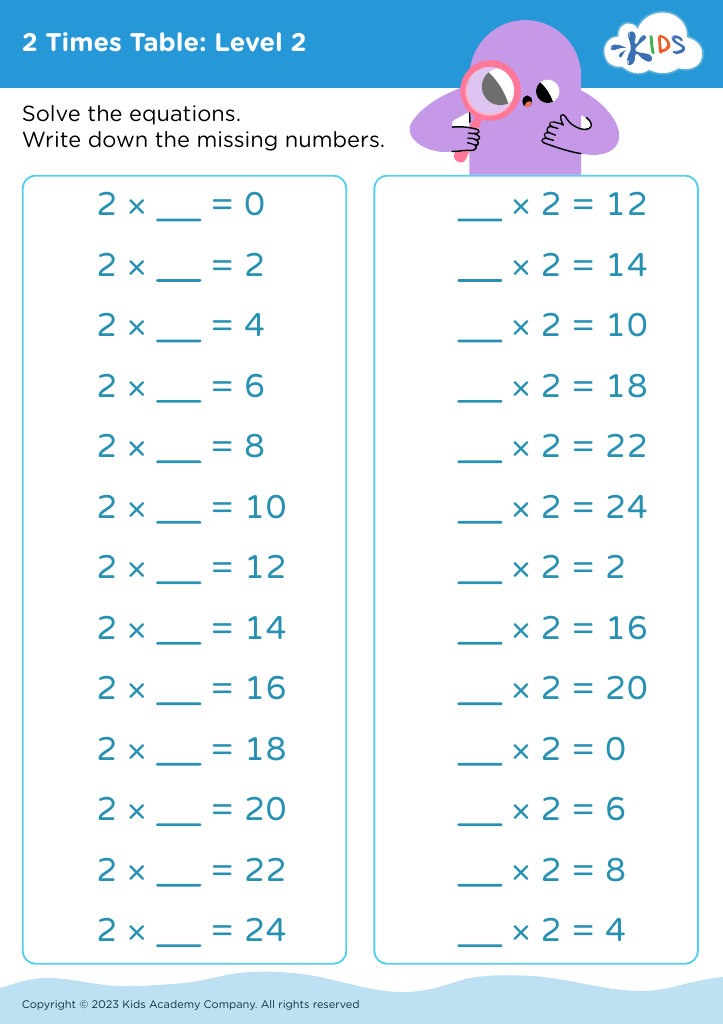






.jpg)
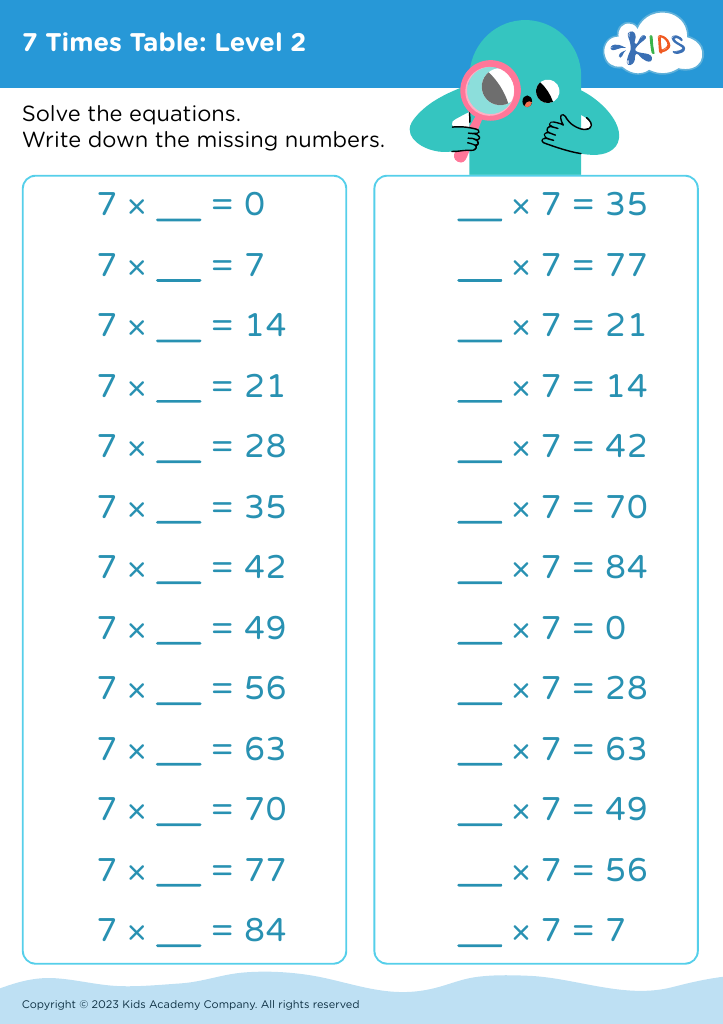
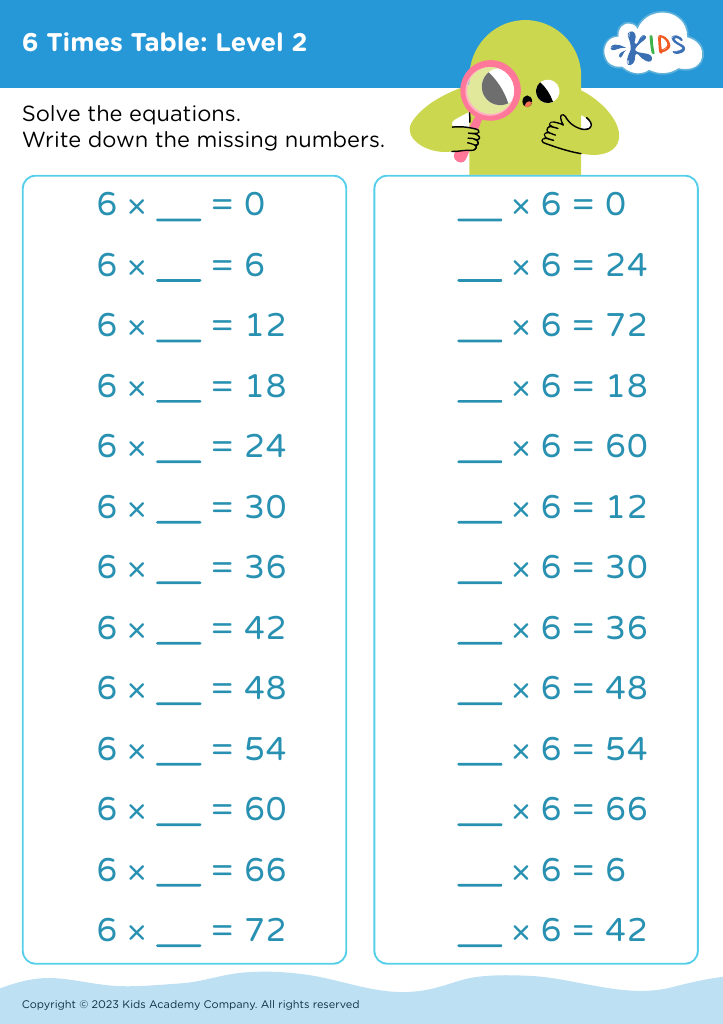
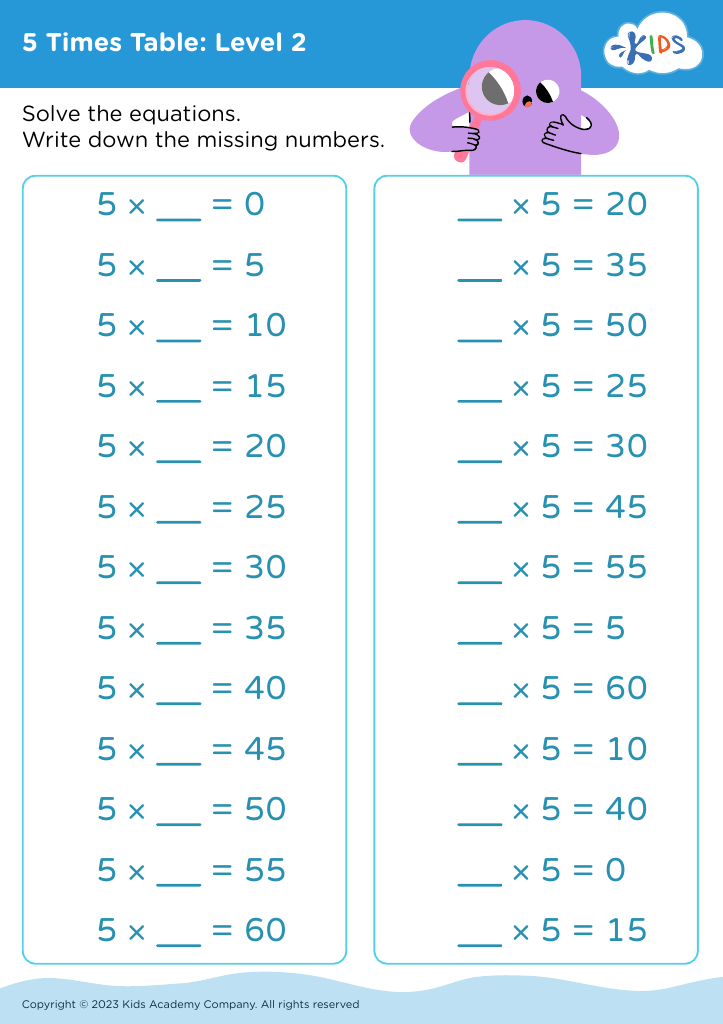
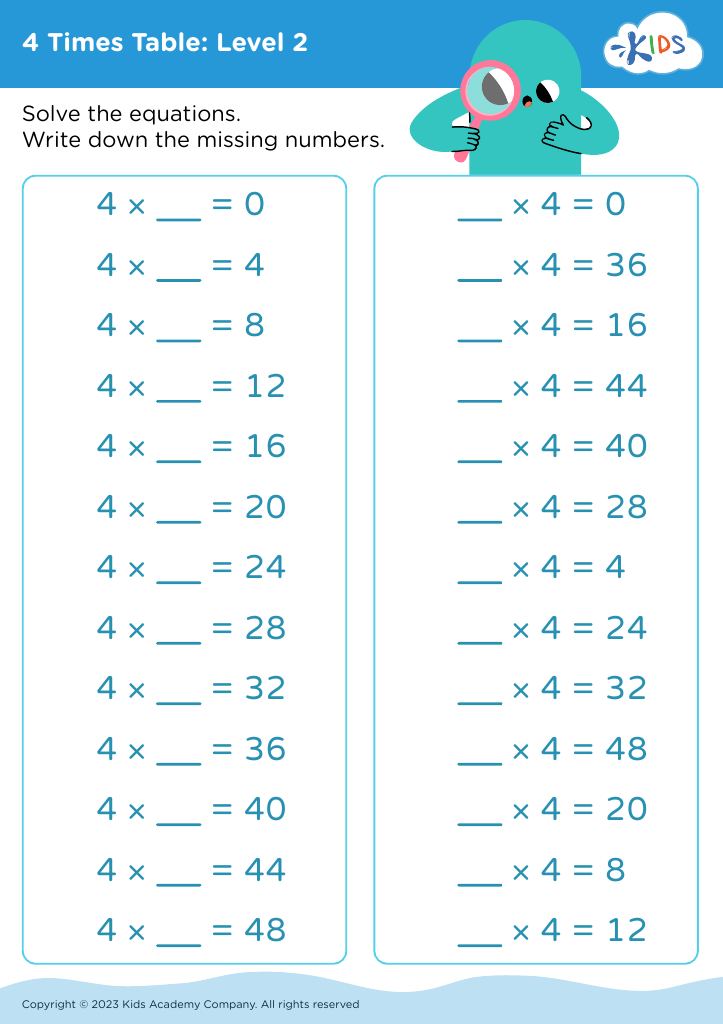
Multiplication practice is crucial for children aged 7 to 9, as it lays the foundation for more advanced mathematical concepts. At this stage, children transition from basic arithmetic to more complex problem-solving, where multiplication becomes a key skill. Regular practice helps enhance fluency, enabling students to solve equations swiftly and accurately, therefore boosting their confidence in math.
Developing strong multiplication skills also fosters logical reasoning and cognitive development. These foundational skills not only improve mathematical performance but also enhance overall academic achievement across subjects. When children understand multiplication, they can easily grasp concepts like division, fractions, and word problems, forming a basis for future learning.
Moreover, regular multiplication practice helps children with everyday tasks, reinforcing its significance outside the classroom. With a solid grasp of multiplication, students can confidently handle scenarios such as budgeting, measuring ingredients for recipes, or understanding statistics.
Parents and teachers play a crucial role in this learning journey. Encouragement and resources for consistent practice help instill a positive attitude towards math, turning it into an enjoyable challenge rather than a daunting task. Ultimately, fostering multiplication skills equips children with essential tools for their academic and personal growth, ensuring they thrive in their educational journey.








