Phonetic awareness Normal Worksheets for Ages 7-9
3 filtered results
-
From - To
Enhance your child's phonetic awareness with our engaging printable worksheets designed specifically for ages 7-9. These worksheets focus on building foundational reading skills by helping children recognize sounds, letters, and word patterns. Fun and interactive activities encourage exploration of phonetics, making learning enjoyable and effective. With varied exercises that include matching sounds to letters, identifying phonemes, and blending words, your child will gain confidence and proficiency in reading. Perfect for homework, extra practice, or classroom use, our resources support tailored learning experiences. Unlock the magic of reading with our phonetic awareness worksheets and watch your child's literacy skills soar!
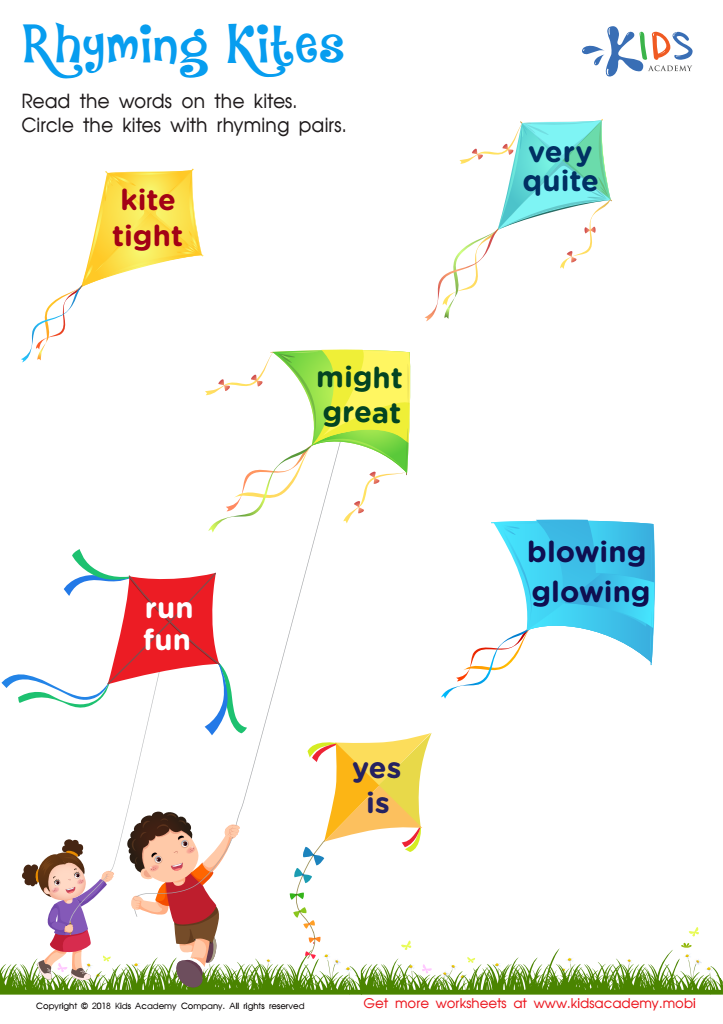
Rhyming Kites Worksheet
 Assign to My Students
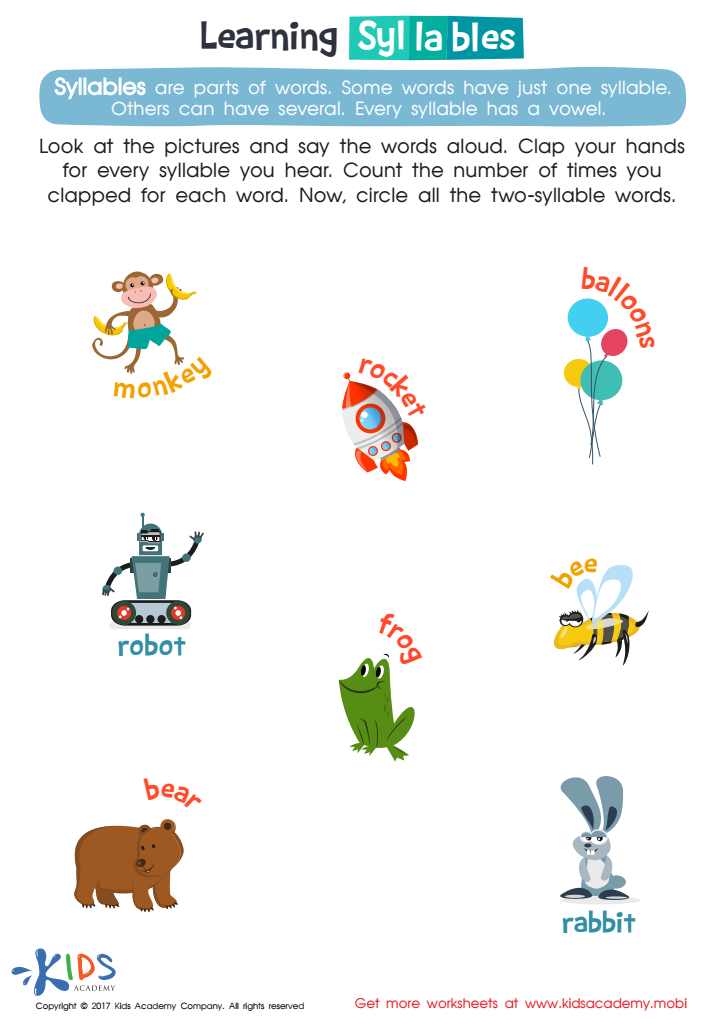
Learning Syllables Word Structure Worksheet
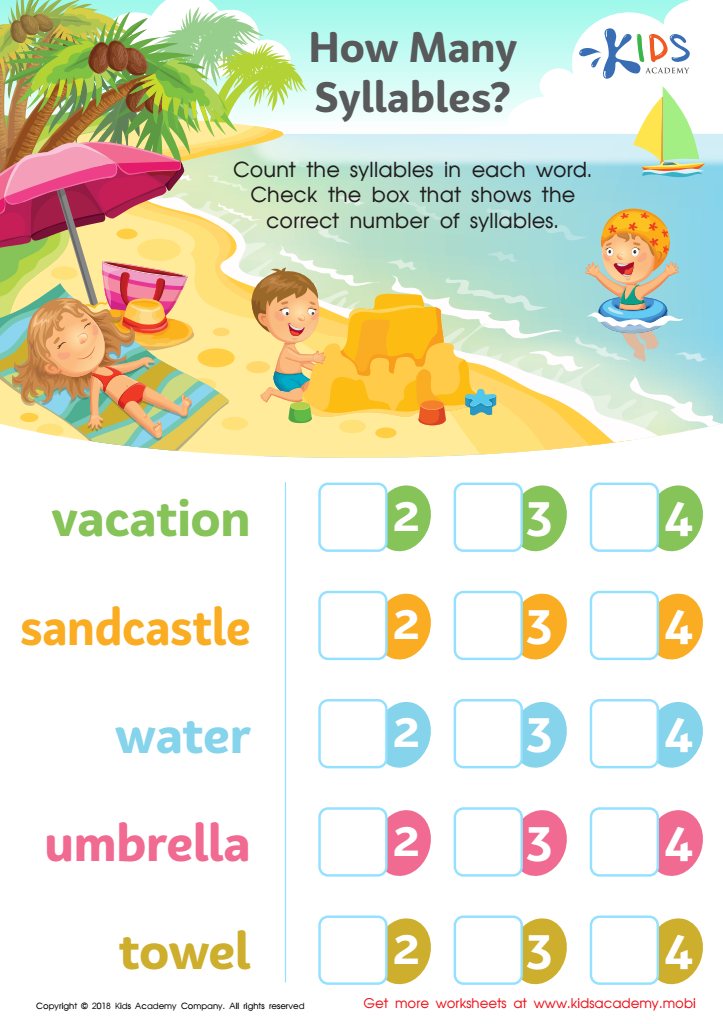
How Many Syllables Worksheet







Phonetic awareness is crucial for children aged 7-9 as it serves as the foundation for successful reading and writing skills. At this age, children are transitioning from learning to read to reading to learn. Strong phonetic awareness helps them discern the relationships between sounds and letters, allowing for better decoding of unfamiliar words and enhancing overall literacy.
Parents and teachers should prioritize phonetic awareness because it directly impacts a child’s academic performance. Struggling readers often fall behind their peers, leading to decreased confidence and motivation. By fostering phonetic awareness, adults can ignite a child’s passion for reading and learning.
Moreover, phonetic awareness extends beyond reading; it improves listening and communication skills. Children who can identify and manipulate sounds in words are better equipped to express themselves and understand spoken language. It also lays the groundwork for more complex skills in spelling and grammar.
In essence, supporting phonetic awareness not only nurtures literacy skills but also contributes to cognitive development and self-esteem. By focusing on this critical area, parents and teachers create empowered, confident learners equipped for lifelong success in both academics and beyond.








