Reading thermometers Normal Worksheets for Ages 7-9
3 filtered results
-
From - To
Enhance your child’s ability to read thermometers with our engaging Normal Worksheets for ages 7-9. These expertly-crafted activities guide children through understanding temperature scales, nurturing essential math and science skills. Presented in a fun, accessible format, our worksheets help young learners practice reading both Fahrenheit and Celsius scales, fostering confidence and scientific literacy. With vibrant illustrations and clear instructions, children will enjoy seeing their progress while mastering this crucial real-world skill. Perfect for classroom or at-home learning, our worksheets provide an exciting and educational experience that supports early academic growth. Empower your child to excel with Kids Academy’s Reading Thermometers Worksheets!
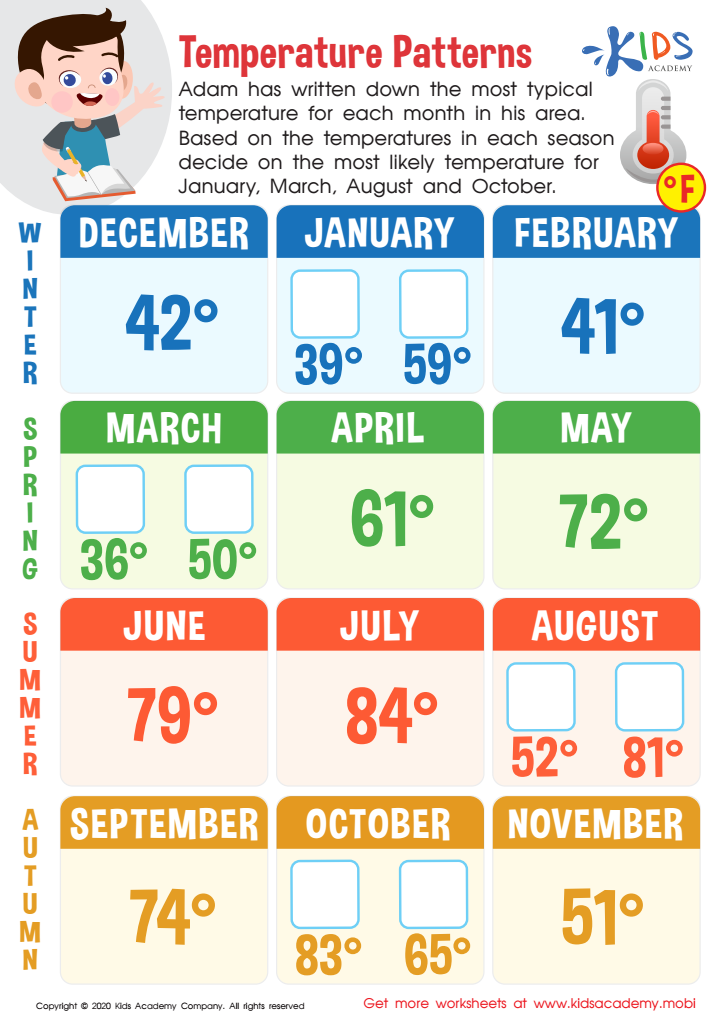
Temperature Patterns Worksheet
 Assign to My Students
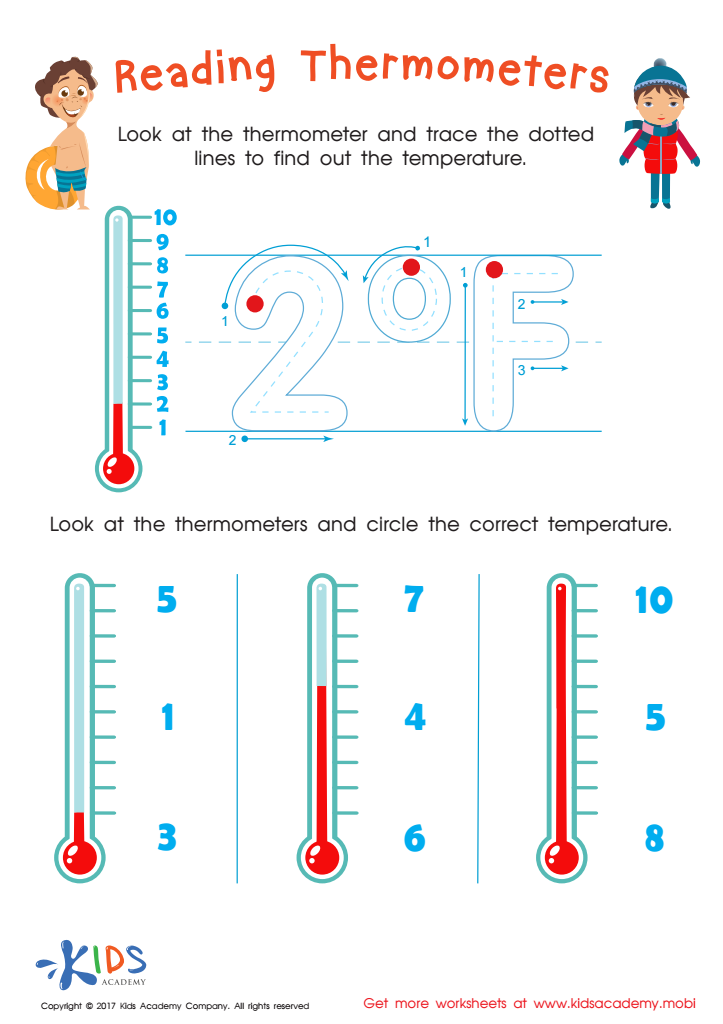
Reading Thermometers Printable
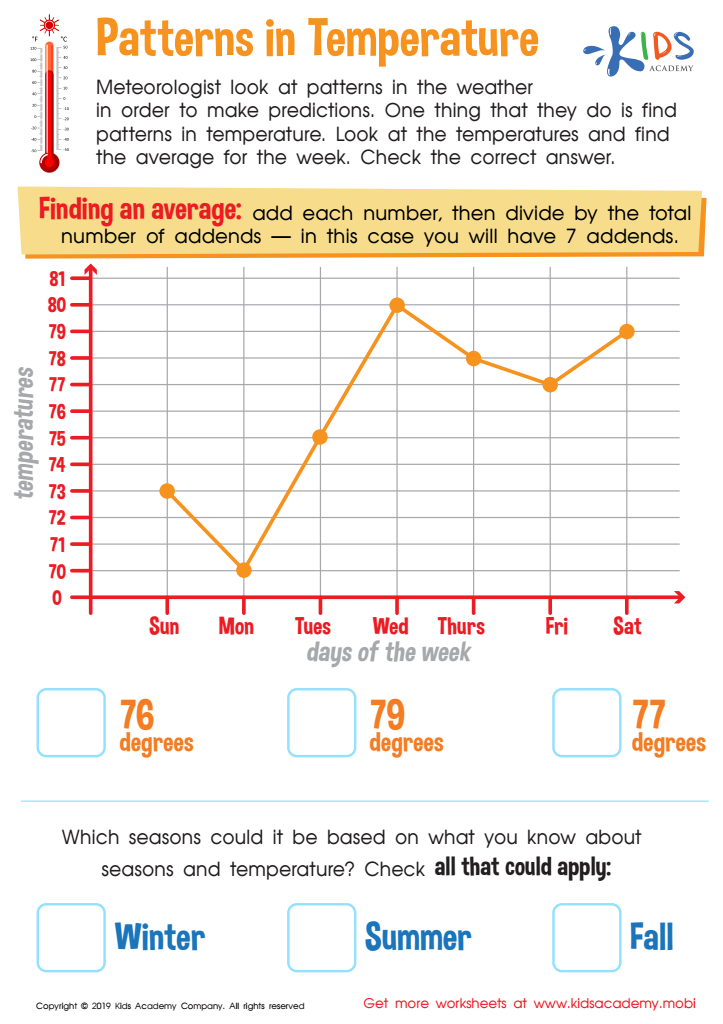
Patterns in Temperature Worksheet







Parents and teachers should care about the ability of children aged 7-9 to read thermometers because it is an important part of mastering early science and math skills. Understanding temperature measures helps children relate to everyday experiences, such as knowing how to dress for the weather or understanding why food needs to be cooked at certain temperatures.
Reading thermometers also strengthens numeracy, including skills in reading scales, understanding units of measure, and interpreting data. These skills are fundamental for more advanced math topics in the future. Knowing about temperature further aids in grasping essential scientific concepts like states of matter (solids, liquids, gases) and the physical properties of materials, which are critical components of elementary science curricula.
Moreover, competency in reading thermometers promotes practical life lessons. Kids learn about health and safety by understanding concepts like fever in a medical context or the appropriate setting for household heating. Engaging in activities that require reading thermometers can also enhance critical thinking and strengthen children's ability to draw conclusions based on observational data.
Overall, developing proficiency in reading thermometers provides a multidisciplinary platform that supports cognitive development, aligns with educational standards, and aids children in becoming scientifically literate individuals.








