Sequencing events Normal Worksheets for Ages 7-9
5 filtered results
-
From - To
Unlock your child's storytelling potential with our Sequencing Events Worksheets, specially designed for ages 7-9! These engaging, printable activities help young learners organize events in a logical order, enhancing their comprehension and critical thinking skills. Our worksheets feature a variety of fun scenarios that encourage children to connect ideas, improve narrative skills, and develop essential sequencing strategies. Perfect for classroom use or at-home learning, these resources support literacy growth while keeping students entertained. Start inspiring your child's educational journey with our comprehensive sequencing worksheets today, fostering an early love for reading and writing in a fun, interactive way!
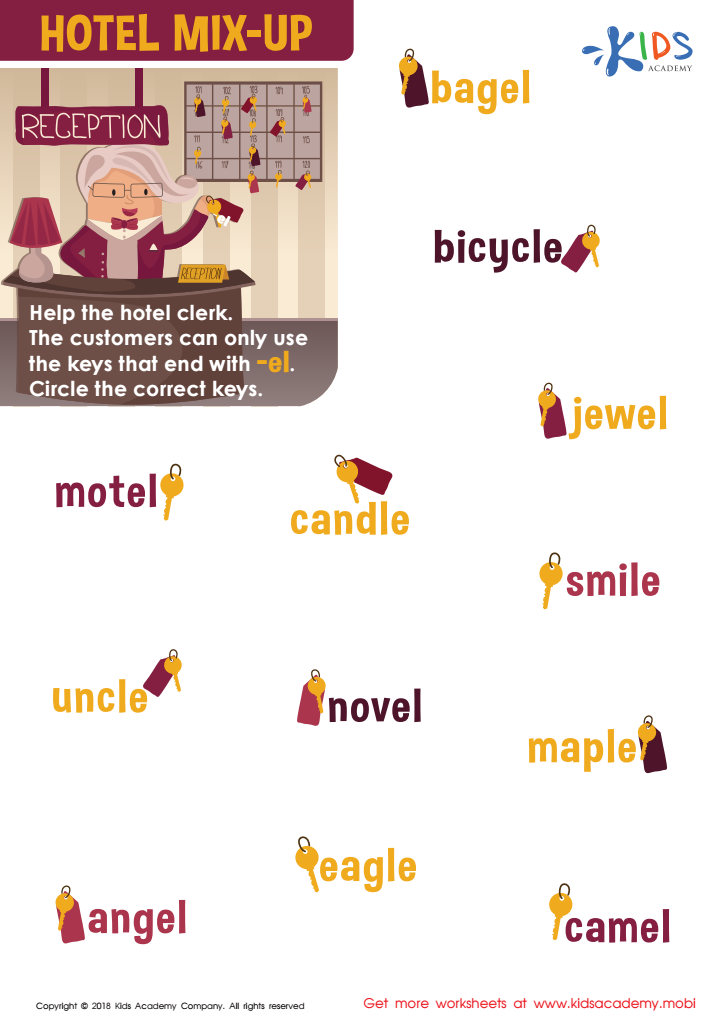
Hotel Mix-up Worksheet
 Assign to My Students
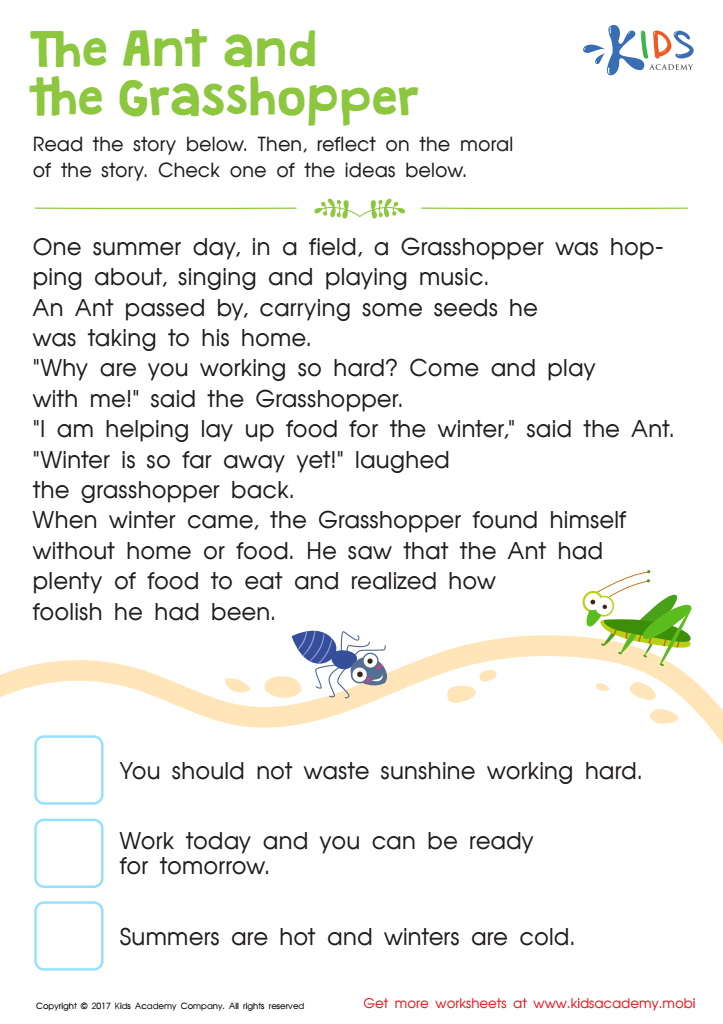
The Ant and The Grasshopper Printable

Emperor Penguin Journey Worksheet
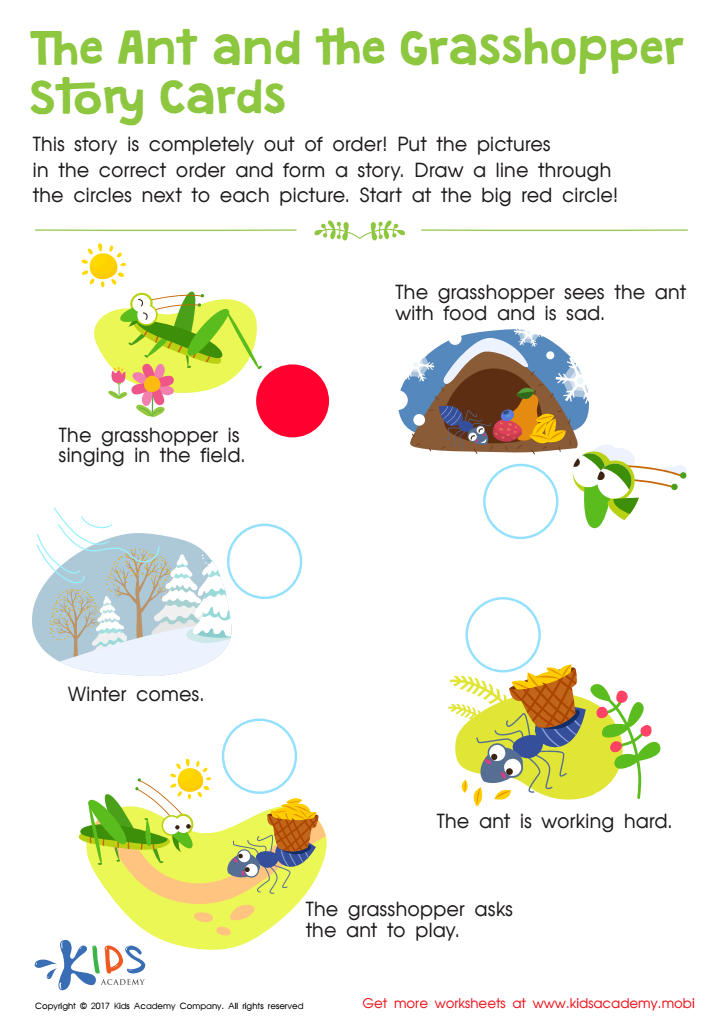
The Ant and The Grasshopper Worksheet
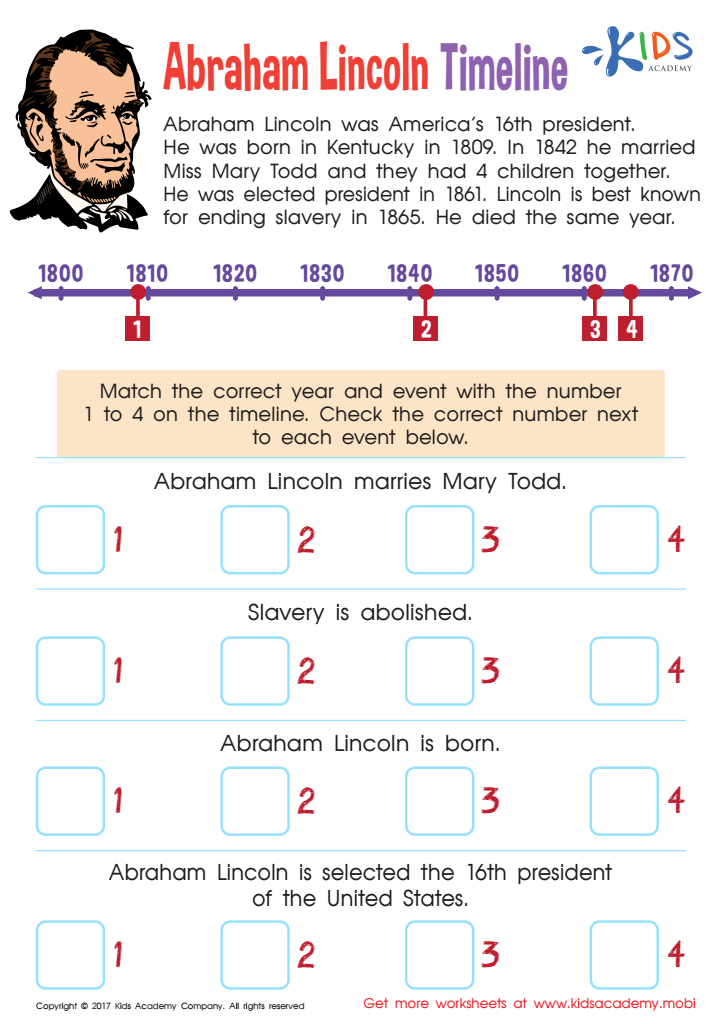
Abraham Lincoln Timeline Worksheet







Sequencing events is a critical skill for children aged 7-9 as it lays the foundation for their reading, writing, and comprehension abilities. At this developmental stage, children begin to encounter more complex stories and texts. Understanding the order of events helps them grasp the main idea, recognize cause and effect, and anticipate outcomes. Moreover, mastering sequencing fosters organizational skills that benefit academic and everyday life, enabling students to follow directions, plan projects, and recount personal experiences coherently.
For parents and teachers, prioritizing sequencing activities can lead to improved literacy performance. Engaging children in storytelling, whether through reading books or creating their own narratives, reinforces this skill. Additionally, sequencing challenges, such as retelling a story with visual aids or sorting picture cards, can make learning enjoyable while enhancing cognitive abilities.
Furthermore, once children achieve proficiency in sequencing, they become more adept at critical thinking and problem-solving. It empowers them to dissect information not only in literature but across various subjects like history and science. Overall, fostering this skill in young learners supports their academic growth and nurtures their ability to communicate effectively, making it a vital focus for both parents and educators.








