Sound differentiation Normal Worksheets for Ages 7-9
3 filtered results
-
From - To
Enhance your child's auditory skills with our "Sound Differentiation Normal Worksheets" designed specifically for ages 7 to 9. These engaging worksheets help young learners distinguish between similar sounds, bolstering their reading and listening abilities. With fun activities such as sound sorting, matching, and identification, kids will improve their phonemic awareness in an enjoyable way. Perfect for home or school use, our resources support early literacy development while making learning interactive. Explore our collection today to foster your child's confidence in sound differentiation and empower them on their educational journey. Download now for a seamless learning experience!
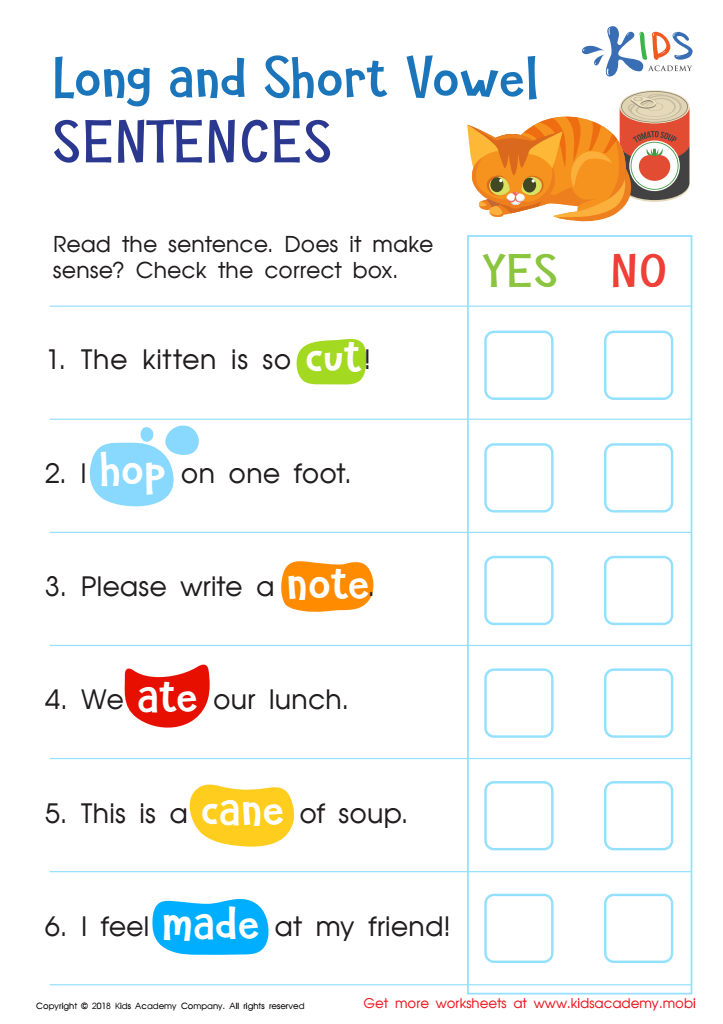
Long and Short Vowel Sentences: Assessment Worksheet
 Assign to My Students
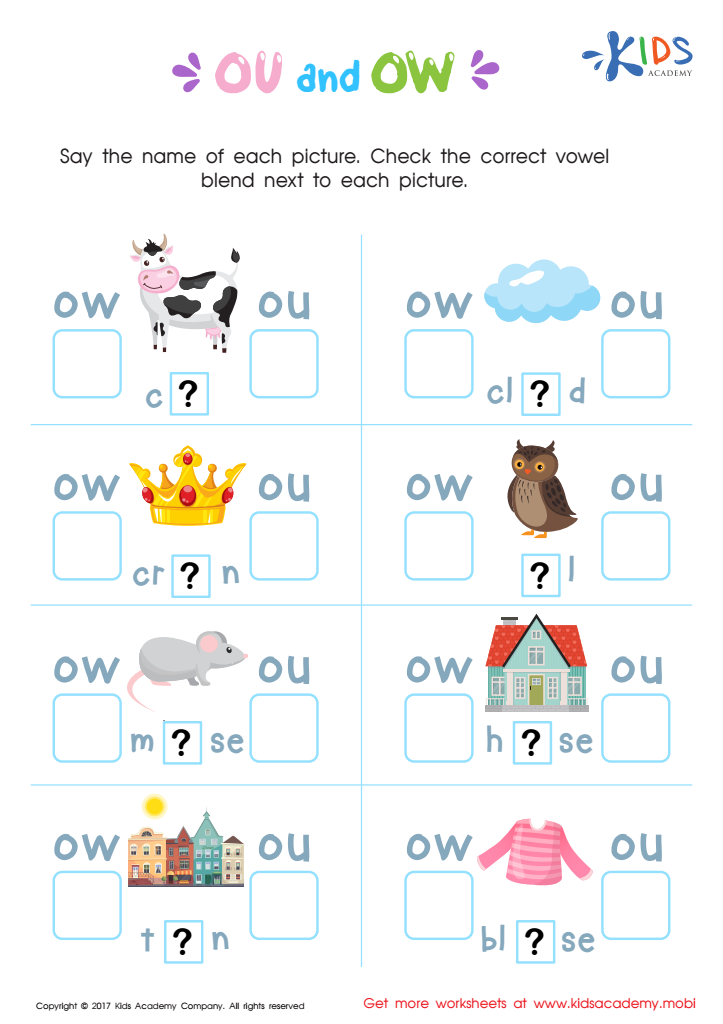
OU and OW Words Worksheet
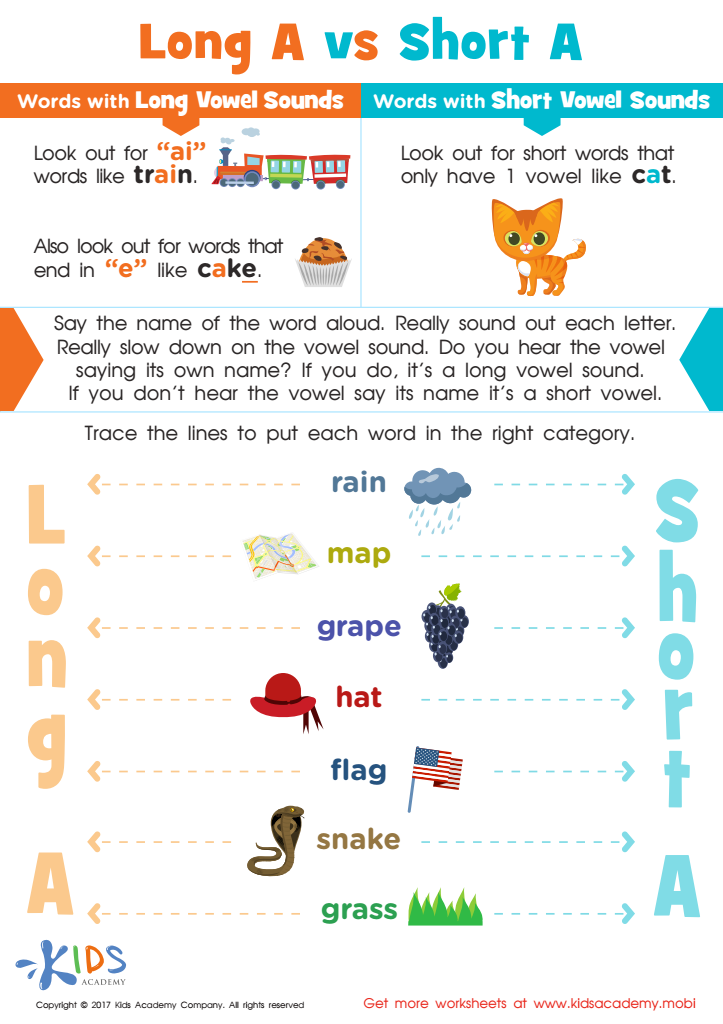
Long and Short Vowel A Spelling Worksheet







Sound differentiation is crucial for children aged 7-9, as it lays the foundation for effective reading, writing, and communication skills. During this developmental stage, children begin to move from learning to read to reading to learn. Mastery of sound differentiation enhances their ability to decode words, recognize phonetic patterns, and understand the nuances of language.
Teachers and parents play a vital role in fostering this skill. By nurturing sound differentiation, they can help children develop better listening and speaking abilities, which are essential for collaboration and participation in classroom discussions. It supports phonemic awareness, enabling children to blend sounds into words and segment words into sounds, ultimately boosting their spelling and vocabulary comprehension.
Furthermore, children who struggle with sound differentiation may face challenges in academic performance and self-esteem. A solid grasp of sound differentiation helps them gain confidence in their linguistic abilities, fostering a love for reading and learning. Consequently, engaging with sound differentiation through phonics exercises, rhymes, and interactive activities supports a child's overall educational journey. By prioritizing this area, parents and educators can significantly impact children's literacy development and lifelong learning skills.








