
Strategic thinking Normal Worksheets for Ages 7-9
3 filtered results
Difficulty Level
Grade
Age
-
From - To
Subject
Activity
Standards
Unlock your child's potential with our Strategic Thinking Worksheets designed for ages 7-9! These engaging resources nurture critical cognitive skills, encouraging young learners to think ahead, solve problems creatively, and make thoughtful decisions. Each printable worksheet provides age-appropriate challenges that engage the mind while promoting essential skills like planning, predicting outcomes, and evaluating options. Ideal for both classroom use and at-home learning, these worksheets make strategic thinking fun and accessible. Foster your child's love for learning and empower them to tackle real-world problems with confidence. Explore our collection and watch your little one's analytical skills shine!
Favorites
With answer key
Interactive
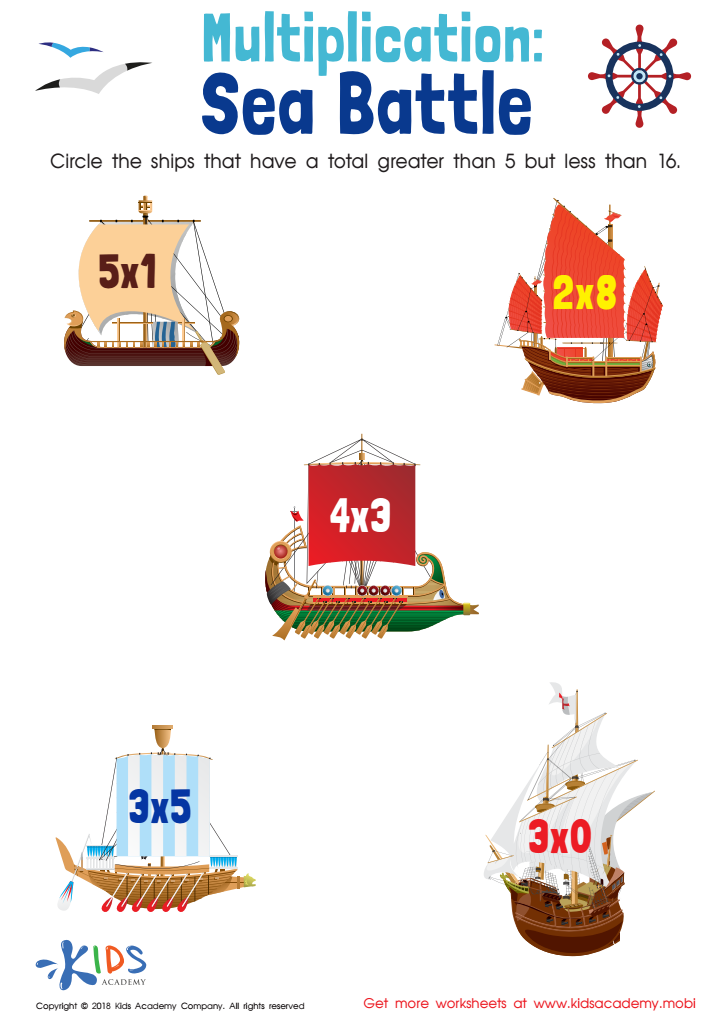
Sea Battle: Multiplication Worksheet
Test your child's math skills and give them an exciting adventure with our Sea Battle: Multiplication Worksheet. Have them solve the multiplication problems on each ship's sail then circle the answers between 5 and 16. An entertaining way to boost their math skills!
 Assign to My Students
Sea Battle: Multiplication Worksheet
Worksheet
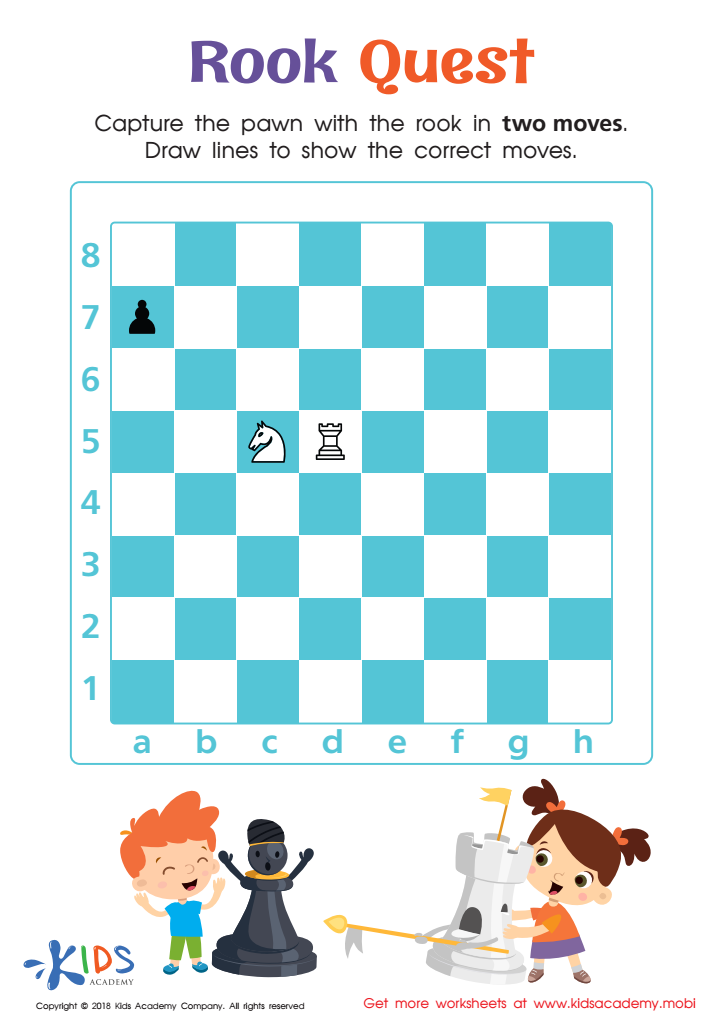
Rook Quest Worksheet
Is your child a chess whiz? Check their progress with this rook quest: get the enemy's pawn piece in just two moves. Have them draw the lines for the moves they'll make. See how quickly they master it!
Rook Quest Worksheet
Worksheet
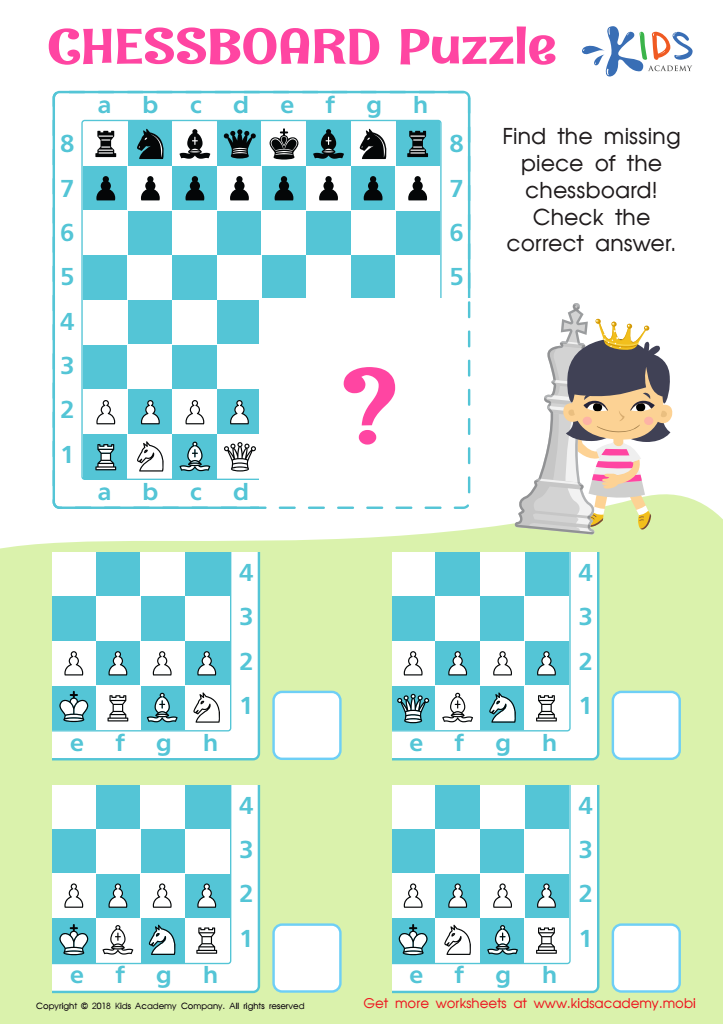
Chessboard Puzzle Worksheet
Test your child's chess prowess with this simple worksheet. They must find the missing pieces to complete the white side of an empty chessboard. The black pieces are already arranged properly on the board. Correct answers are provided so you can see how they did!
Chessboard Puzzle Worksheet
Worksheet
Join Kids Academy for Free
Who is primarily going to use this learning content?








Strategic thinking is vital for children aged 7-9 as it fosters problem-solving skills, promotes critical thinking, and enhances decision-making abilities. During these formative years, kids develop cognitive skills that will impact their academic performance and everyday interactions. By encouraging strategic thinking, parents and teachers help children learn to analyze situations, weigh pros and cons, and formulate plans to achieve goals.
Early exposure to strategic thinking encourages creativity and innovation, empowering kids to explore multiple solutions to challenges they face. It nurtures resilience—a vital trait as they encounter obstacles, teaching them to adapt and refine their strategies instead of giving up. Moreover, strategic thinking enhances collaboration and communication skills, as children often engage in group activities requiring negotiation and consensus-building.
Additionally, in an increasingly complex world, children equipped with strategic thinking skills are better prepared to navigate social relationships and academic demands. By supporting the development of these skills, parents and teachers provide children with a toolkit to thrive in various environments. Ultimately, fostering strategic thinking in early education builds a foundation for lifelong learning, instilling in children the confidence to tackle new challenges and pursue their interests with purpose.








