Understanding adjectives Normal Worksheets for Ages 7-9
5 filtered results
-
From - To
"Understanding Adjectives: Normal Worksheets for Ages 7-9" offers an engaging way for children to master the use of descriptive words. Designed to enhance vocabulary and grammar skills, these worksheets provide fun activities like matching adjectives to nouns, completing sentences, and identifying adjectives in a text. Ideal for children ages 7-9, this resource helps kids recognize and use adjectives effectively, aiding in the development of richer, more expressive language. Perfect for classroom use or at-home practice, these worksheets make learning enjoyable and help children build strong foundational language skills.
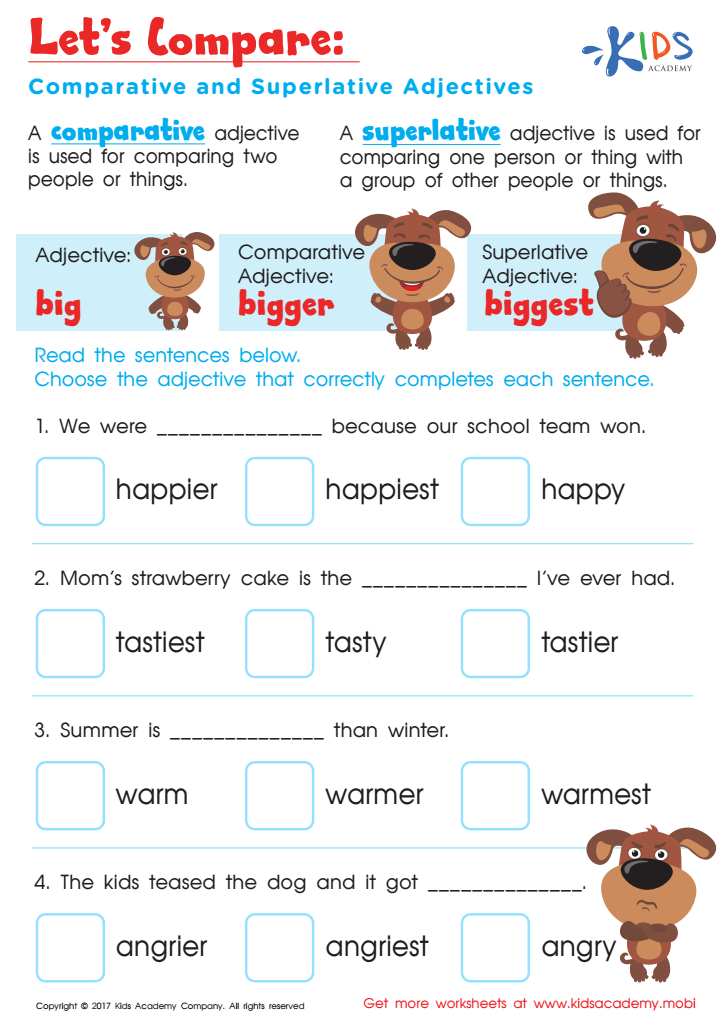
Comparative and Superlative Worksheet
 Assign to My Students
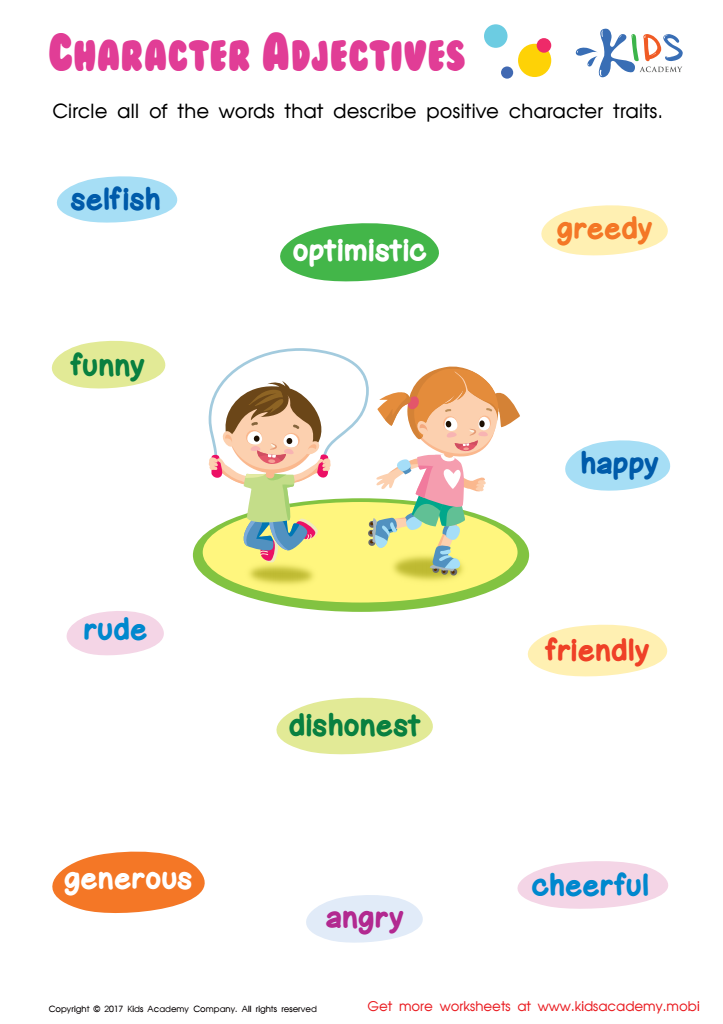
Character Adjectives Worksheet
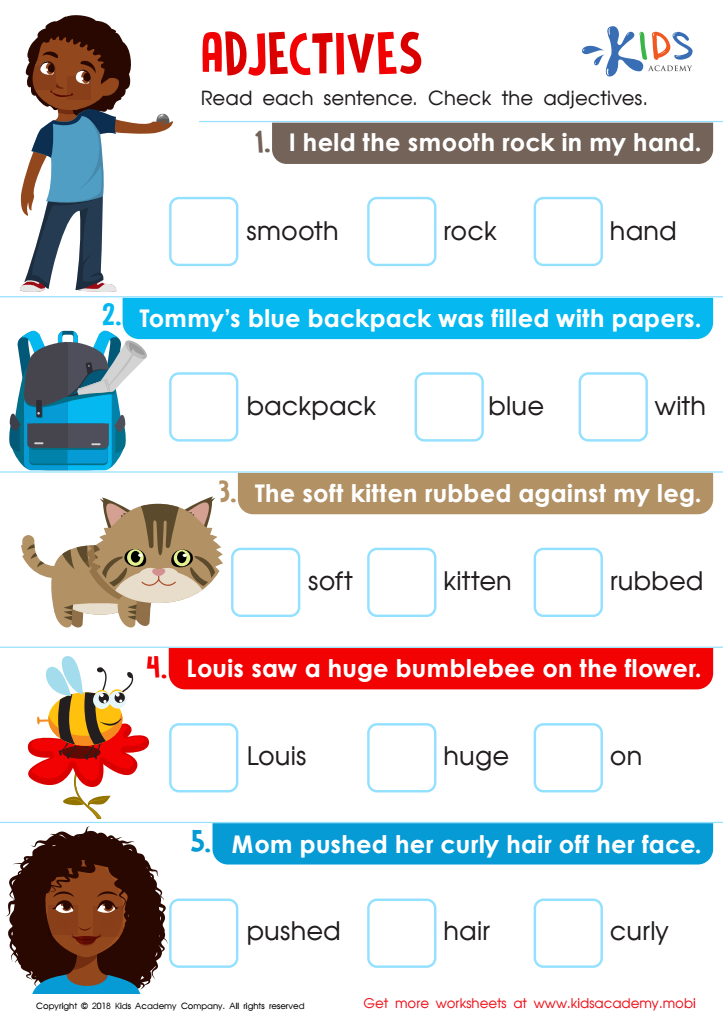
Adjectives Worksheet
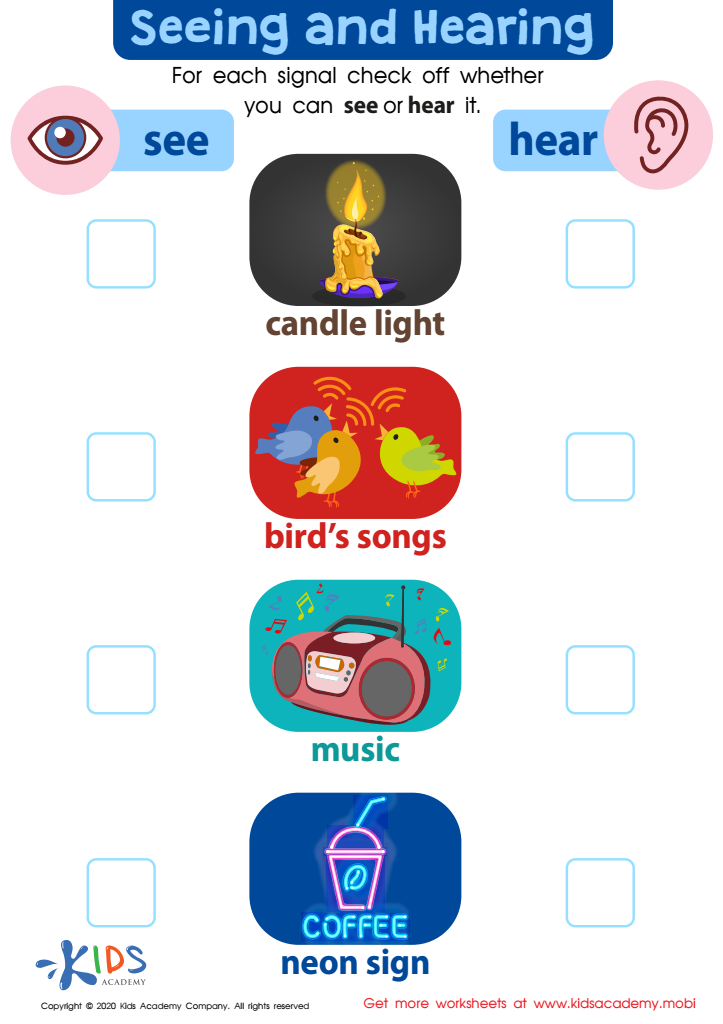
Seeing and Hearing Worksheet
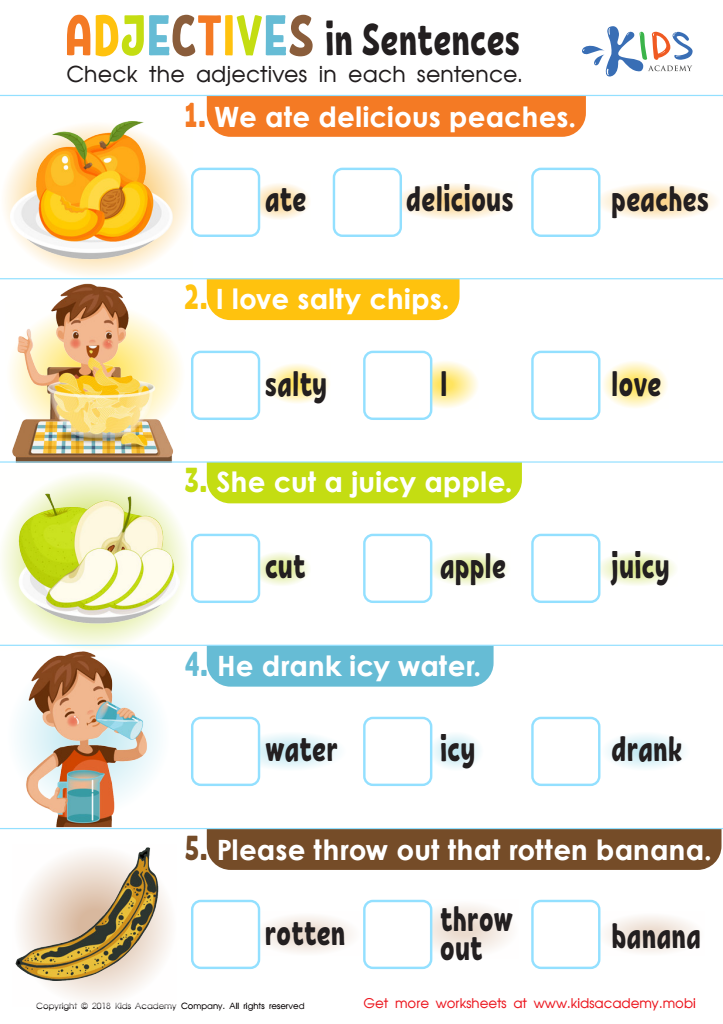
Adjectives in Sentences Worksheet








Understanding adjectives is crucial for children aged 7-9 because it significantly enhances their communication skills and academic performance. At this developmental stage, children are beginning to craft more complex sentences and express their thoughts in more detailed ways. Adjectives, which describe or modify nouns, are key to enriching their vocabulary and making their speech and writing more vivid and precise.
For example, instead of saying “I have a cat,” a child could say, “I have a fluffy, orange cat,” providing a clearer and more engaging picture. This not only helps in personal expression but fosters creative thinking and imagination.
Moreover, comprehension of adjectives aids in reading comprehension. When children encounter descriptive words in a text, their ability to visualize scenes and understand contexts improves, making reading a more enjoyable and fulfilling experience.
Teachers can leverage this understanding to enhance lesson plans, including descriptive writing and interactive activities that sharpen observational skills. Parents can reinforce these lessons at home by encouraging descriptive language in everyday conversations. By caring about and focusing on adjectives, both parents and teachers are setting the foundation for strong communication skills, which are essential for future academic success and personal development.








