Understanding economics Normal Worksheets for Ages 7-9
3 filtered results
-
From - To
Introducing "Understanding Economics Normal Worksheets for Ages 7-9" by Kids Academy! Our expertly designed worksheets simplify essential economic concepts for young learners, making education fun and engaging. Tailored for ages 7-9, these worksheets provide an interactive approach to understanding money, saving, spending, and the basics of financial decision-making. Our age-appropriate exercises encourage critical thinking, helping children grasp real-life economic principles early on. Perfect for classroom use or homeschooling, these printable resources ensure a strong foundation in economics while enhancing math and reasoning skills. Empower your kids with the knowledge they need for a brighter financial future!
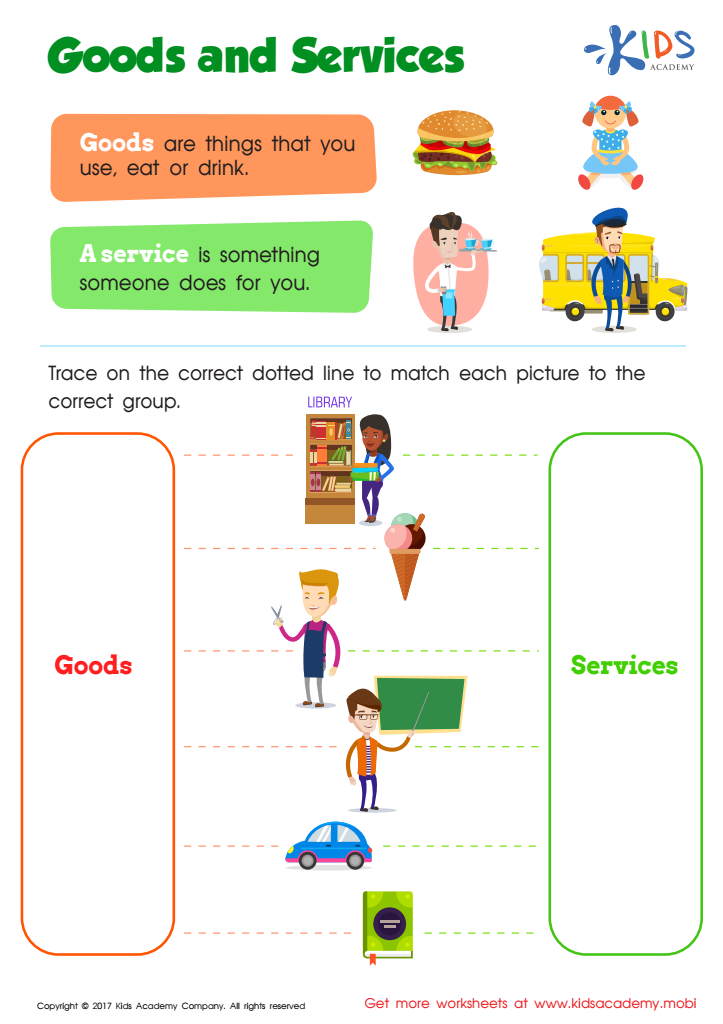
 Assign to My Students
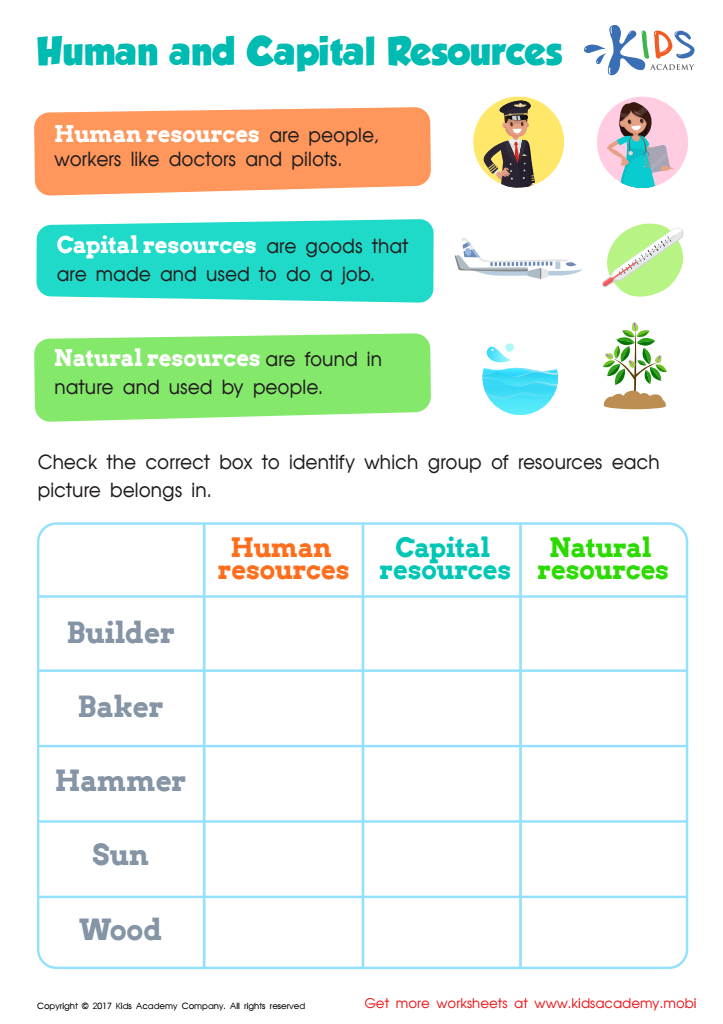
Human and Capital Resources Worksheet
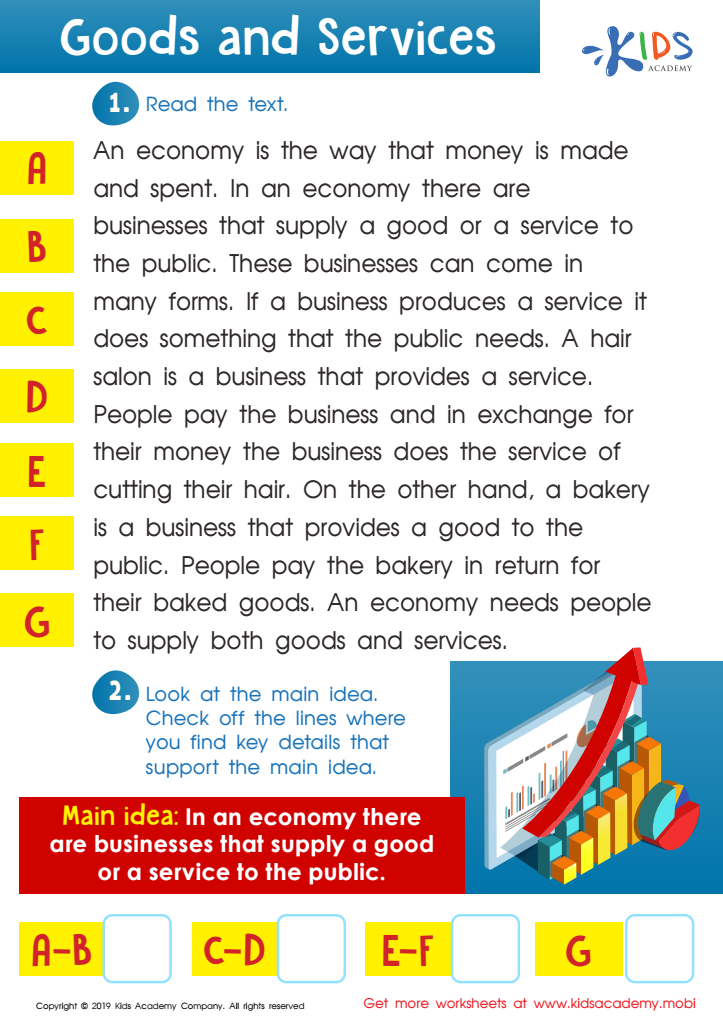
Goods and Services Worksheet








Understanding economics is essential for children aged 7-9 as it lays a foundational understanding of how the world works. First, learning basic economic concepts like saving, spending, and making choices helps kids develop critical life skills. They learn the importance of budgeting and making informed decisions, paving the way for financial responsibility in later years.
Moreover, introducing economics fosters a sense of relation between work and need fulfilment. Children who understand where money comes from—i.e., through work—and how it is used to meet needs and wants are likely to value hard work and discipline. This knowledge empowers them to appreciate resources and understand the consequences of waste.
Additionally, understanding economics contributes to critical thinking. Kids start making connections, such as how their choices affect themselves and others around them. For example, they grasp why they can’t have every toy they want, leading to better appreciation and decision-making about resources.
Furthermore, young minds exposed to these concepts are better prepared for more complex economic ideas they will encounter in higher education and real life. Finally, when parents and teachers work together to teach these principles, it fosters collaboration and mutual support, emphasizing the importance of community in personal growth and societal functioning.








