Mathematical reasoning Normal Numbers Worksheets for Ages 7-9
6 filtered results
Difficulty Level
Grade
Age
-
From - To
Subject
Activity
Standards
Boost your child's mathematical reasoning with our expertly designed Normal Numbers Worksheets tailored for ages 7-9. These engaging worksheets help young learners understand fundamental math concepts, develop strong numeracy skills, and build logical thinking. From basic arithmetic to pattern recognition, our content ensures your child stays ahead. Perfect for classroom or home use, our worksheets are an invaluable resource for educators and parents alike. Aligned with educational standards, they turn learning into an enjoyable adventure, encouraging confidence and curiosity in young minds. Unlock their potential with our comprehensive collection on Kids Academy!
Favorites
With answer key
Interactive
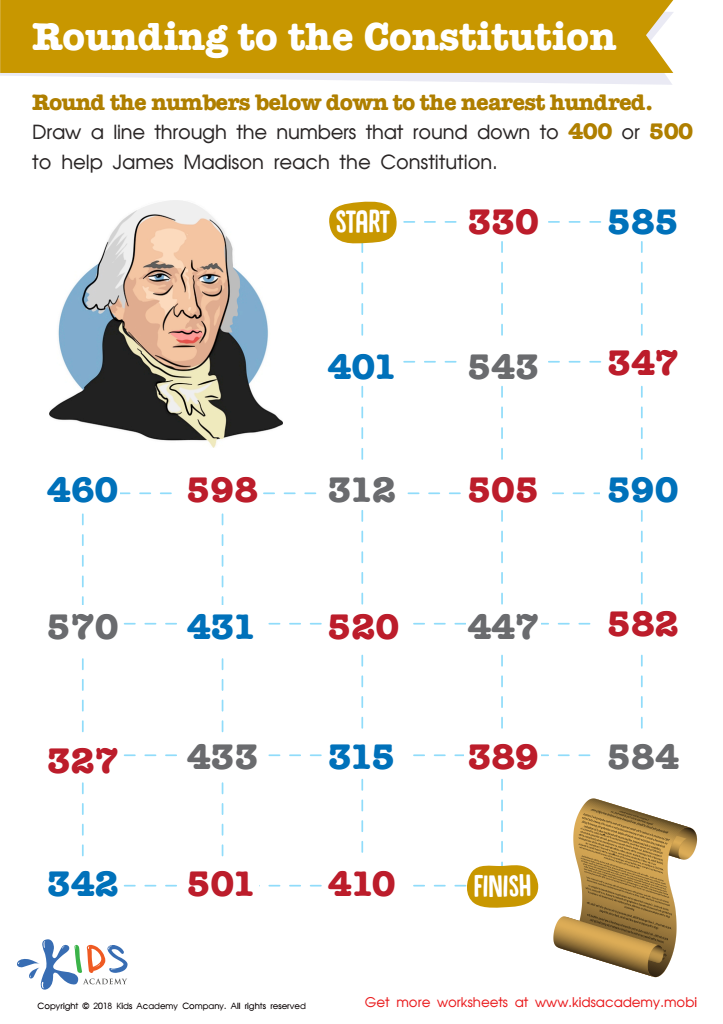
Rounding to the Constitution Worksheet
Before starting this traceable worksheet, ask your students: who is James Madison? If they know, you're doing great! If not, now's your chance to give a quick history lesson. Then, ask them to round the numbers to the nearest numbers. Get your students to draw a line through the numbers that round down to 400/500, to help James Madison reach the Constitution.
 Assign to My Students
Rounding to the Constitution Worksheet
Worksheet
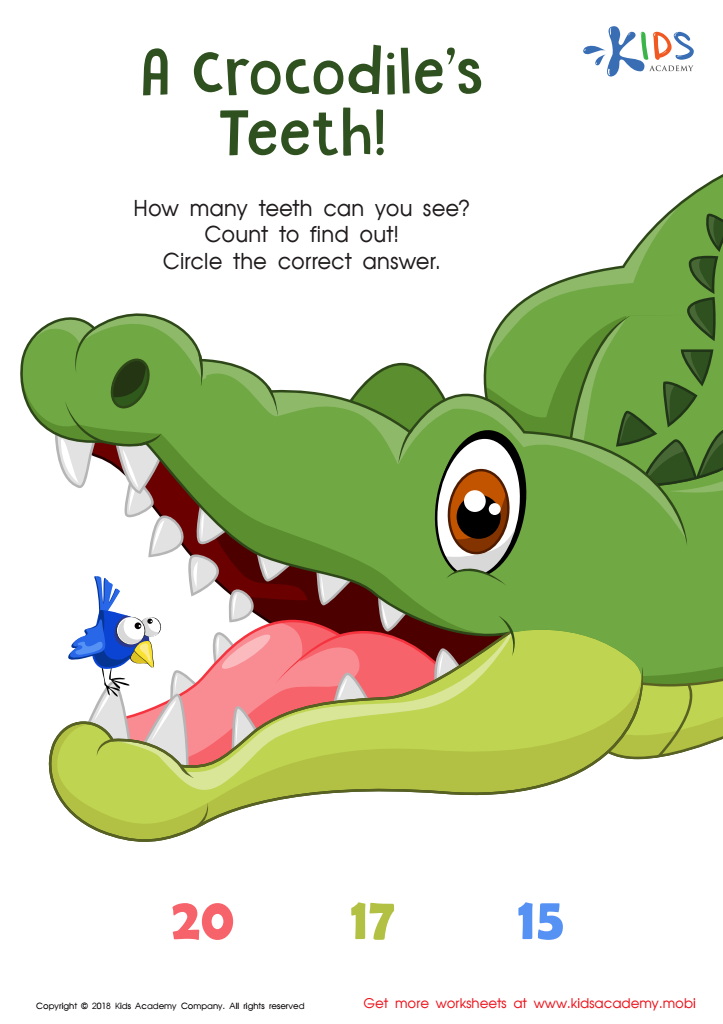
A Crocodile's Teeth Worksheet
Show your child the animal image and ask them to identify it. If they watch animal shows, they'll likely be interested. Count the teeth together, then look at the options and help them circle the right one.
A Crocodile's Teeth Worksheet
Worksheet
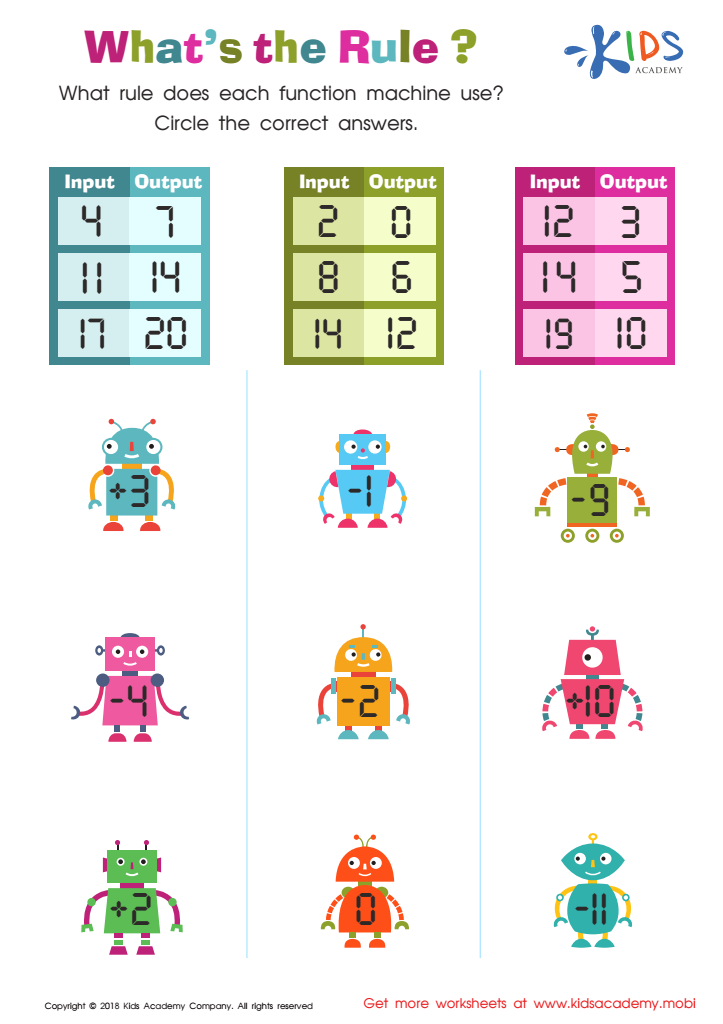
What's the Rule Worksheet
Robots are here to help your child find the relationship between each set of numbers! Adorably illustrated worksheets use vivid pictures that each contain a rule. Look at each function machine and find the pattern or relationship between the input and output. Then, complete the sheet by circling the correct answer!
What's the Rule Worksheet
Worksheet
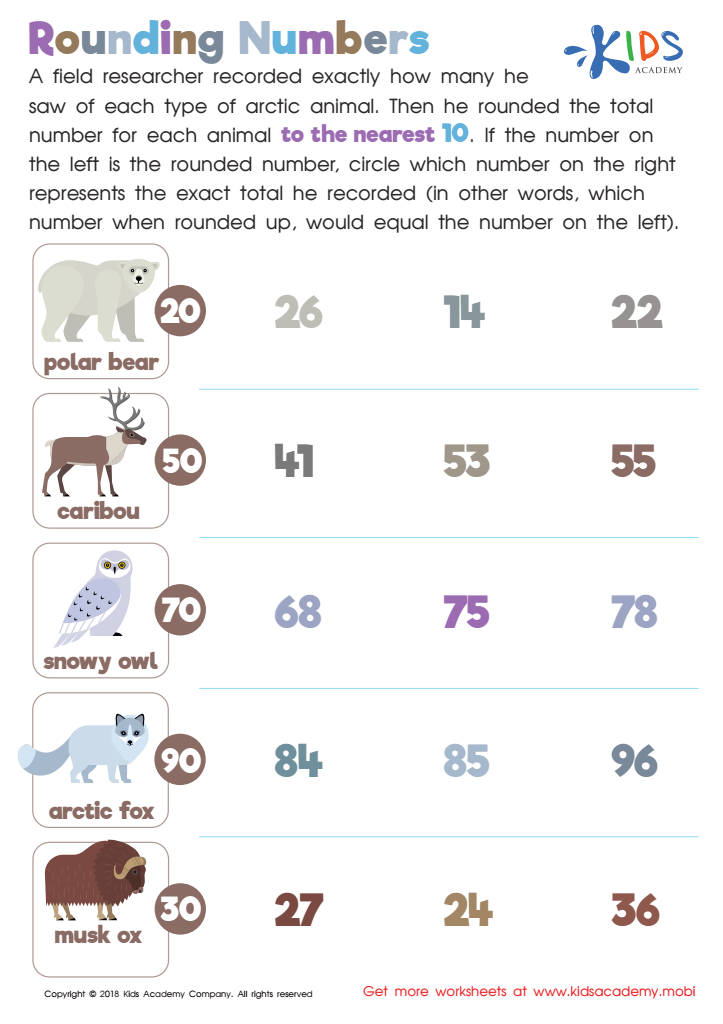
Rounding Numbers Worksheet
Take a trip north with this cute rounding math worksheet! Perfect for mastering number work, it adds a twist to the usual rounding practice. Help your child by getting them to view each animal picture to find the exact total of the rounded number. Then, look at the numbers on the right to determine what number was used to create the rounded total.
Rounding Numbers Worksheet
Worksheet
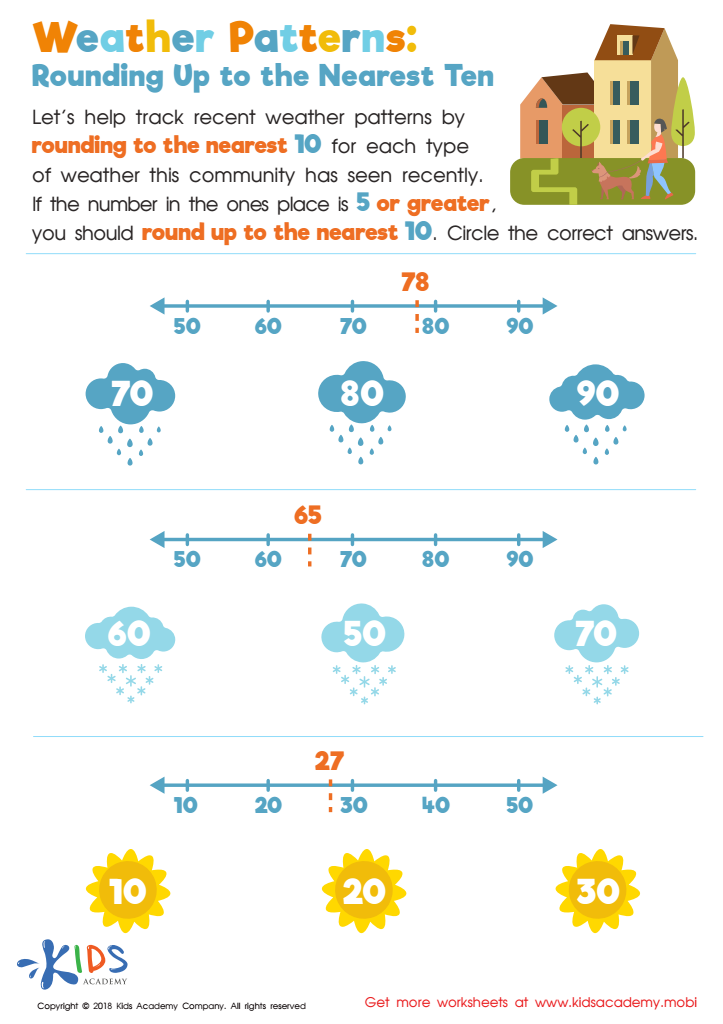
Weather Patterns Worksheet
Use this Weather Patterns worksheet to help your kids develop their mathematical skills. Get them to round the recent weather patterns to the nearest 10 and round up if the number in the ones place is 5 or higher. Work with them to figure out which answers are correct and get them to circle them.
Weather Patterns Worksheet
Worksheet
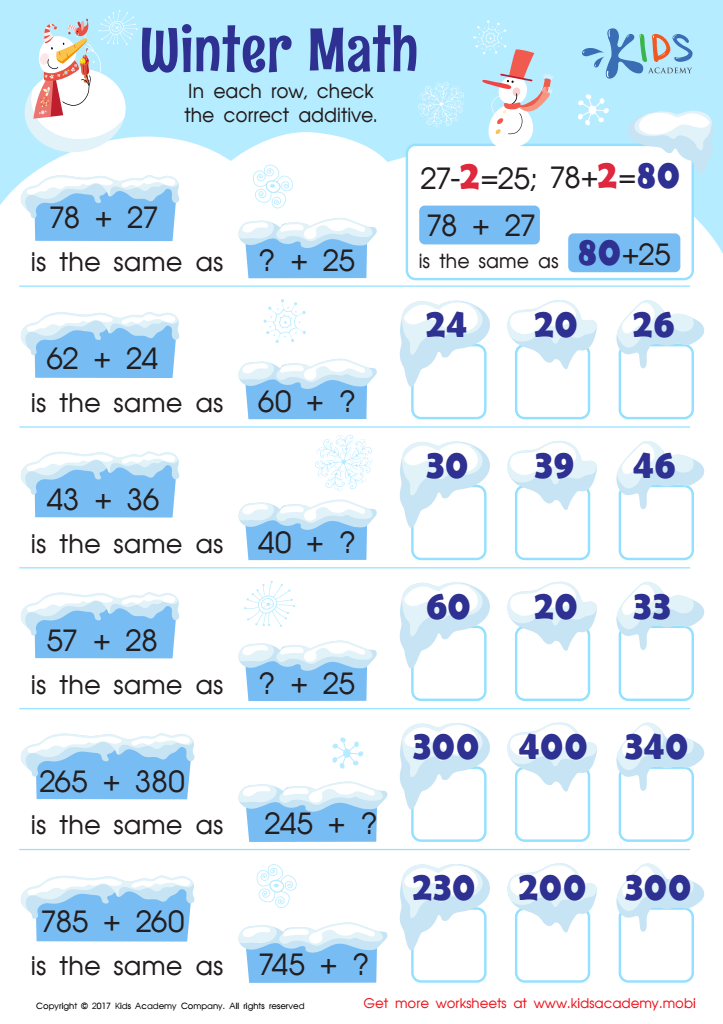
Free Addition Worksheet
Perfect for a wintry day, challenge your 3rd grader to compare addition equations and fill in the missing numbers in the PDF.
This winter-themed worksheet is sure to bring a smile while your 3rd grader practices their addition skills. Perfect for a blustery day, challenge your child to compare addition equations and complete the missing numbers in the PDF.
Free Addition Worksheet
Worksheet
Join Kids Academy for Free
Who is primarily going to use this learning content?








Mathematical reasoning forms the cornerstone of a child's cognitive development, especially for children aged 7 to 9. This crucial educational stage is when children transition from simple arithmetic to more complex concepts that require logical thinking and problem-solving skills. Normal numbers, including basic arithmetic operations, cardinality, and place value, serve as foundational elements in this developmental phase.
For parents and teachers, fostering mathematical reasoning skills means more than just helping children solve equations; it's about nurturing their ability to identify patterns, make inferences, and approach problems systematically. This kind of reasoning is not only fundamental for future success in more advanced mathematics but also for everyday decision-making and critical thinking skills.
To illustrate, consider a scenario where a child learns to understand the concept of place value. This understanding allows them to comprehend the difference between numbers such as 14 and 41, which is essential for accurate computation. Moreover, such skills promote confidence and enjoyment in learning, assuaging math anxiety that may develop later on.
In essence, attention to mathematical reasoning at this formative stage can pave the way for a lifelong appreciation of mathematics, equip children with vital 21st-century skills, and provide them with the tools they need to navigate an increasingly complex world.