Multiplication practice Normal Multiplication Worksheets for Ages 7-9 - Page 2
26 filtered results
-
From - To
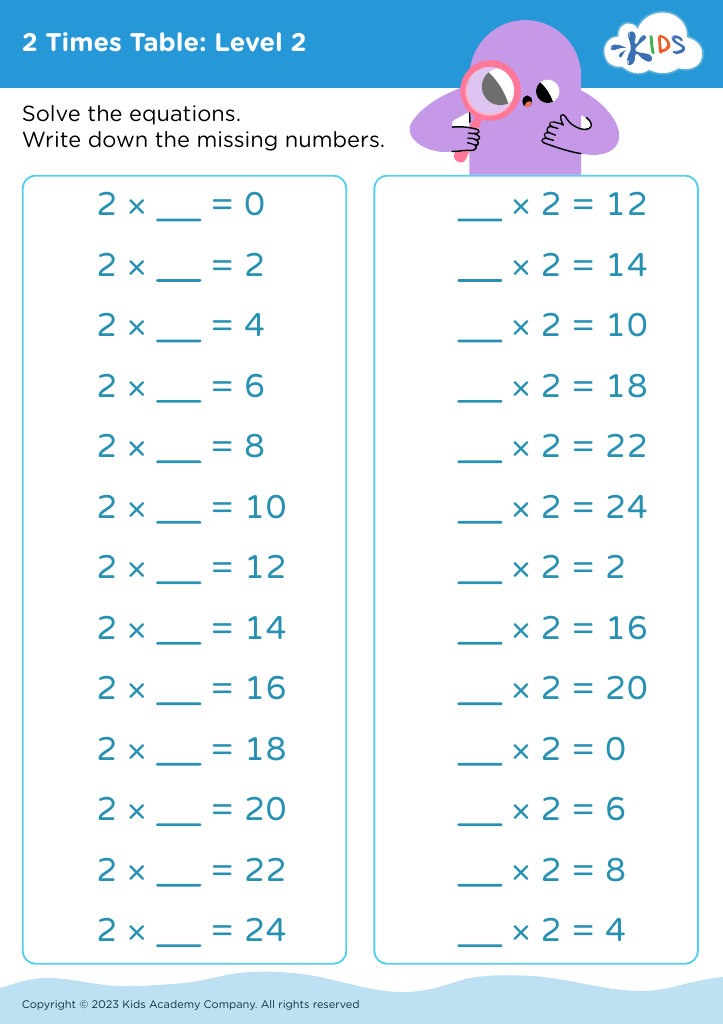
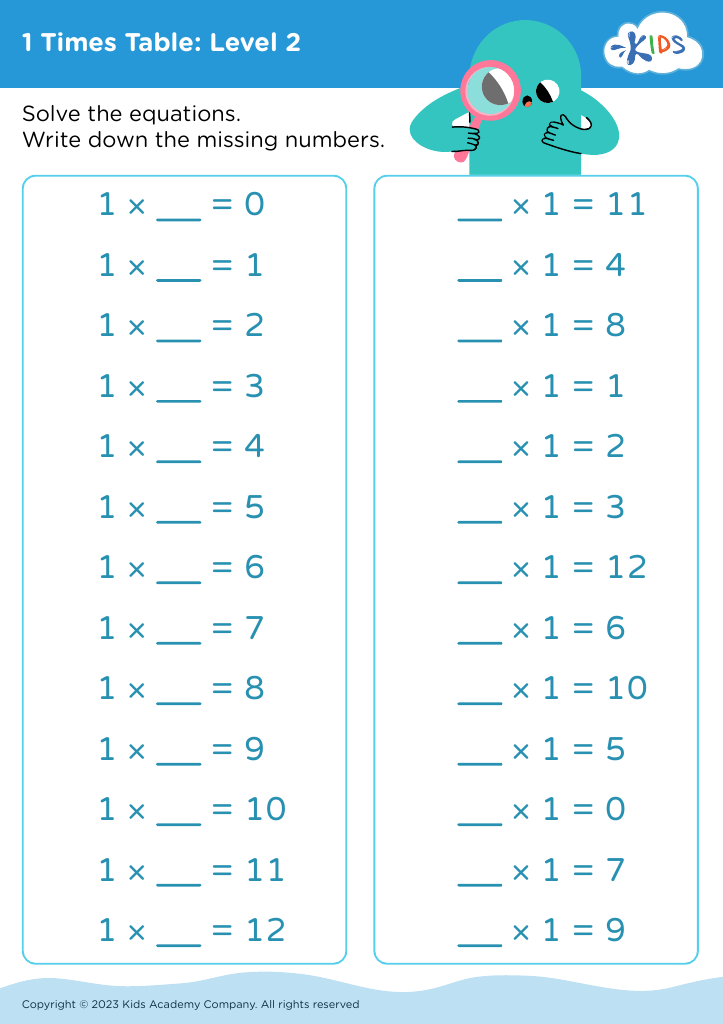








Parents and teachers should prioritize multiplication practice for children aged 7-9 for several crucial reasons. At this age, pupils are typically transitioning from basic arithmetic to more complex mathematical concepts. Mastery of multiplication lays a strong foundation for future math skills, including division, fractions, and higher-level problem-solving. Proficient multiplication skills contribute to increased confidence in math, encouraging students to embrace challenges and develop a positive attitude toward the subject.
Additionally, multiplication is not just a standalone skill; it is interconnected with various real-life applications, such as budgeting, telling time, and understanding basic statistics. Strengthening these skills allows children to engage more meaningfully in everyday tasks and enhances their analytical thinking.
Moreover, early mastery of multiplication can lead to improved academic performance across other subjects, as mathematical thinking also supports reading comprehension, logical reasoning, and spatial awareness. Encouraging consistent multiplication practice through games and engaging exercises can make learning enjoyable and effective, catering to various learning styles.
In conclusion, investing time and effort into multiplication practice during these formative years sets children on a successful educational path, equipping them with essential skills that will benefit them throughout their academic careers and beyond.








