Animal identification Normal Reading Worksheets for Ages 7-9
4 filtered results
-
From - To
Explore our engaging Animal Identification Normal Reading Worksheets designed for children aged 7-9! These worksheets foster critical reading skills while captivating young minds with exciting content about various animals. Students will enhance their reading comprehension through interesting passages and interactive exercises that emphasize identification, characteristics, and habitats of animals. Perfect for classroom use or at-home learning, these resources encourage curiosity about the natural world while improving literacy skills. With visually appealing illustrations and age-appropriate language, our worksheets are both educational and fun. Dive into a world of animals and help your child develop a lifelong love for reading today!
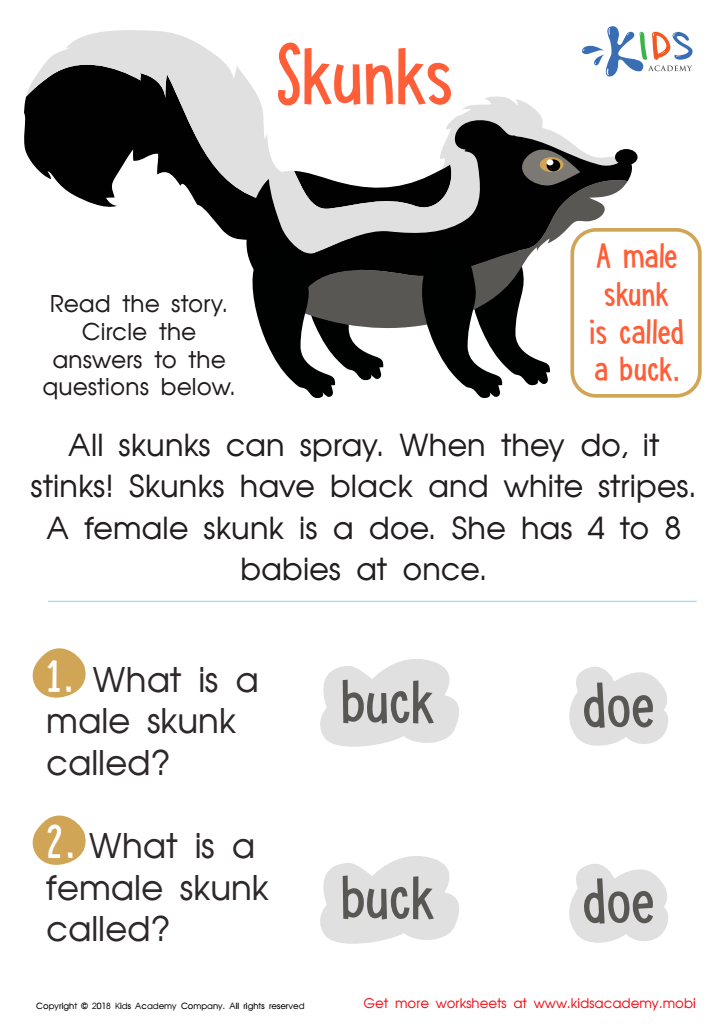
Skunks Worksheet
 Assign to My Students
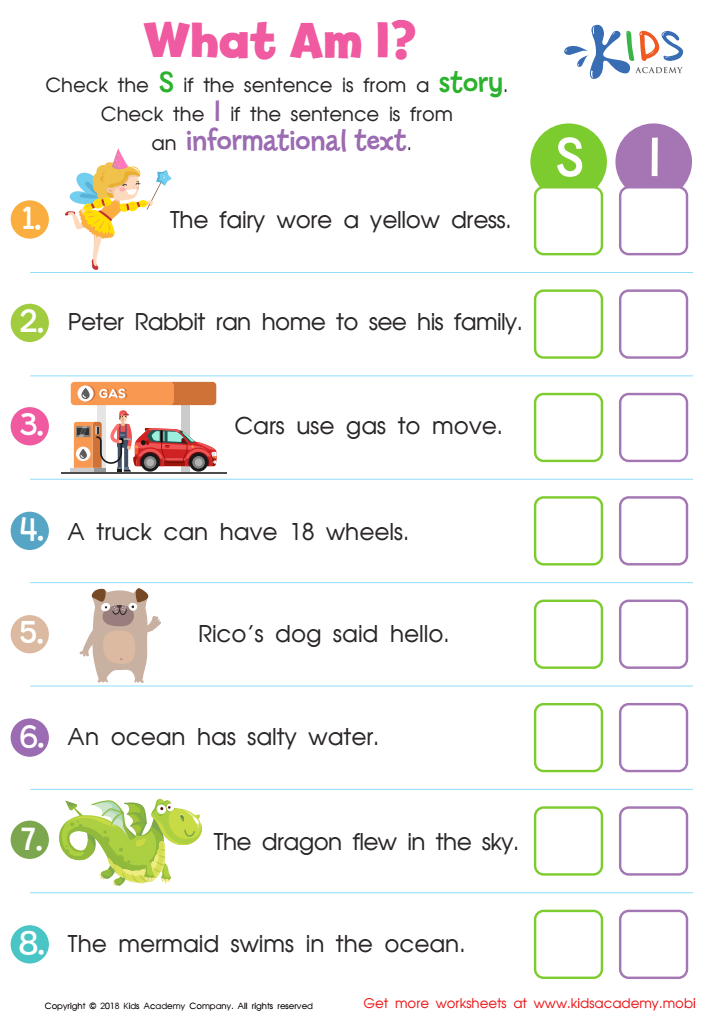
What Am I? Worksheet
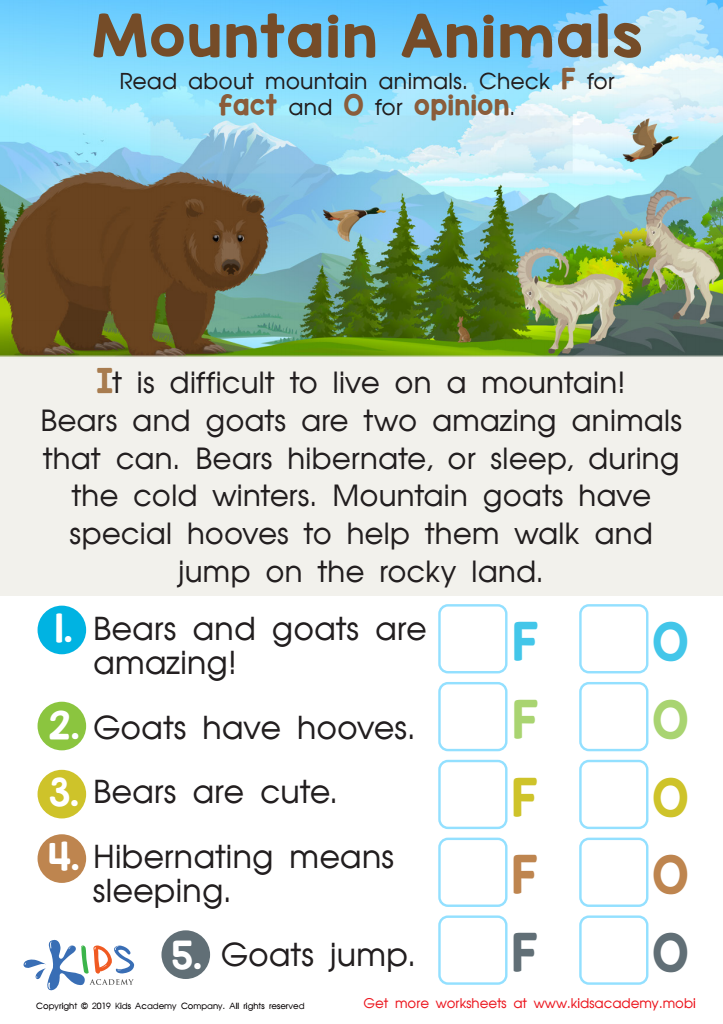
Mountain Animals Worksheet
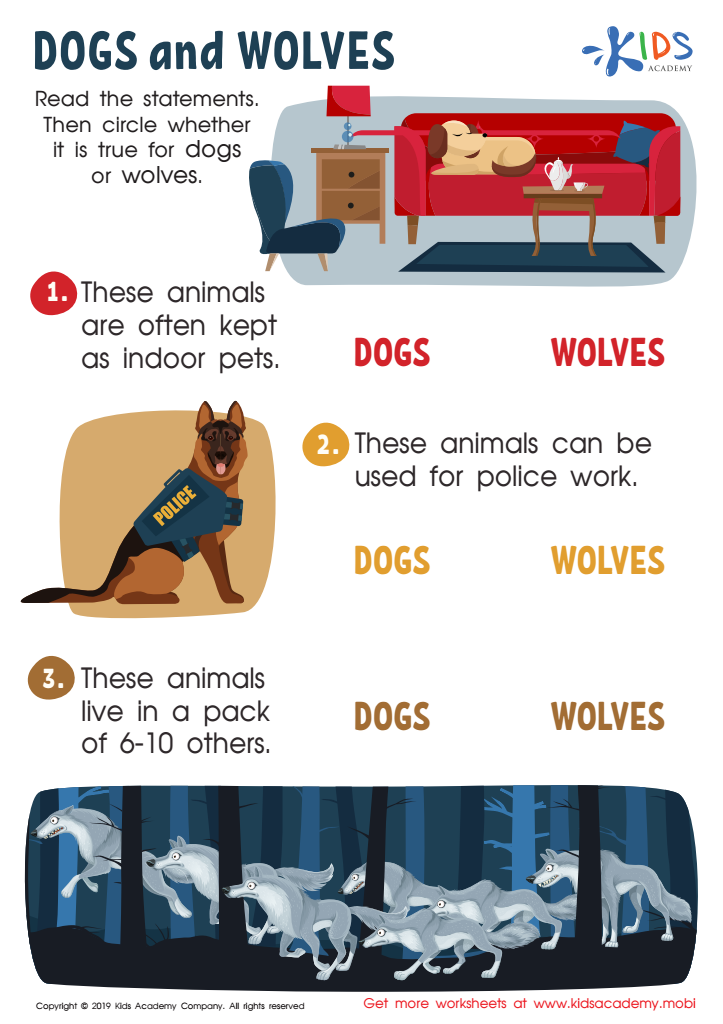
Dogs and Wolves Worksheet








Animal identification is an exciting and important topic for children aged 7-9. Understanding how to identify different animals helps children develop a sense of curiosity about the world around them. When parents and teachers engage children in this learning process, they foster a sense of wonder and a connection to nature.
Learning about animal identification promotes observation skills and critical thinking. For instance, children learn to notice distinguishing features—such as size, color, and behavior—helping them become more attentive to details in their environment. This not only applies to animals but also enhances their overall observational skills, which are crucial in subjects like science and mathematics.
Additionally, recognizing different species instills a sense of responsibility for our planet and its inhabitants. Awareness of the diversity of life can encourage empathy and respect for all living beings. This understanding may even inspire children to pursue interests in wildlife conservation or veterinary science as they grow.
Furthermore, engaging in activities like viewing local wildlife or collaborating on a classroom project about animal habitats can enhance social skills and promote teamwork. By emphasizing the importance of animal identification, parents and teachers set the stage for lifelong learning and appreciation of the natural world.








