Contextual understanding Normal Reading Worksheets for Ages 7-9
5 filtered results
-
From - To
Enhance your child's reading skills with our Contextual Understanding Normal Reading Worksheets designed specifically for ages 7-9. These engaging worksheets foster comprehension by encouraging students to draw connections between the text and real-life scenarios. Each activity is crafted to challenge young readers to think critically and infer meaning from context, aiding in vocabulary expansion and sentence comprehension. Interactive and varied, our worksheets keep learning fun and relevant, making reading an enjoyable experience. Ideal for classroom settings or at-home learning, these resources empower children to become confident readers equipped with essential skills for future success. Explore our collection today!
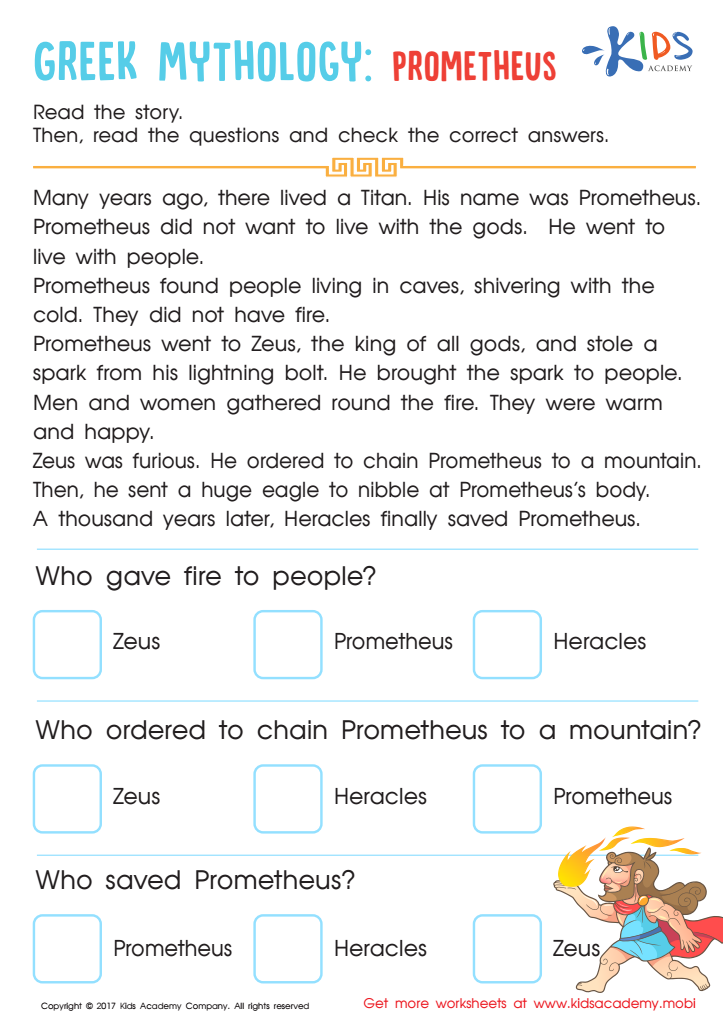
Prometheus Story Worksheet
 Assign to My Students
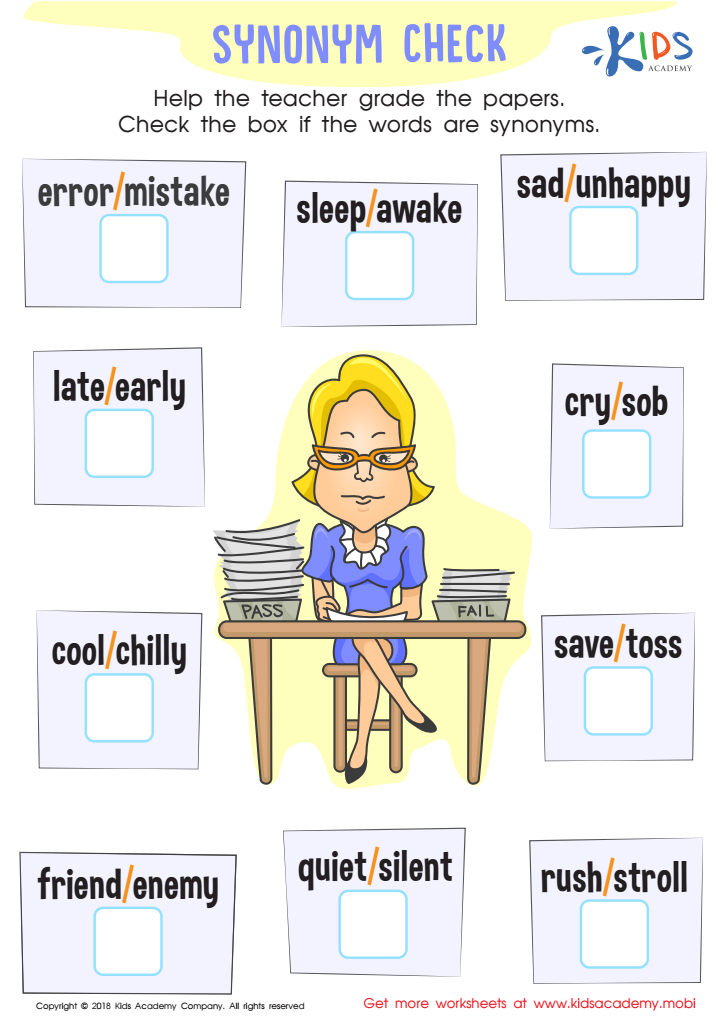
Synonym Check Worksheet
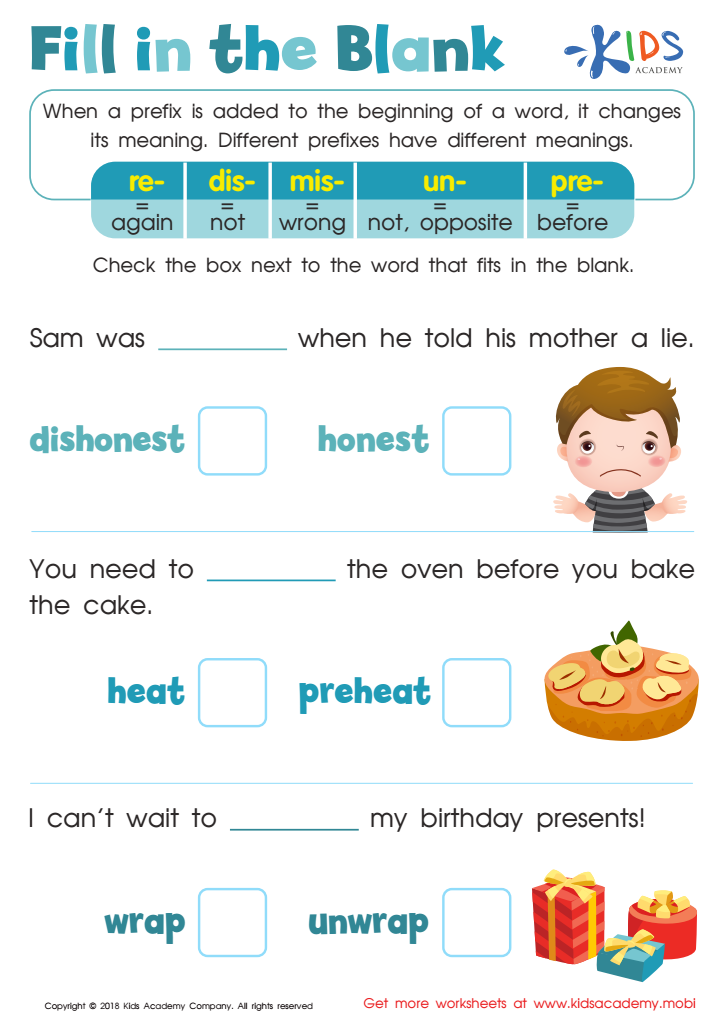
Reading: Fill in the Blank Worksheet
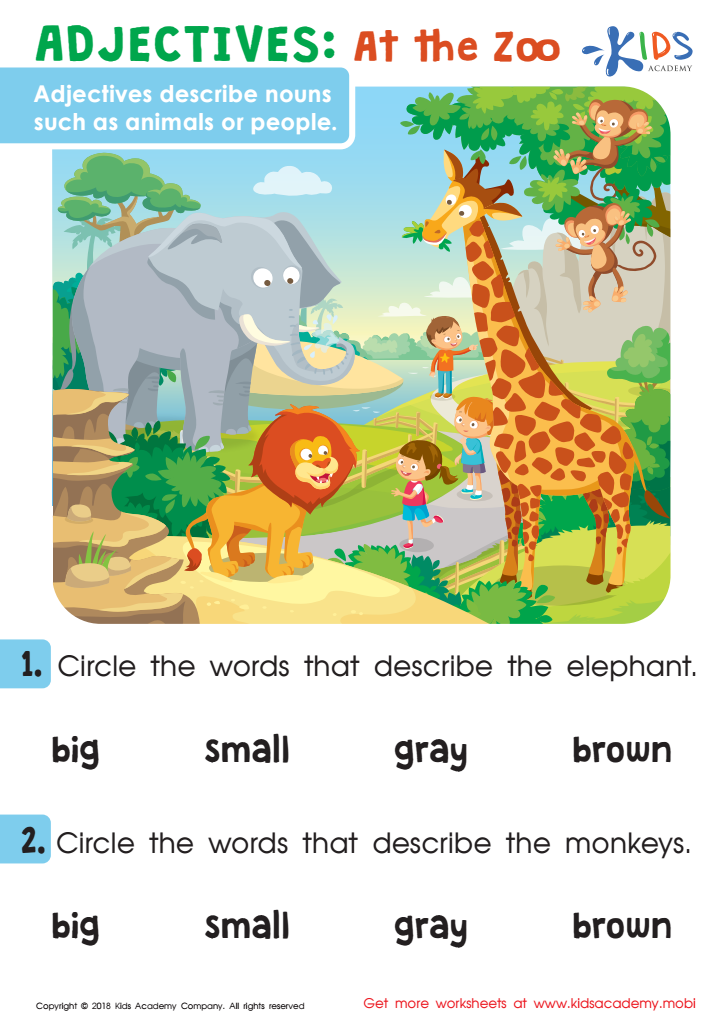
Adjectives: At The Zoo Worksheet
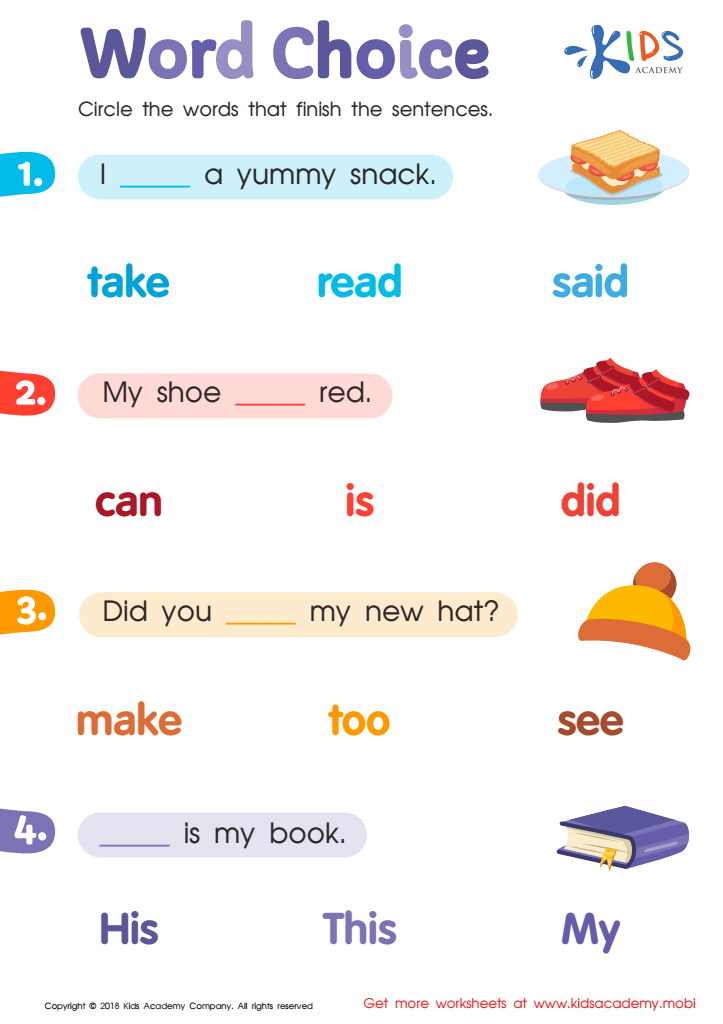
Word Choice Worksheet








Contextual understanding in reading is crucial for children aged 7-9, as it plays a significant role in their overall literacy development. For parents and teachers, fostering this skill transforms mere decoding of words into meaningful comprehension of texts. When kids understand the context behind words and sentences, they are better equipped to grasp themes, infer meanings, and engage with the material in a deeper way.
At this age, children are naturally curious and eager to connect stories with their own experiences. Contextual understanding allows them to relate characters’ emotions, settings, and actions to their personal lives, enhancing their engagement with the text. This connection not only motivates them to read more but bolsters their critical thinking skills.
Additionally, as they navigate complex narratives and diverse genres, children learn to identify various tones and perspectives. Teachers and parents can nurture this by encouraging discussion about the context, asking open-ended questions, and promoting connections to real-life situations or emotions. Ultimately, prioritizing contextual understanding helps develop confident, capable readers who can tackle increasingly complex materials while fostering a lifelong love for learning and literature.








