Identifying story elements Normal Reading Worksheets for Ages 7-9
3 filtered results
-
From - To
Explore our engaging "Identifying Story Elements" Normal Reading Worksheets for children aged 7-9! These printable resources are designed to enhance young readers' comprehension skills by focusing on essential story elements such as characters, setting, plot, conflict, and resolution. With a variety of fun and interactive activities, students will learn to recognize and analyze the components that make up a story. Perfect for home or classroom use, these worksheets empower kids to become confident readers and critical thinkers. Foster a love for literature and storytelling while developing essential reading skills with our thoughtfully crafted worksheets! Download now to inspire young minds!
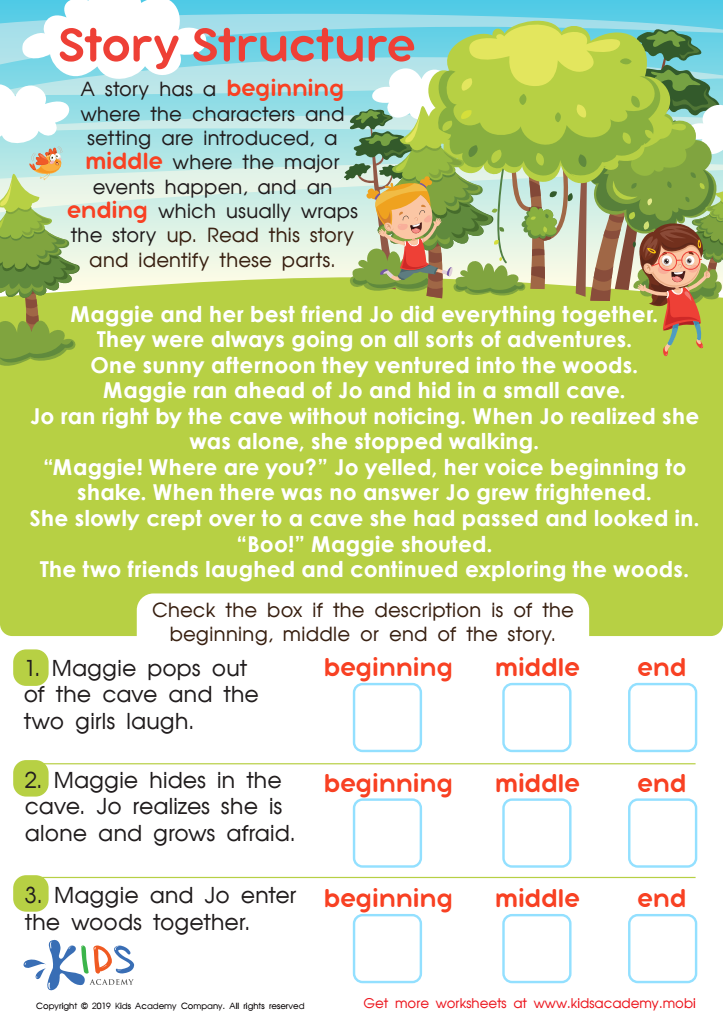
Story Structure Worksheet
 Assign to My Students
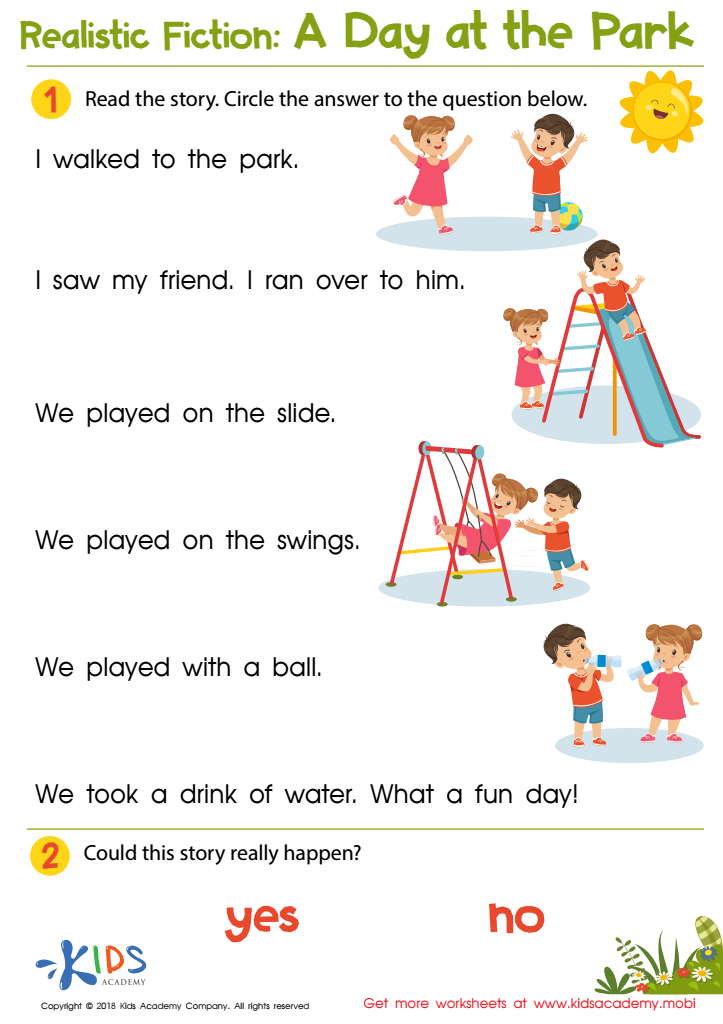
A Day at the Park Worksheet
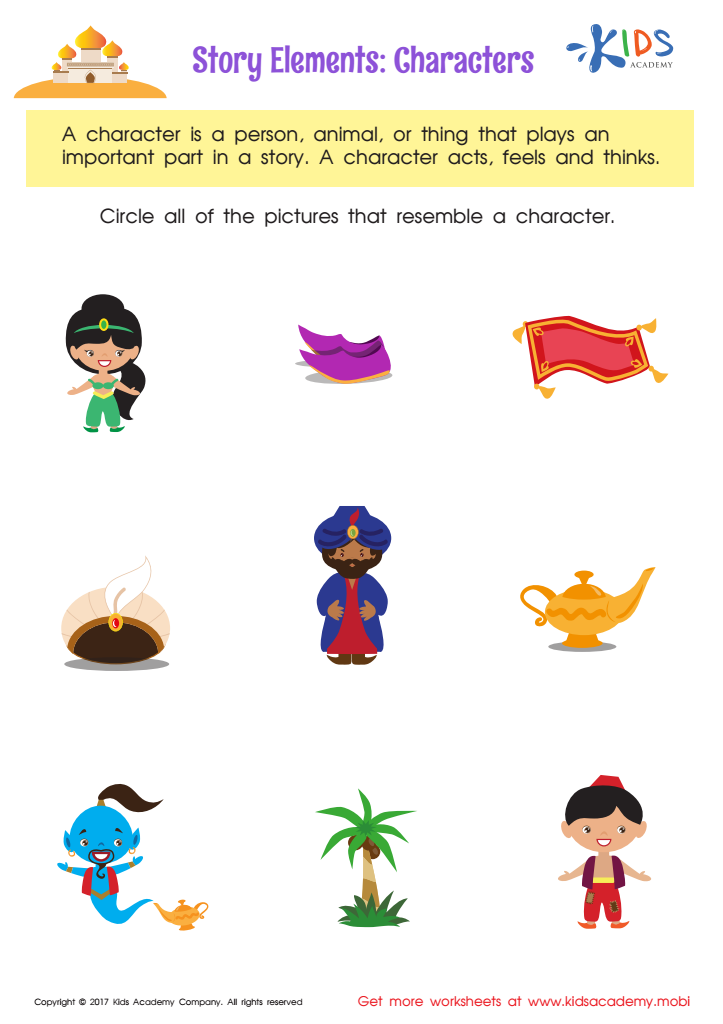
Story Elements Printable






Identifying story elements is crucial for young readers aged 7-9 as it significantly enhances their comprehension and engages their critical thinking skills. Parents and teachers should prioritize this activity because understanding fundamental elements such as characters, setting, plot, conflict, and resolution sets a strong foundation for literacy. By recognizing these components, children can dissect texts, leading to deeper insights and connections with the material.
Additionally, grasping story elements encourages creativity and imagination, allowing kids to craft their own narratives by applying similar structures. This practice not only boosts their writing skills but also enhances their ability to communicate effectively.
Furthermore, the ability to discuss and analyze story elements fosters collaborative learning. When children share their thoughts with peers or adults, they expand their vocabulary and develop social skills, while also cultivating a love for reading and storytelling.
Lastly, this knowledge helps young readers transfer skills to different genres and subjects, creating a lifelong affinity for literature. For all these reasons, recognizing and teaching story elements should be a priority for parents and teachers alike, facilitating a richer educational experience during these vital developmental years.








