Moral understanding Normal Reading Worksheets for Ages 7-9
5 filtered results
-
From - To
Explore our engaging Moral Understanding Normal Reading Worksheets designed specifically for children aged 7-9. These worksheets promote critical thinking and empathy by encouraging kids to explore moral themes through relatable stories and scenarios. By analyzing characters' actions and choices, children will develop a deeper understanding of right and wrong, enhancing their social-emotional skills. Each worksheet is crafted to stimulate thought-provoking discussions and inspire personal reflection, making learning both fun and meaningful. Ideal for reinforcing lessons at home or in the classroom, these resources are essential for nurturing compassionate, conscientious children. Download and start fostering moral understanding today!
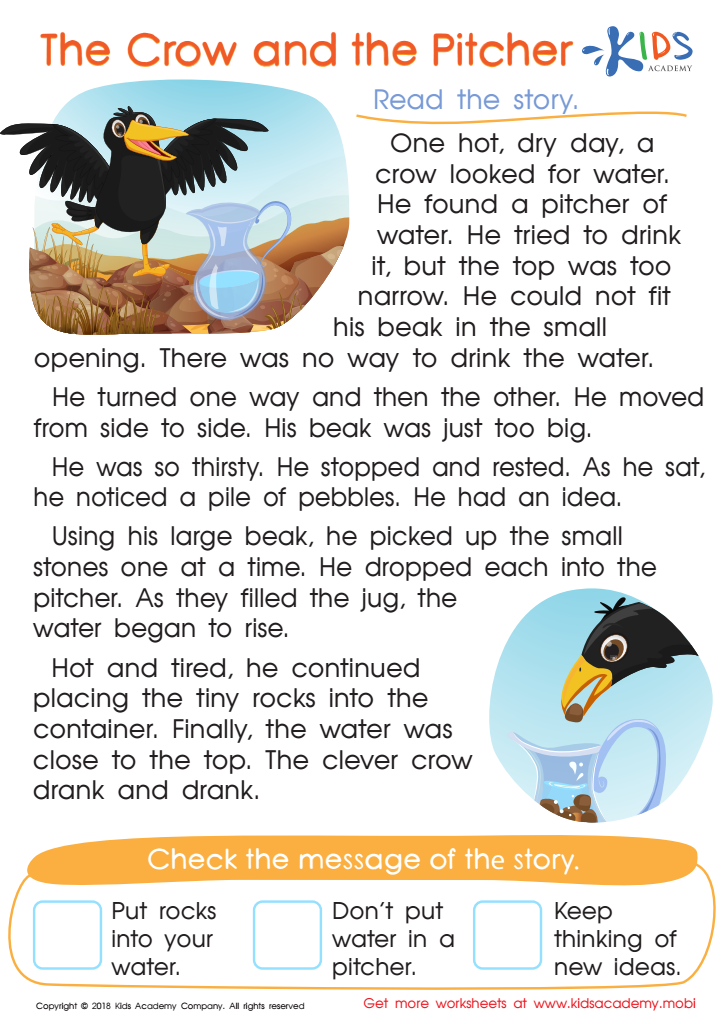
The Crow and the Pitcher Worksheet
 Assign to My Students
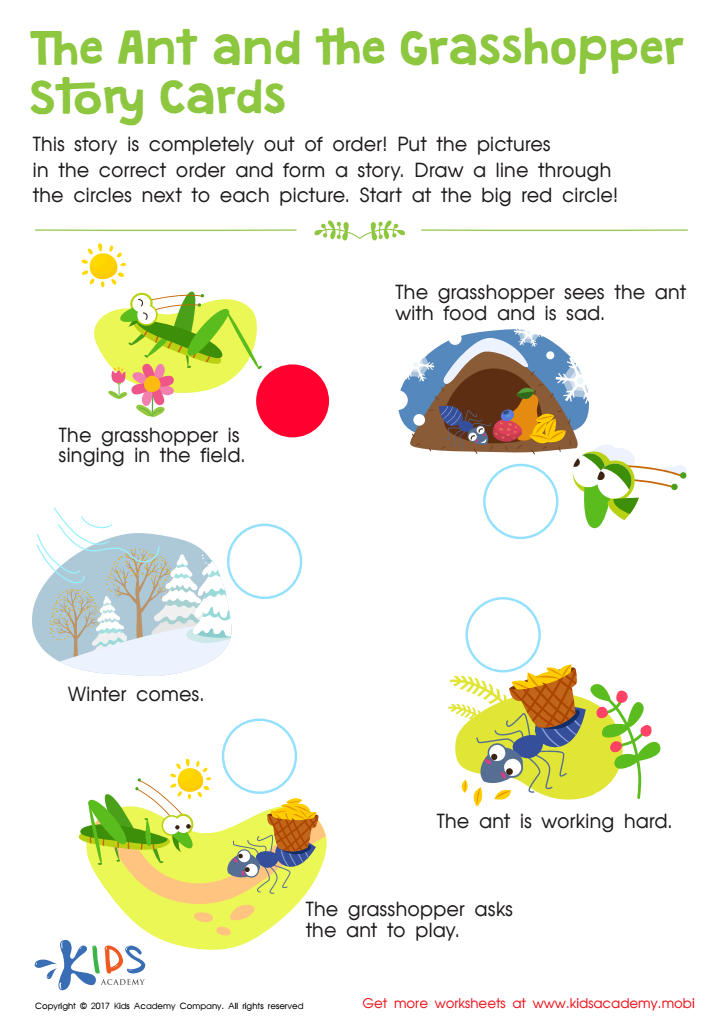
The Ant and The Grasshopper Worksheet
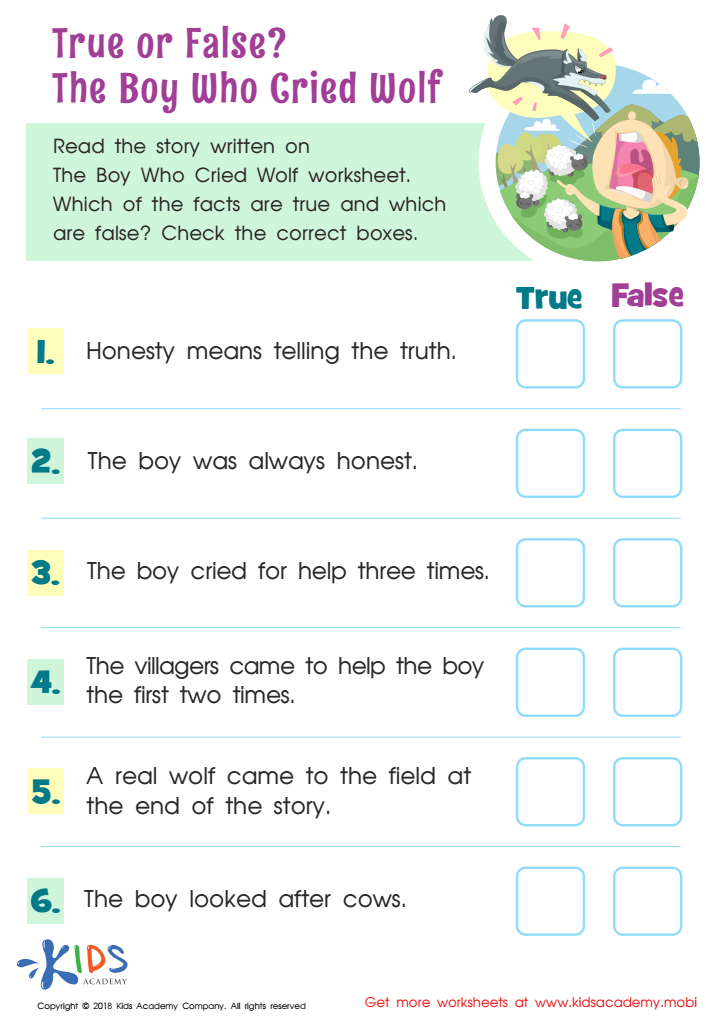
True or False? The Boy Who Cried Wolf Worksheet
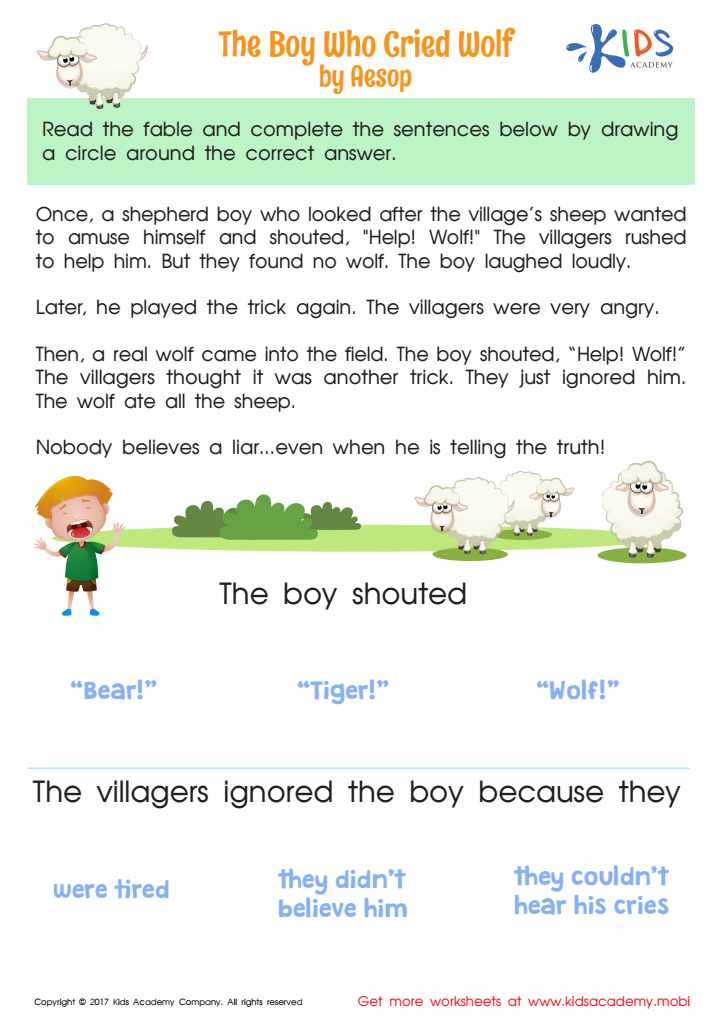
The Boy Who Cried Wolf Worksheet
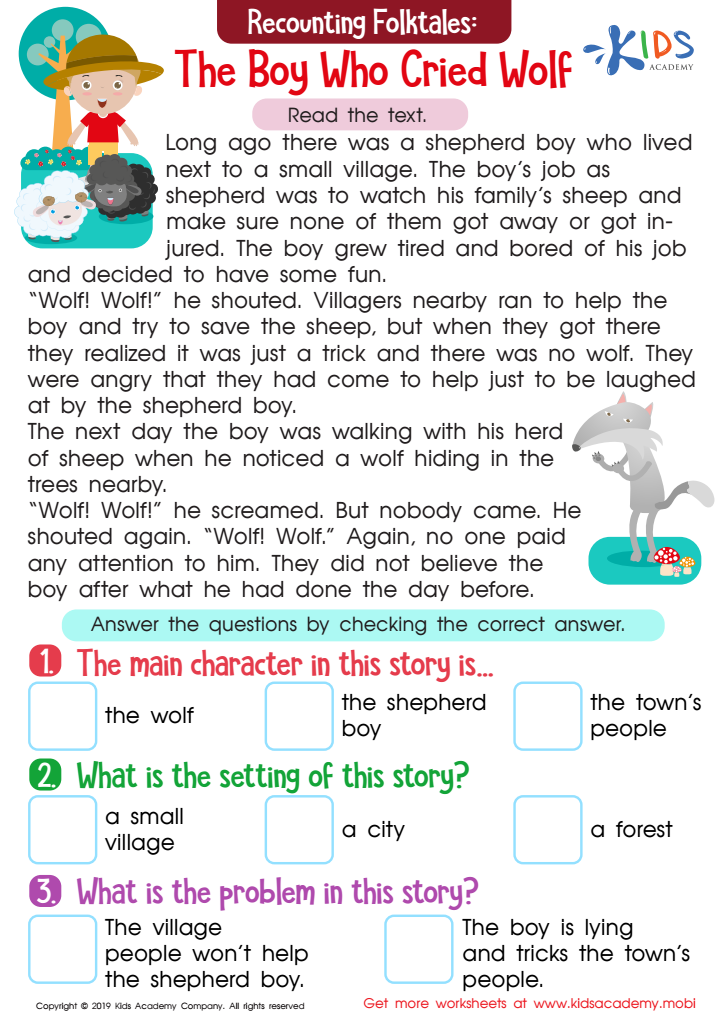
The Boy Who Cried Wolf Part 1 Worksheet







Moral understanding is essential for children aged 7-9 as it lays the foundation for their social interactions and decision-making. At this critical stage, children are developing their sense of right and wrong. Parents and teachers play a key role in guiding them through this process by fostering an environment where moral values, empathy, and kindness are emphasized.
Reading stories with moral lessons helps children analyze characters’ choices, understand consequences, and recognize diverse perspectives. Engaging discussions about these stories can enhance critical thinking and promote reflective skills, enabling children to form their own moral compass.
Furthermore, moral understanding contributes to improving behavior in social groups, reducing bullying, and enhancing cooperation among peers. When children comprehend and empathize with the feelings of others, they are more likely to build strong, respectful relationships.
This understanding is also linked to academic success; children with strong moral foundations often display greater motivation and engagement in learning. Ultimately, nurturing moral understanding in young learners not only shapes them into responsible citizens but also creates a more compassionate and cohesive community. Thus, parents and teachers should prioritize it in their educational efforts.








