Historical Knowledge Normal Reading Comprehension Worksheets for Ages 7-9
5 filtered results
-
From - To
Discover our engaging Historical Knowledge Normal Reading Comprehension Worksheets designed specifically for children ages 7-9. These worksheets combine history with reading skills, making learning fun and interactive! Through age-appropriate texts, young readers will explore significant historical events, figures, and concepts, enhancing their comprehension and critical thinking skills. Each worksheet encourages curiosity and promotes discussions about history while seamlessly integrating reading practice. Perfect for the classroom or at-home learning, our resources support educators and parents in nurturing a child's understanding of the past. Boost your child's literacy and historical knowledge today with our thoughtfully crafted activities!
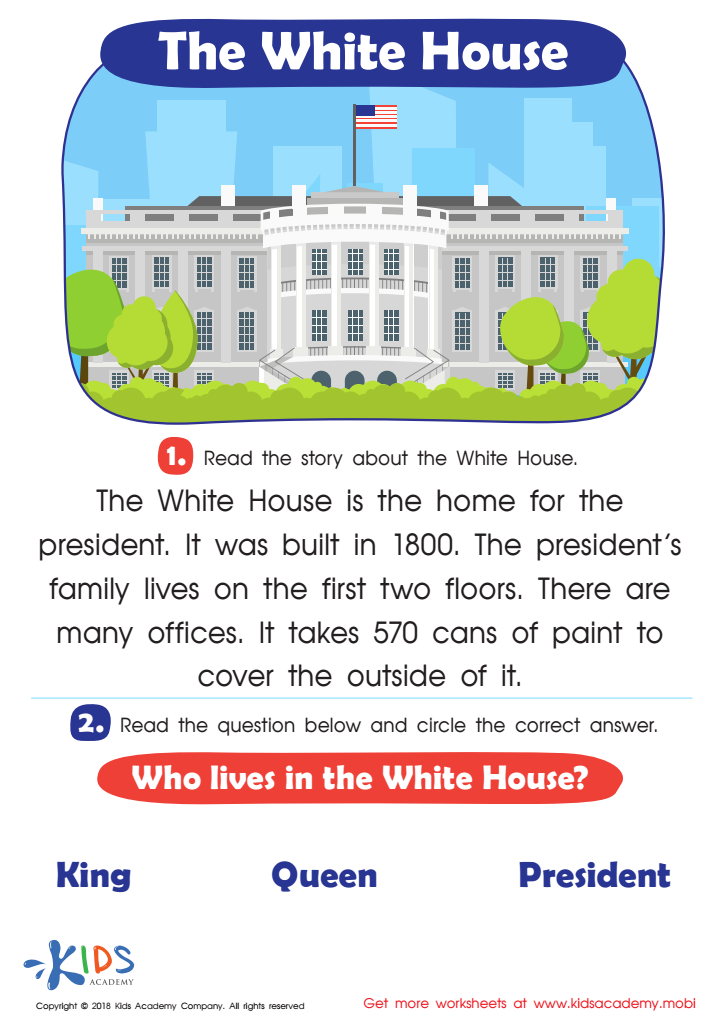
White House Worksheet
 Assign to My Students
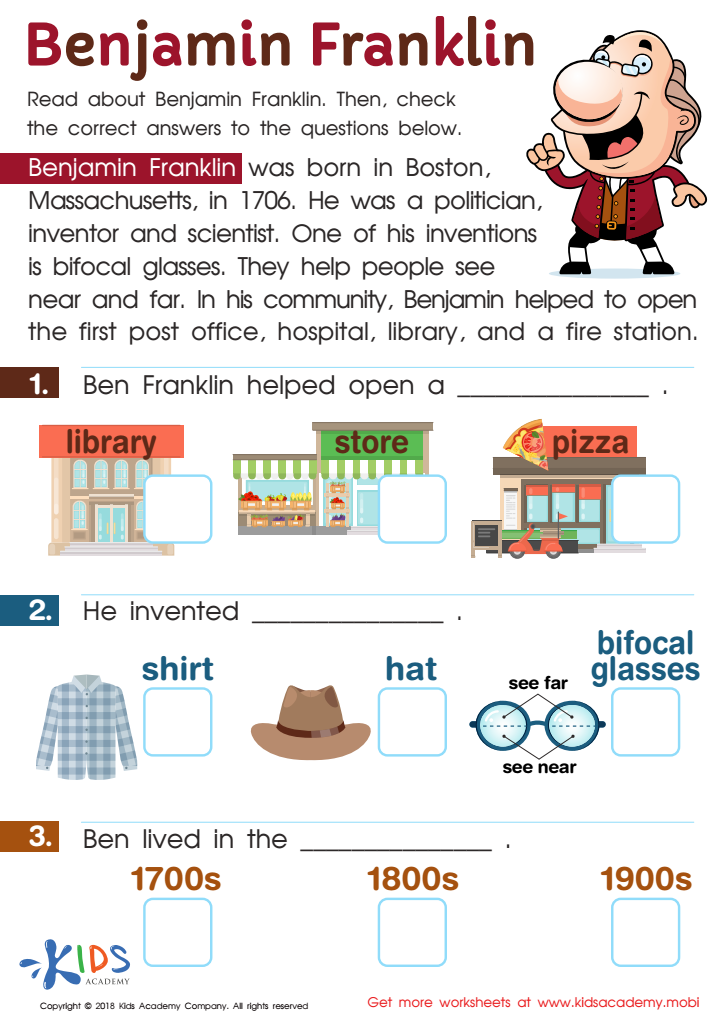
Benjamin Franklin Worksheet
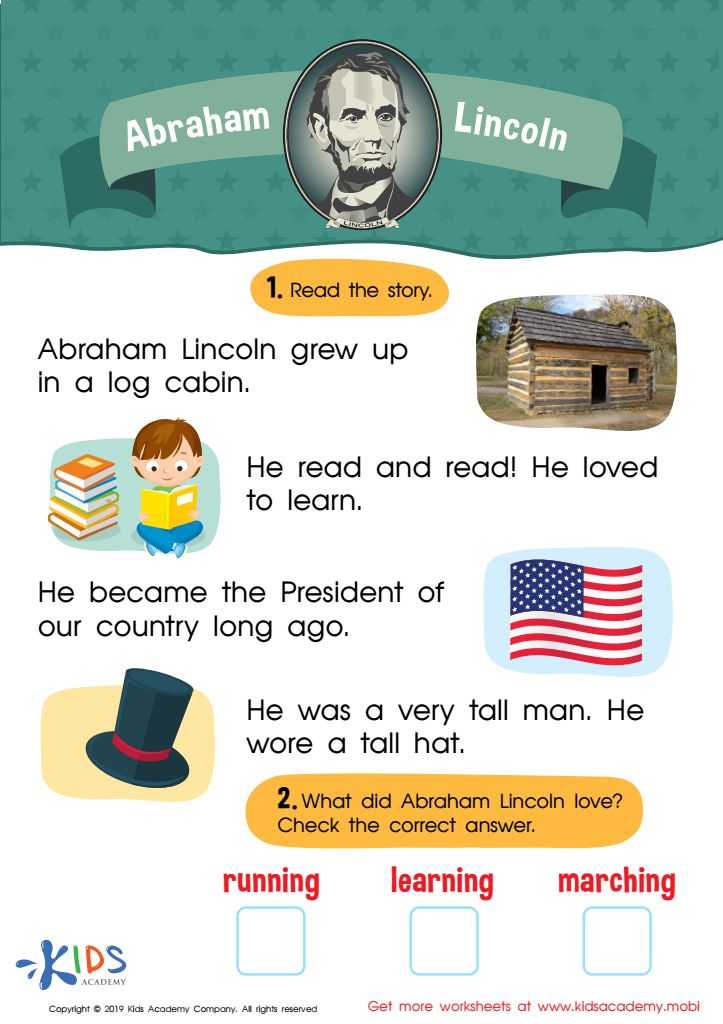
Abraham Lincoln Worksheet
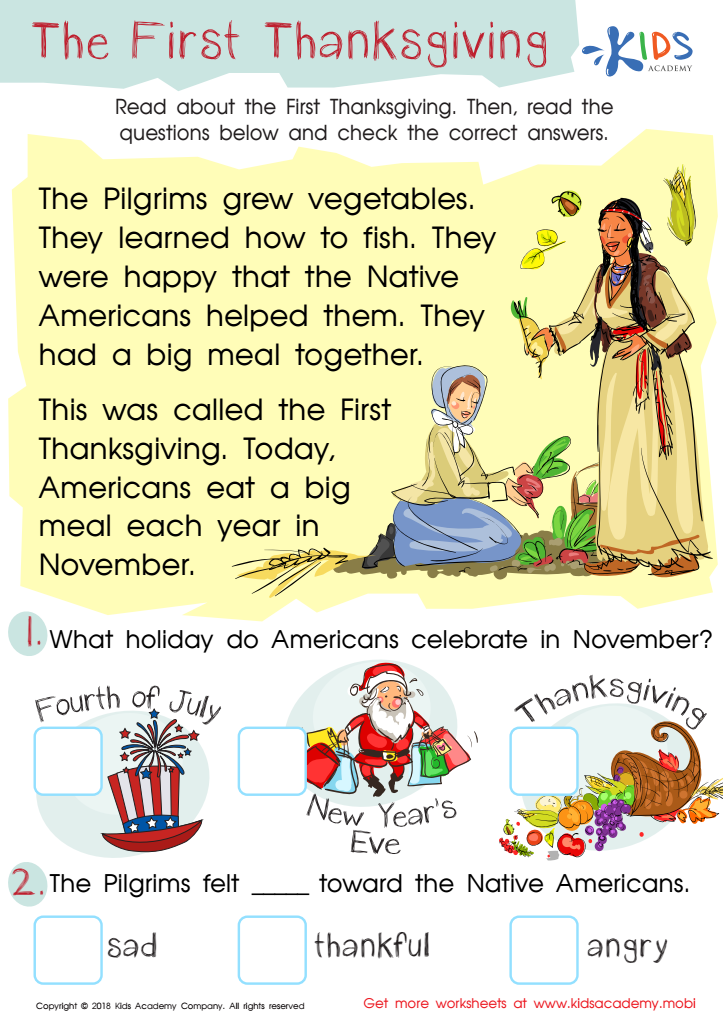
Assessment: First Thanksgiving Worksheet
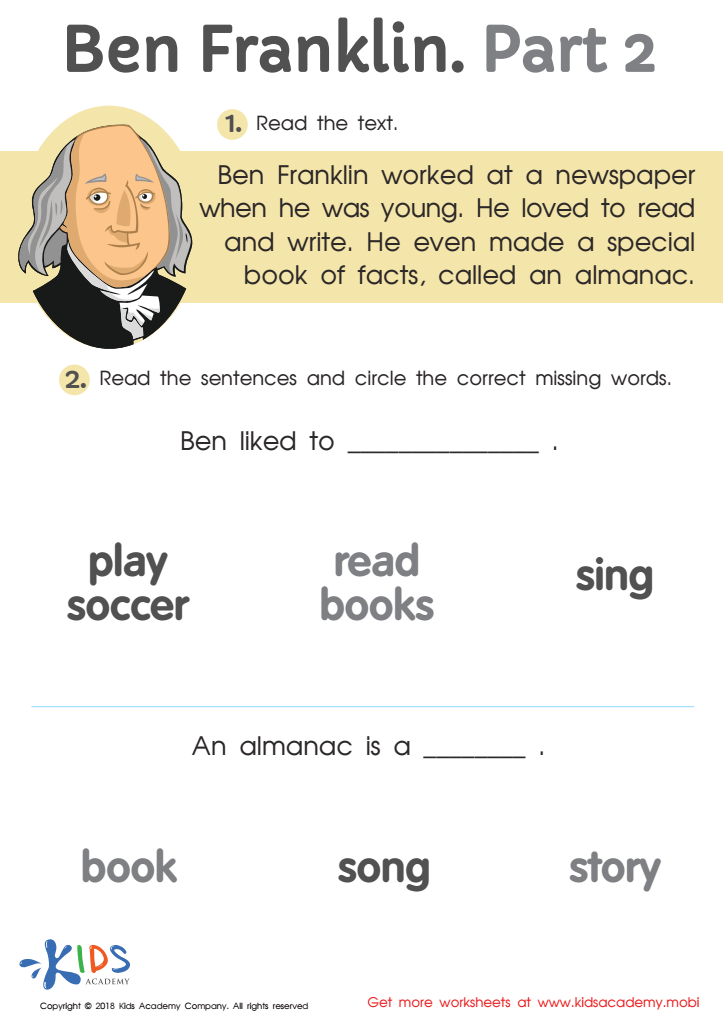
Ben Franklin Part 2 Worksheet








Parents and teachers should prioritize historical knowledge for kids aged 7-9 as it significantly enhances reading comprehension and critical thinking skills. At this formative age, children are developing foundational literacy abilities, and integrating historical content can make reading more engaging and relevant. Learning about history helps kids understand the context behind texts, making them more adept at grasping the intricacies of narratives.
When children read stories or articles about historical events, they can connect the content to real-life scenarios, which deepens comprehension. It allows learners to develop essential skills like inference, analysis, and synthesis of information. Additionally, understanding historical context teaches children to recognize multiple perspectives and fosters empathy—skills vital in nurturing informed and socially responsible citizens.
Moreover, historical knowledge inspires curiosity and promotes discussions at home and in the classroom, thereby enriching the learning experience and encouraging lifelong learning. By fostering this deep-rooted knowledge, we can ensure that our children are not just passive readers but active participants in their learning, which ultimately cultivates critical thinkers capable of understanding the complexities of our world. Investing in historical knowledge thus has far-reaching benefits beyond mere literacy, empowering children to think analytically about themselves and society.








