
Logical thinking Normal Reading Comprehension Worksheets for Ages 7-9
3 filtered results
Difficulty Level
Grade
Age
-
From - To
Subject
Activity
Standards
Enhance reading skills and critical thinking in children ages 7-9 with our expertly designed "Logical Thinking Normal Reading Comprehension Worksheets." These engaging worksheets, available on Kids Academy, seamlessly blend reading practice with logical reasoning exercises, fostering deeper understanding and thoughtful analysis of texts. Perfectly tailored to the developmental readiness of young readers, our materials provide ample opportunities to strengthen key literacy skills while promoting active problem solving and inferential thinking. Developed by education professionals, each worksheet aims to make learning both enjoyable and intellectually stimulating, ensuring children not only grasp the text but also cultivate vital thinking skills for future academic success.
Favorites
With answer key
Interactive
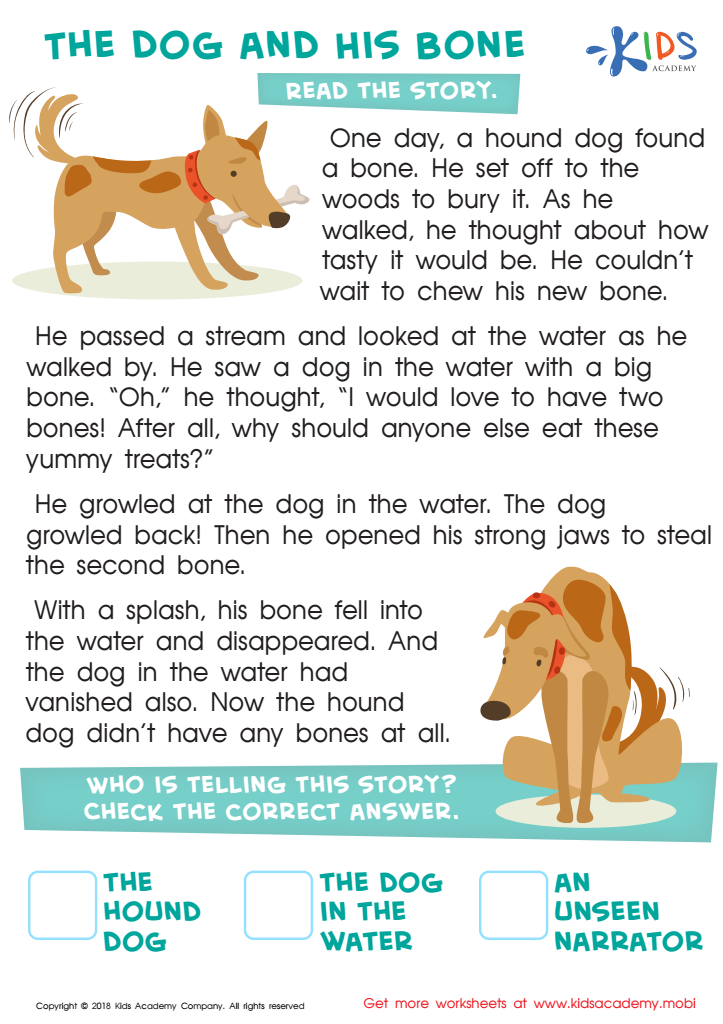
The Dog and His Bone Worksheet
Read the story of The Dog and His Bone to your kids, making sure they take in the details. Ask them the questions in this worksheet and help them check the answers. Encourage them to think carefully.
 Assign to My Students
The Dog and His Bone Worksheet
Worksheet
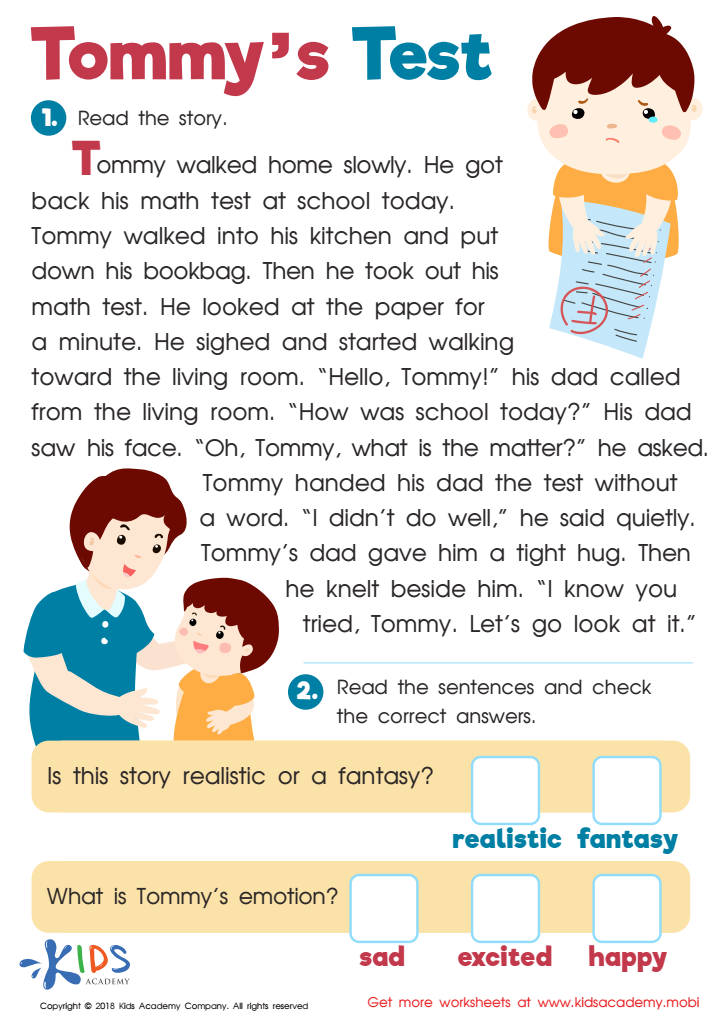
Tommys Test Worksheet
Reading short stories to your students builds a bond, teaches new words and lessons. Read the story aloud and then have them listen for details. Ask them the questions at the bottom and help them check the answers.
Tommys Test Worksheet
Worksheet
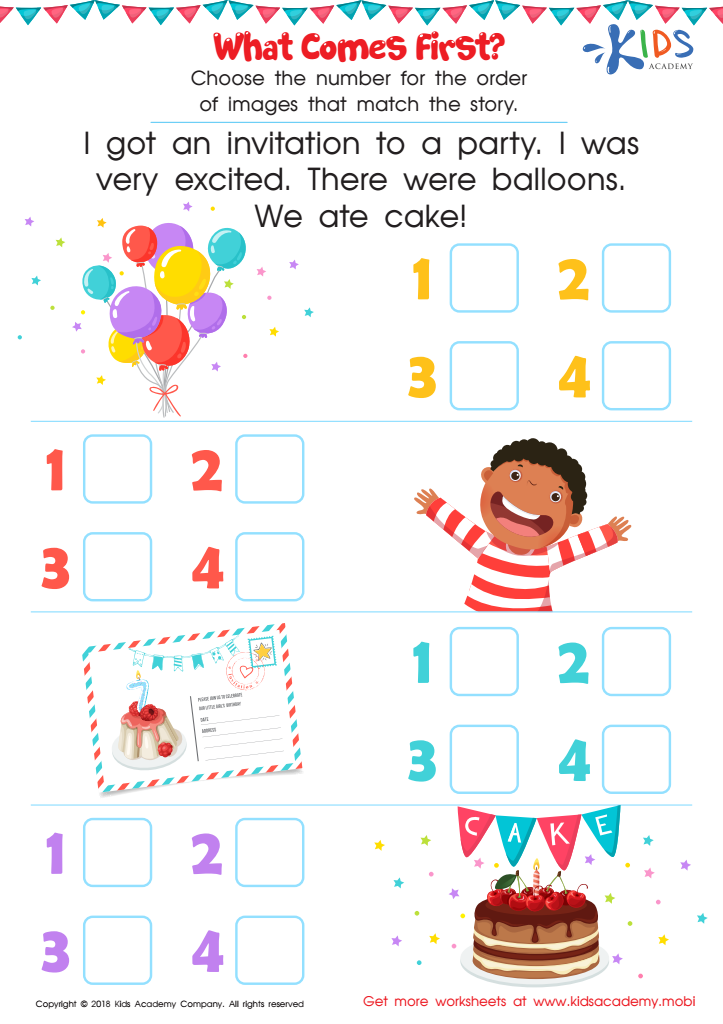
What Comes First Worksheet
Before you start, ask your child what they see in the picture. Read the story aloud together, then show them the images in order, numbered 1-5. Ask them to choose the numbers that match the story. Have fun and enjoy this party worksheet with your little one! (80 words)
What Comes First Worksheet
Worksheet
Join Kids Academy for Free
Who is primarily going to use this learning content?






.jpg)
.jpg)
Logical thinking and normal reading comprehension are critical components of early childhood education that parents and teachers should prioritize for children aged 7-9. Both skills are foundational, influencing a child's ability to learn across subjects and succeed in later academic endeavors.
Logical thinking enables children to reason systematically, solve problems, and understand cause-and-effect relationships. This skill is crucial not just for mathematics and science, but also for everyday decision-making and developing critical thinking abilities. When children learn to think logically, they can approach complex problems coherently and come up with valid solutions, laying the groundwork for advanced learning and problem-solving in the future.
Normal reading comprehension, on the other hand, is essential for understanding and analyzing written material. It involves not only the ability to decode words but also the capacity to grasp the meaning, context, and nuances of the text. Children with strong reading comprehension skills are better equipped to follow instructions, glean information from textbooks, and enjoy literature. Moreover, reading comprehension boosts vocabulary, enhances language skills, and fosters a love for reading, which is crucial for lifelong learning.
Together, logical thinking and reading comprehension create a well-rounded cognitive platform for young learners, enabling them to excel intellectually and socially. Therefore, investing time and resources in nurturing these skills is indispensable for parents and teachers alike.








