Identifying story elements Normal Reading Fiction Worksheets for Ages 7-9
3 filtered results
-
From - To
Unlock the magic of storytelling with our "Identifying Story Elements" Normal Reading Fiction Worksheets designed for ages 7-9. These engaging worksheets help young readers delve into the key components of narratives, including characters, setting, plot, problem, and solution. By developing critical reading skills, children enhance comprehension and creativity, fostering a deeper appreciation for literature. Our thoughtfully crafted worksheets offer a variety of activities that cater to diverse learning styles, ensuring that every child can thrive. Encourage your little ones to explore the world of fiction, build confidence, and cultivate a lifelong love of reading with our fun, informative resources!
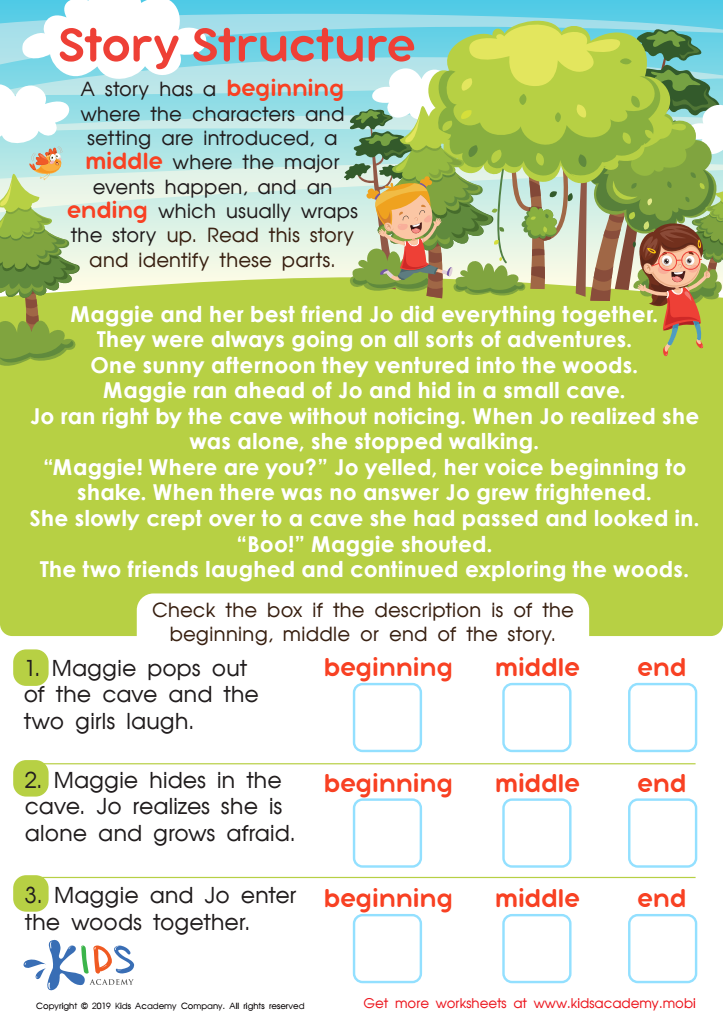
Story Structure Worksheet
 Assign to My Students
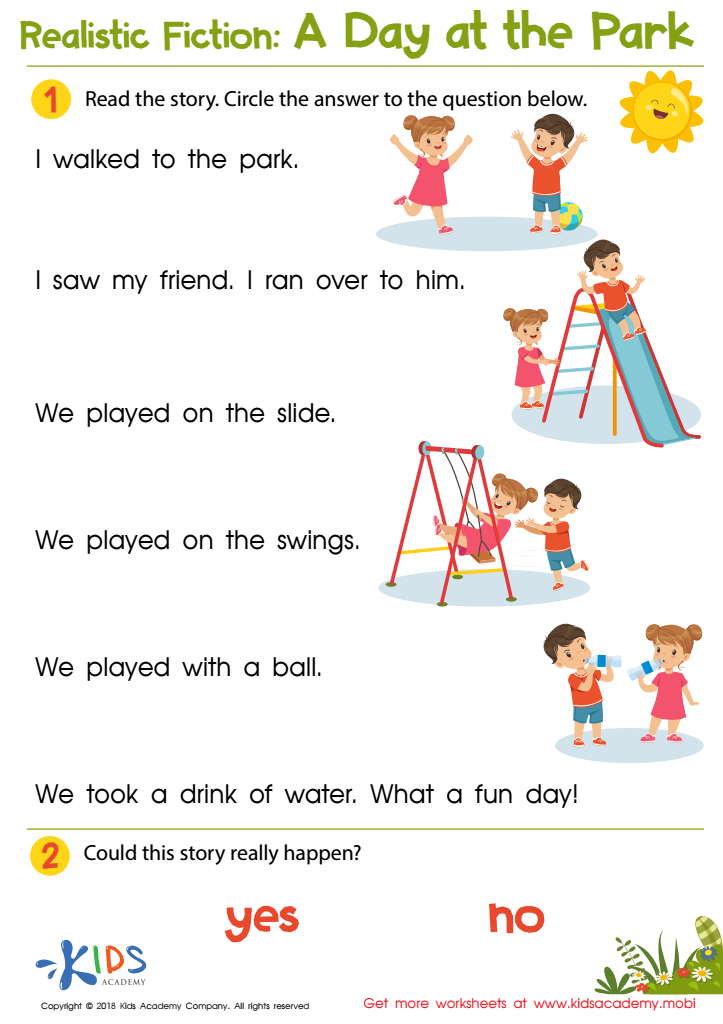
A Day at the Park Worksheet
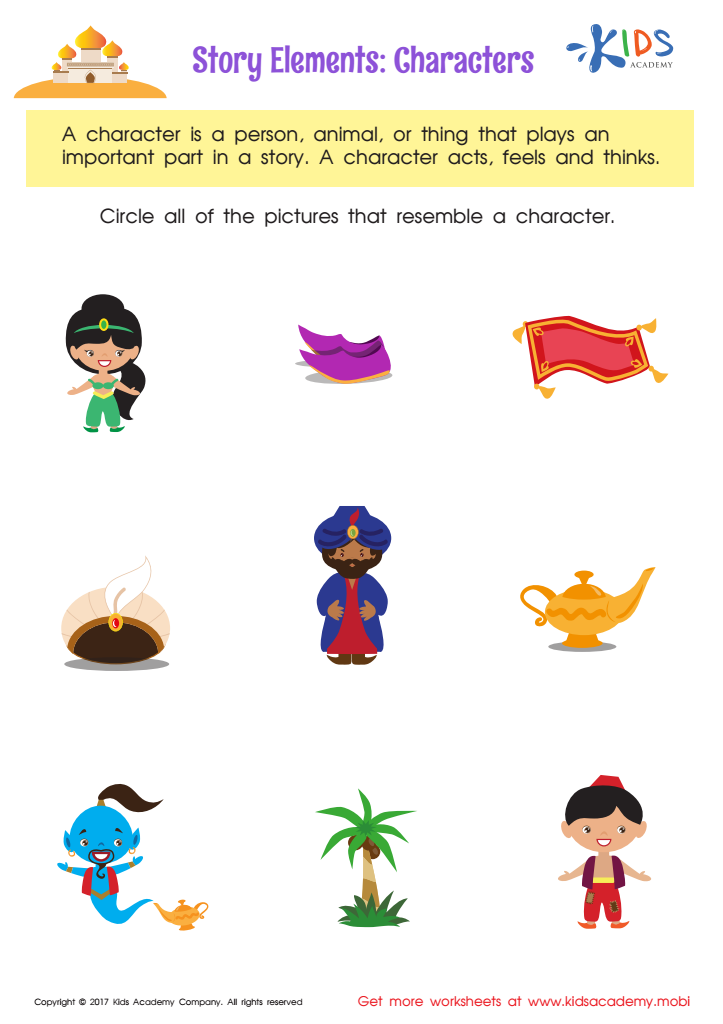
Story Elements Printable







Identifying story elements in fiction is crucial for the developmental literacy skills of children aged 7 to 9. When parents and teachers emphasize these elements—like characters, setting, plot, conflict, and resolution—they foster a deeper understanding of narratives. This understanding enhances children's reading comprehension, enabling them to grasp the overarching themes and messages in the stories they encounter.
Furthermore, recognizing story elements helps children systematically analyze texts, which encourages critical thinking skills. As they learn to differentiate between various components of a story, children become more adept at summarizing, predicting outcomes, and connecting to other texts, enhancing their overall literacy development.
Additionally, engaging with story elements cultivates a love for reading. It allows children to immerse themselves in the text, fostering imagination and creativity as they visualize characters and settings. Prompt discussions about these elements can strengthen the bond between parents, teachers, and children, leading to enriched learning experiences.
Incorporating activities that target these story elements can encourage active participation. Ultimately, when parents and teachers prioritize the identification of story elements, they play a vital role in nurturing confident, proficient readers who will be better equipped for academic success and lifelong learning.







