Reading comprehension Normal Reading Fiction Worksheets for Ages 7-9 - Page 3
51 filtered results
-
From - To
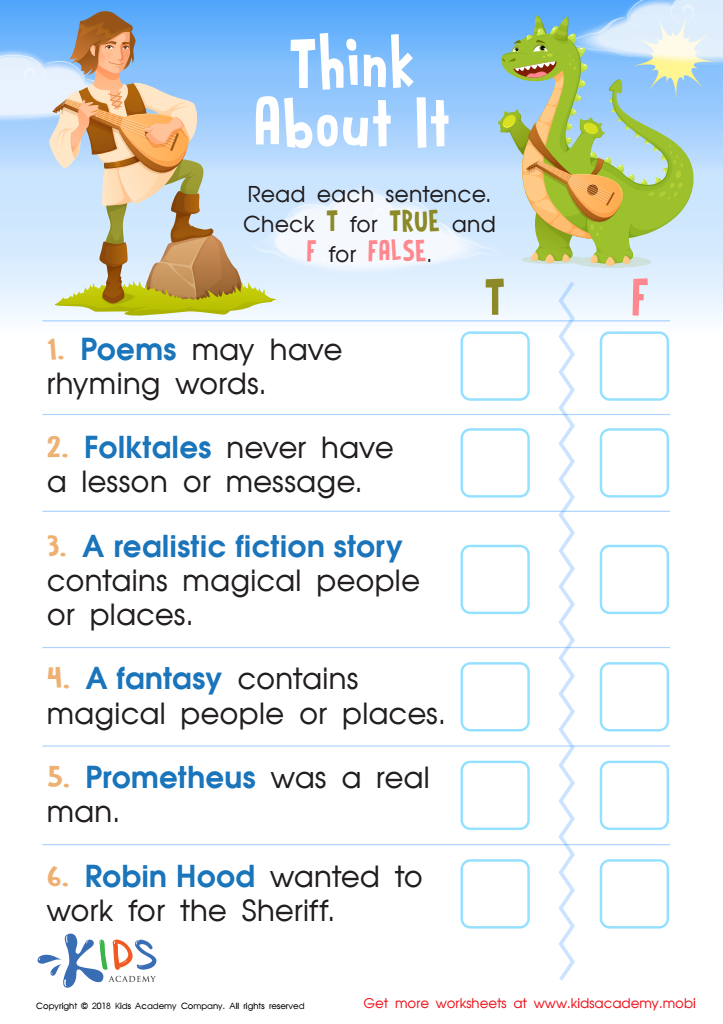
Think About It: Assessment Worksheet
 Assign to My Students
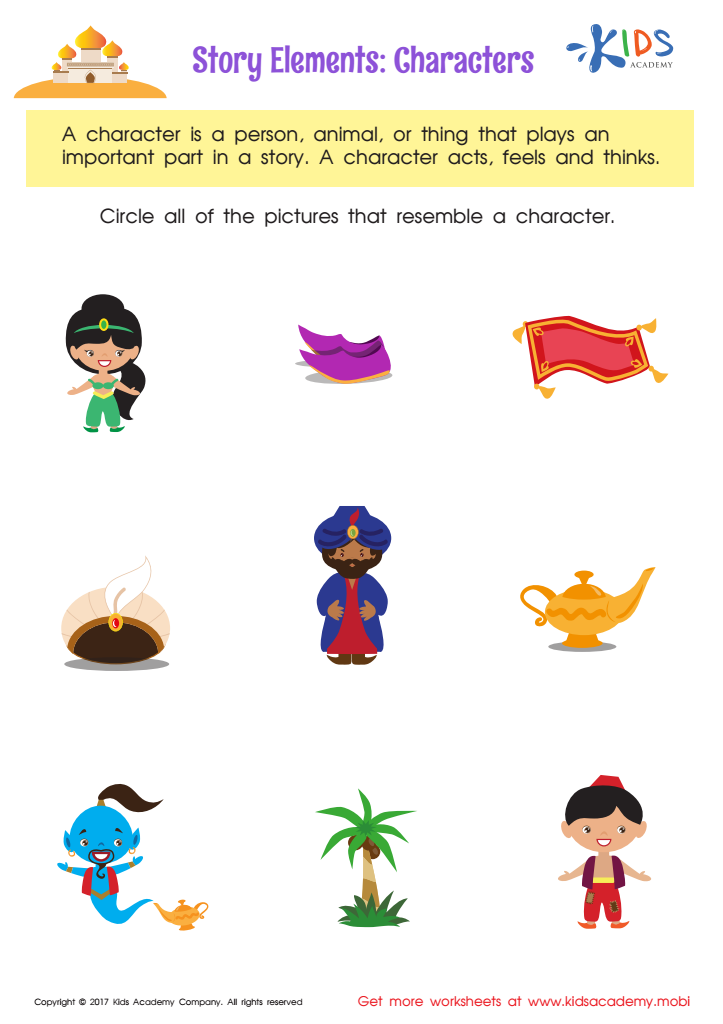
Story Elements Printable
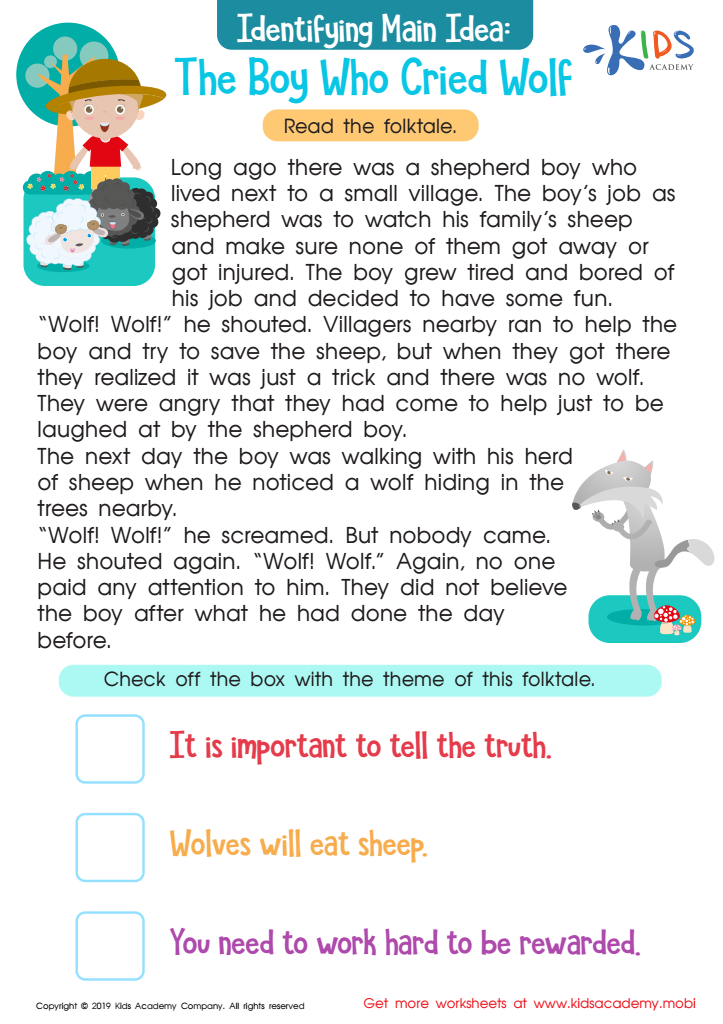
The Boy Who Cried Wolf Part 2 Worksheet







.jpg)
Reading comprehension is a crucial skill, especially for children between the ages of 7-9. At this stage in their development, kids transition from "learning to read" to "reading to learn." Comprehending what they read allows them to gain knowledge in all academic areas, which is fundamental for their academic success.
When children read fiction, they encounter complex sentence structures and new vocabulary, which enhances their language skills. Fiction also stimulates their imagination, helping them develop creativity and empathy. Understanding characters' feelings and actions helps children understand different perspectives, teaching them critical social-emotional skills.
Another significant benefit is that fiction contributes to cognitive development. Following a storyline requires focus and concentration, which can improve attention span and memory. Regularly comprehending stories boosts critical thinking skills as children predict plot points or infer motives behind characters' actions.
For parents and teachers, prioritizing reading comprehension can set the foundation for lifelong learning. It can foster a love for reading, transforming it from an academic requirement to an enjoyable and enriching activity. Engaging with fiction also provides a platform for meaningful discussions between adults and children, strengthening communication and understanding.
Fostering strong reading comprehension skills through fiction helps children grow intellectually and emotionally, setting them up for future success.







