Animal Classification Normal Animals Worksheets for Ages 7-9
3 filtered results
-
From - To
Explore our Animal Classification Worksheets designed for ages 7-9! Perfect for enhancing your child's understanding of the animal kingdom, these engaging worksheets cover various classifications such as mammals, birds, reptiles, amphibians, and fish. Each activity is age-appropriate, promoting critical thinking and observational skills as children categorize animals based on their characteristics. Our resources aim to make learning fun and interactive, allowing young learners to expand their knowledge while reinforcing essential science concepts. Ideal for home or classroom use, these worksheets support curriculum standards and foster a love for animals and nature in your child. Start their journey into the fascinating world of animals today!
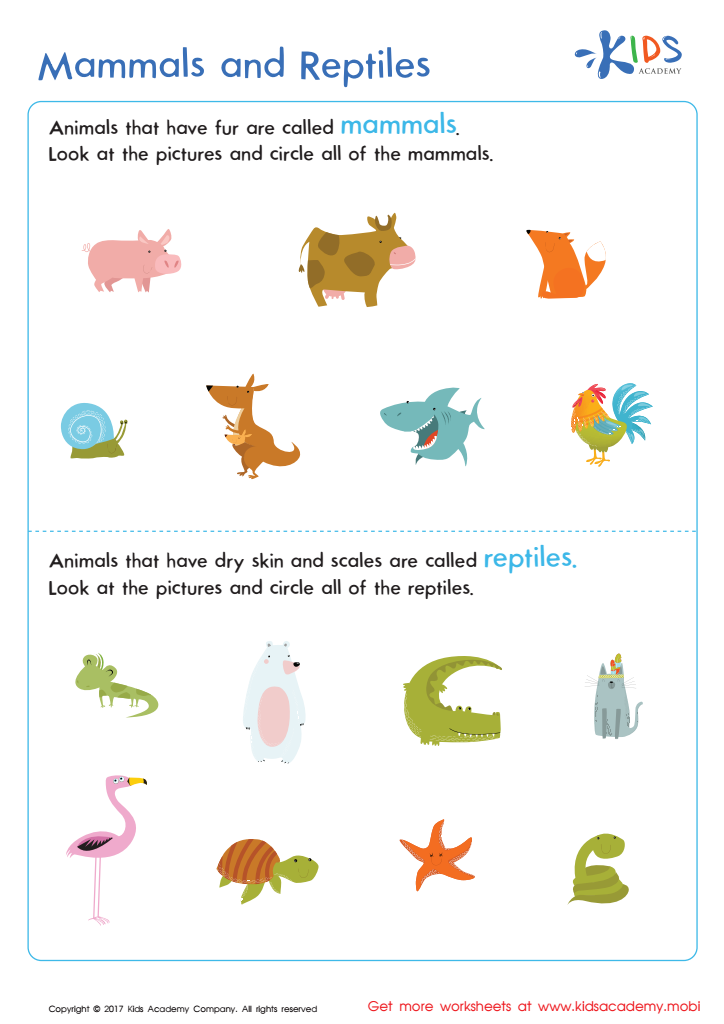
Mammals and Reptiles Worksheet
 Assign to My Students
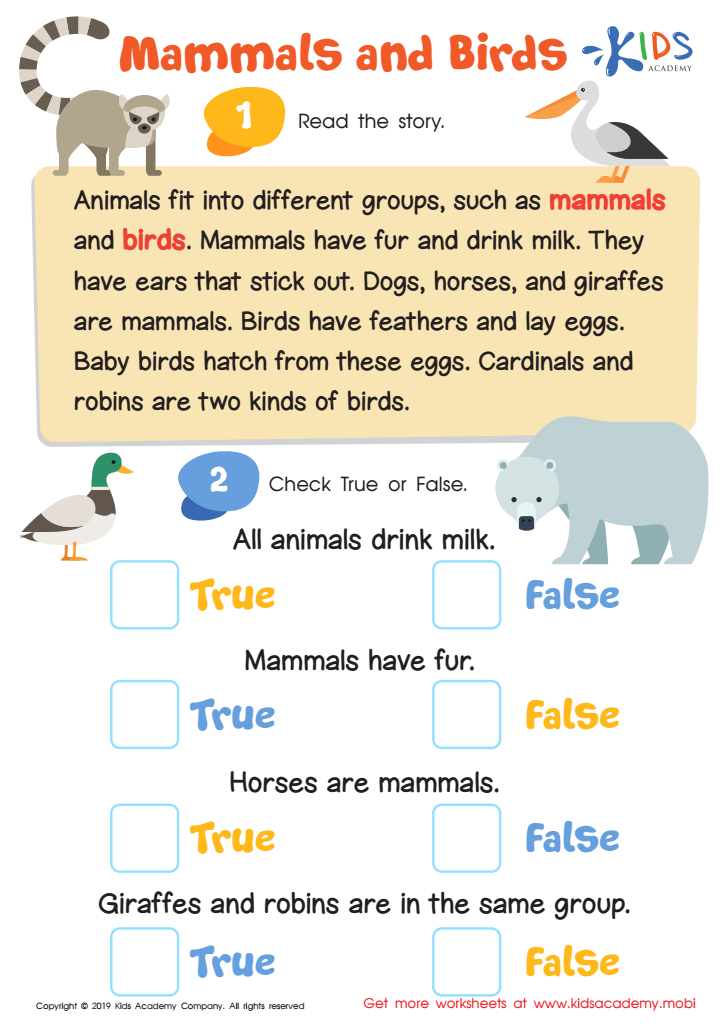
Mammals and Birds Worksheet
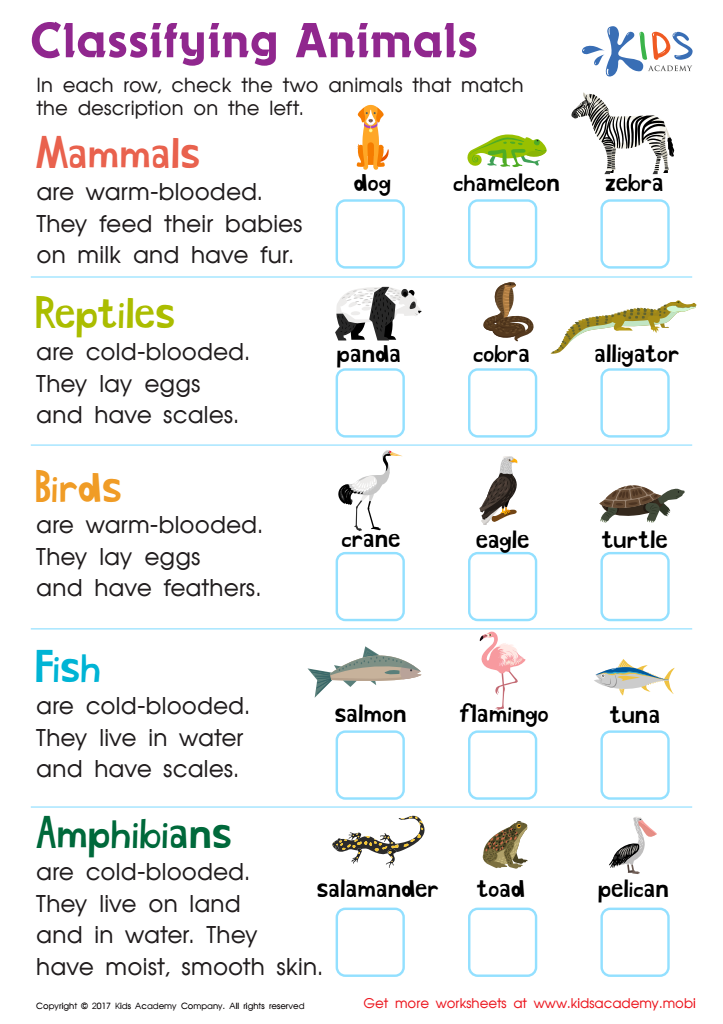
Classifying Animals Worksheet







%20(1).jpg)
Understanding animal classification is essential for children aged 7-9 as it nurtures curiosity and fosters a deeper appreciation for biodiversity. Parents and teachers should care about this topic because it enhances critical thinking skills, encouraging students to categorize animals based on shared characteristics. For instance, learning about mammals, reptiles, birds, and amphibians helps children grasp the diversity of life on Earth and the importance of each group within the ecosystem.
Animal classification also facilitates scientific literacy, equipping children with foundational knowledge for future studies in biology and environmental science. By introducing kids to concepts like habitats and the food chain, educators help them understand ecological relationships and the impact of human activity on wildlife.
Furthermore, engaging with animal classification can spark interest in conservation efforts. As children learn about endangered species, they may develop a sense of responsibility toward protecting the environment and standing up against habitat destruction. This knowledge empowers young learners, instantly connecting them to the world around them.
In conclusion, prioritizing animal classification for early learners not only fulfills educational goals but also nurtures eco-conscious citizens, ensuring the next generation respects and protects our planet’s incredible biodiversity.








