
Basic Math Skills Normal Science Worksheets for Ages 7-9
3 filtered results
Difficulty Level
Grade
Age
-
From - To
Subject
Activity
Standards
Discover engaging Basic Math Skills Normal Science Worksheets designed specifically for ages 7-9, available at Kids Academy! Our worksheets seamlessly integrate math into fun, real-life science contexts, helping young learners enhance their arithmetic skills while exploring exciting science concepts. These expertly crafted activities cover essentials such as addition, subtraction, multiplication, and division, all tailored to complement the cognitive and developmental stages of children. With a focus on hands-on learning, our worksheets not only strengthen math proficiency but also ignite curiosity and foster a love for learning. Make math and science fun and accessible for your young learners with Kids Academy!
Favorites
With answer key
Interactive
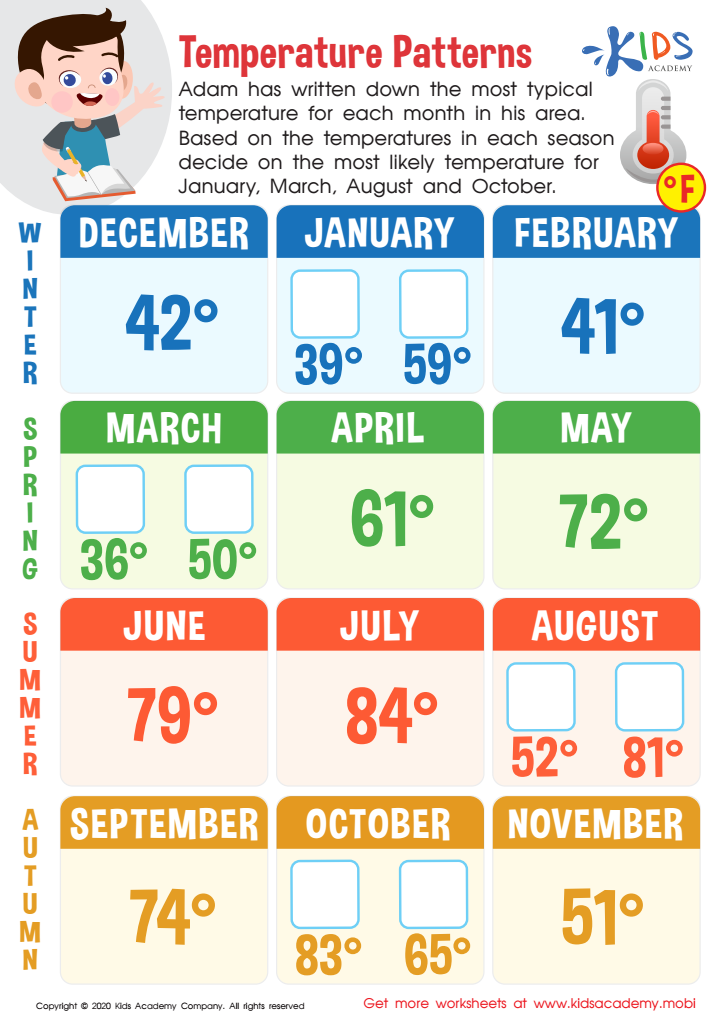
Temperature Patterns Worksheet
Adam has recorded temperatures in his area. Help your child use the data to predict temperatures for one month in each season. Check the box next to the correct temperature for each row in this worksheet. In America, temperatures vary by climate and season - colder in winter, hotter in summer.
 Assign to My Students
Temperature Patterns Worksheet
Worksheet
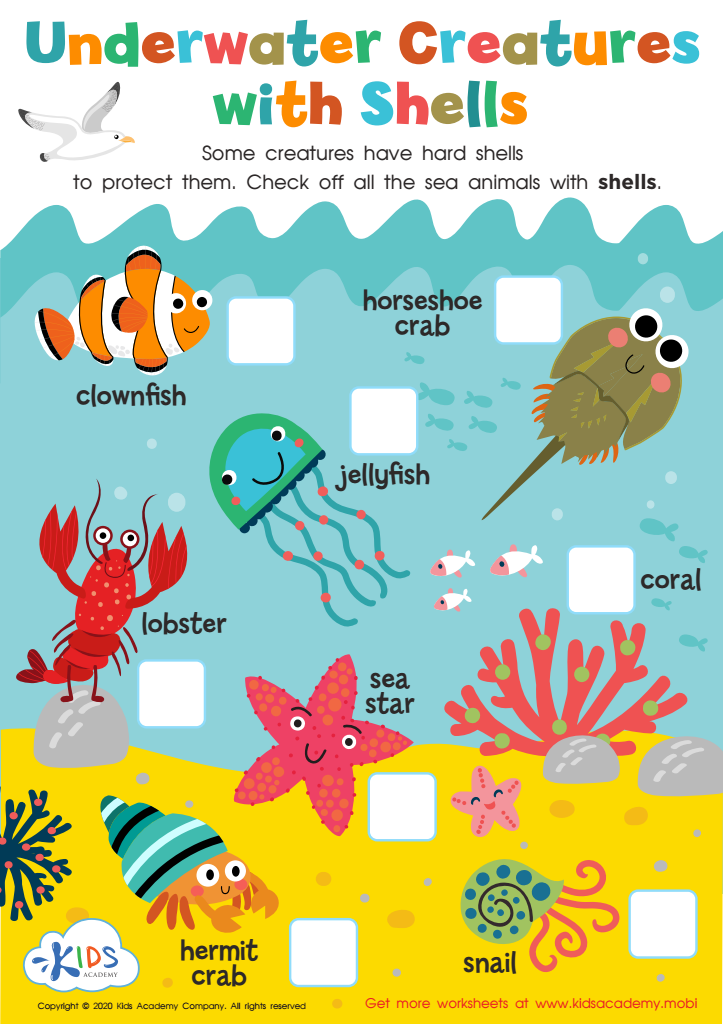
Underwater Creatures with Shells Worksheet
Teach your child about sea creatures with this vibrant PDF science worksheet! Comb through the colorful image to identify animals with shells; compare them to others and check them off. Let them know shells don't just wash up on beach, they serve as protection for sea creatures!
Underwater Creatures with Shells Worksheet
Worksheet
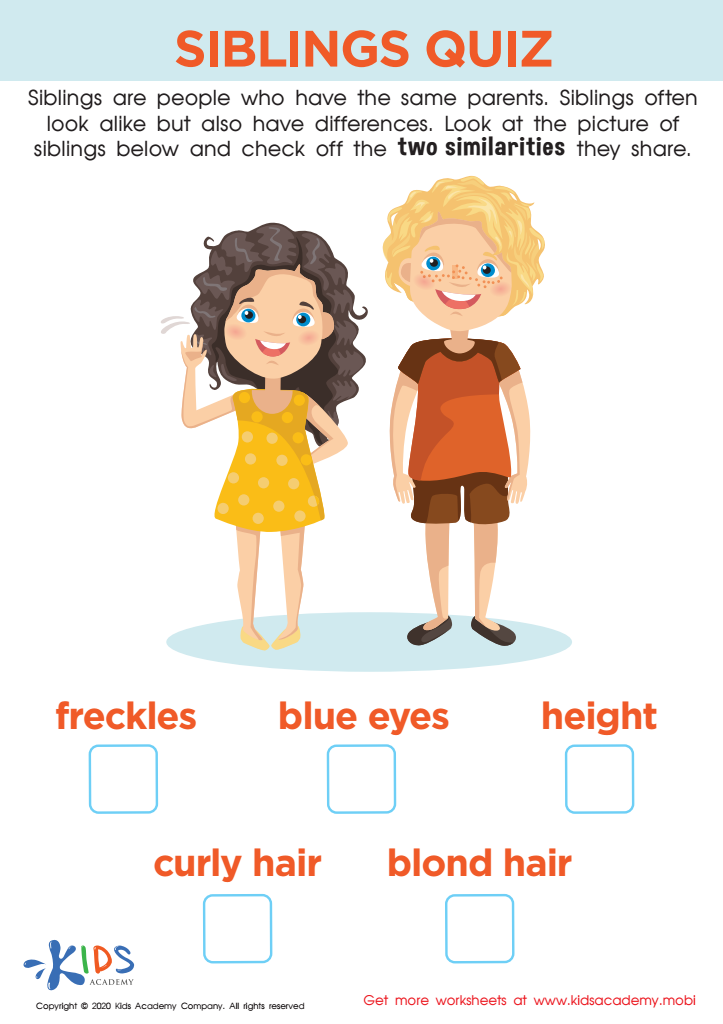
Siblings Quiz Worksheet
Your children may know a sibling is a sister or brother, but not realize what it means to be one. Siblings share the same parents, which means they share many genes. They are alike in many ways, but also have their own unique traits. Help your future scientist understand this early biology concept with this fun worksheet. They'll be tasked with finding similarities between two siblings on the page.
Siblings Quiz Worksheet
Worksheet
Join Kids Academy for Free
Who is primarily going to use this learning content?







Basic math skills are foundational for children aged 7-9 because they form the building blocks for more complex mathematical concepts and everyday problem-solving. During these formative years, children develop an understanding of numbers, simple arithmetic, geometry, and measurement. These skills are critical, as they not only enhance academic performance but also foster logical thinking and reasoning abilities.
Parents and teachers should care about basic math skills because they directly correlate with a child's confidence and success in future subjects, including science, technology, engineering, and mathematics (STEM). Consistent practice in math at this age helps children grasp the intrinsic logic of the subject, making it easier for them to tackle higher-level problems as they progress through their education.
Moreover, math skills play a significant role in normal science education. Understanding quantities, shapes, and patterns is crucial for observing and interpreting scientific phenomena. For example, measuring ingredients in a simple science experiment or understanding the proportions in a plant's growth requires basic math.
Engagements in hands-on activities, puzzles, and games in a familiar and supportive environment both at home and in school can make learning math enjoyable and effective. Thus, prioritizing basic math skills during ages 7-9 equips children with indispensable tools for lifelong learning and critical thinking.







