
Enhancing vocabulary Normal Science Worksheets for Ages 7-9
5 filtered results
Difficulty Level
Grade
Age
-
From - To
Subject
Activity
Standards
Enhance your child's vocabulary with our engaging Normal Science Worksheets designed for ages 7-9. Developed by experts, these worksheets help young learners explore scientific concepts while building language skills. Each activity combines age-appropriate science topics with vocabulary exercises, making learning fun and effective. With colorful illustrations and interactive tasks, kids will stay motivated and engaged. Perfect for both classroom and home use, our worksheets aim to foster a love for science and improve reading comprehension. Equip your child with the tools they need to excel in science and language arts. Discover a world of fun and education with Kids Academy!
Favorites
With answer key
Interactive
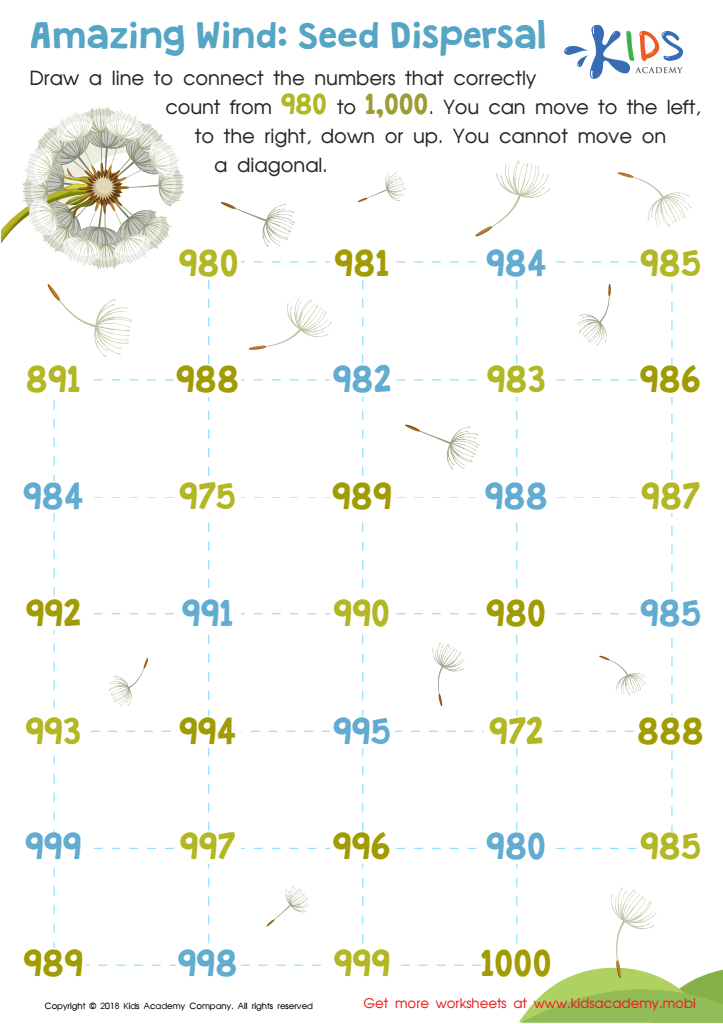
Amazing Wind: Seed Dispersal Worksheet
Let your child have fun and practice math skills with this worksheet! They'll use traceable lines to disperse a dandelion's seeds, building number sense, sequencing, fine motor, and hand-eye coordination. Discern between similar numbers and strengthen reasoning skills as they enjoy the familiar activity of blowing the seeds away.
 Assign to My Students
Amazing Wind: Seed Dispersal Worksheet
Worksheet
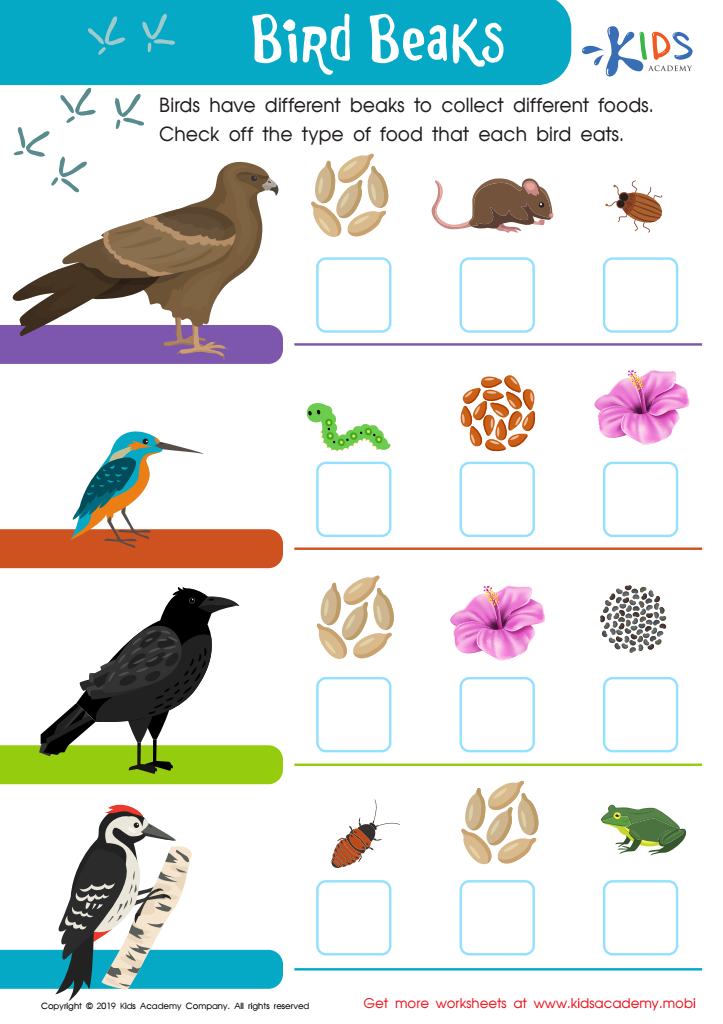
Bird Beaks Worksheet
Birds have beaks to eat different types of food. Let your little nature lover explore why with this free worksheet! They'll learn about different beak shapes and match them to the food that's best for them. Be an adorable bird watcher together!
Bird Beaks Worksheet
Worksheet
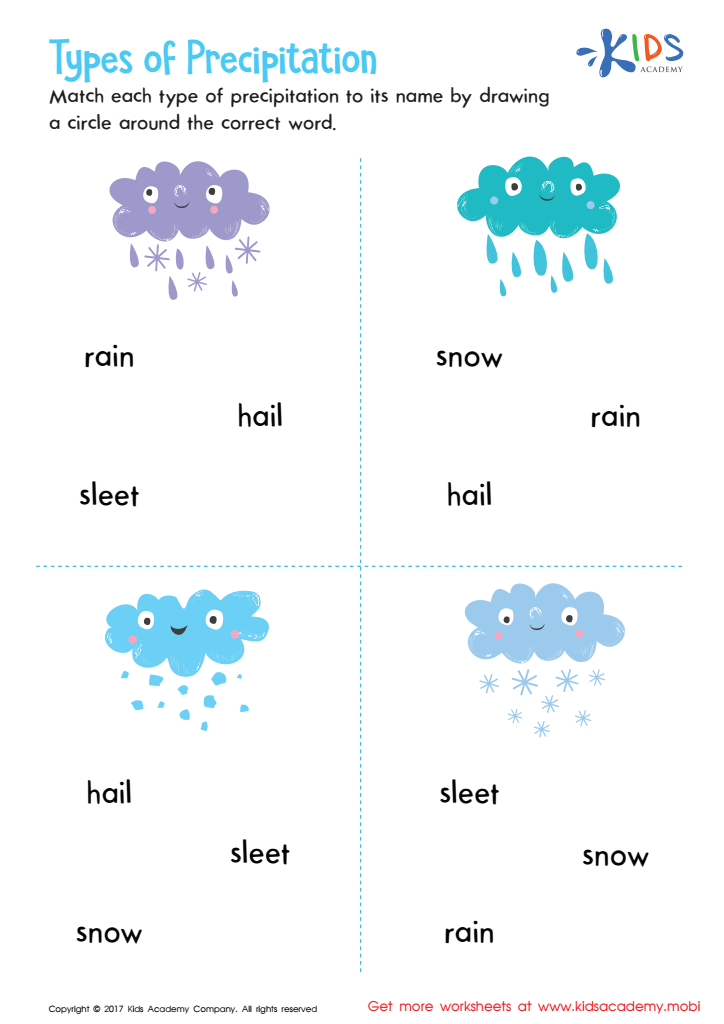
Types of Precipitation Printable
Science has a big impact on our world, and teaching kids about weather helps them understand how their learning applies to their lives. Our worksheet reviews different types of weather, so kids can look out the window and know what's happening. It covers familiar types of precipitation and more challenging ones like sleet or hail. Kids can use this to build a mental library of scientific knowledge for the future, even from places that don't get much snow.
Types of Precipitation Printable
Worksheet
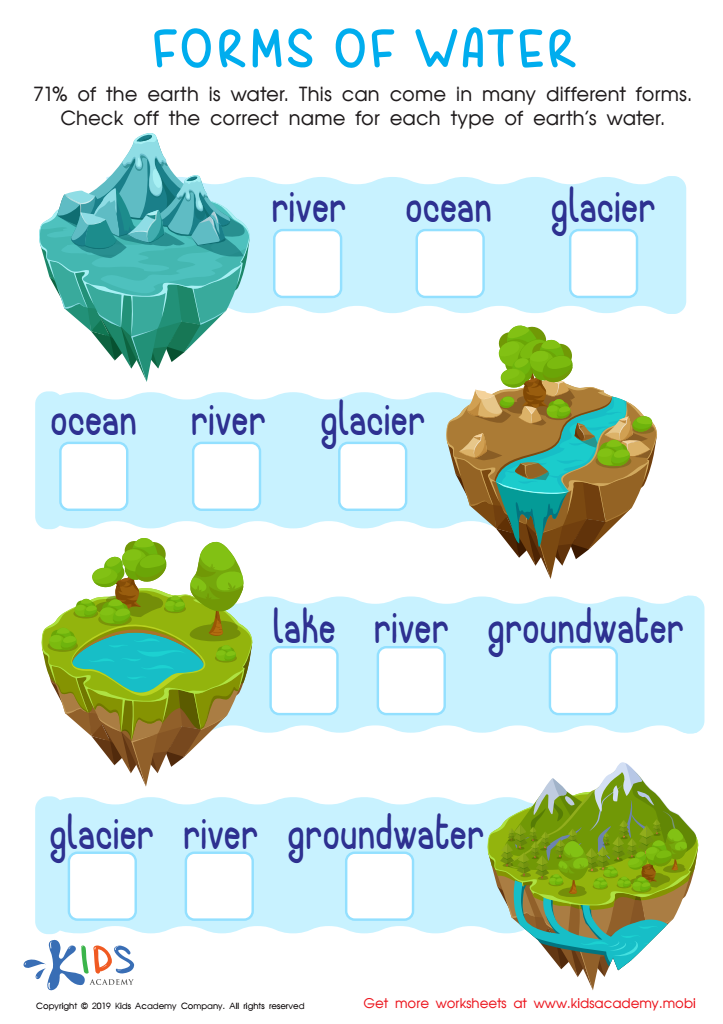
Forms of Water Worksheet
Life on Earth needs water to survive. Luckily, water makes up 75% of the Earth's surface and comes in various forms such as rivers, oceans and lakes. Ask your kids to name other forms and use this worksheet to help them identify each type.
Forms of Water Worksheet
Worksheet
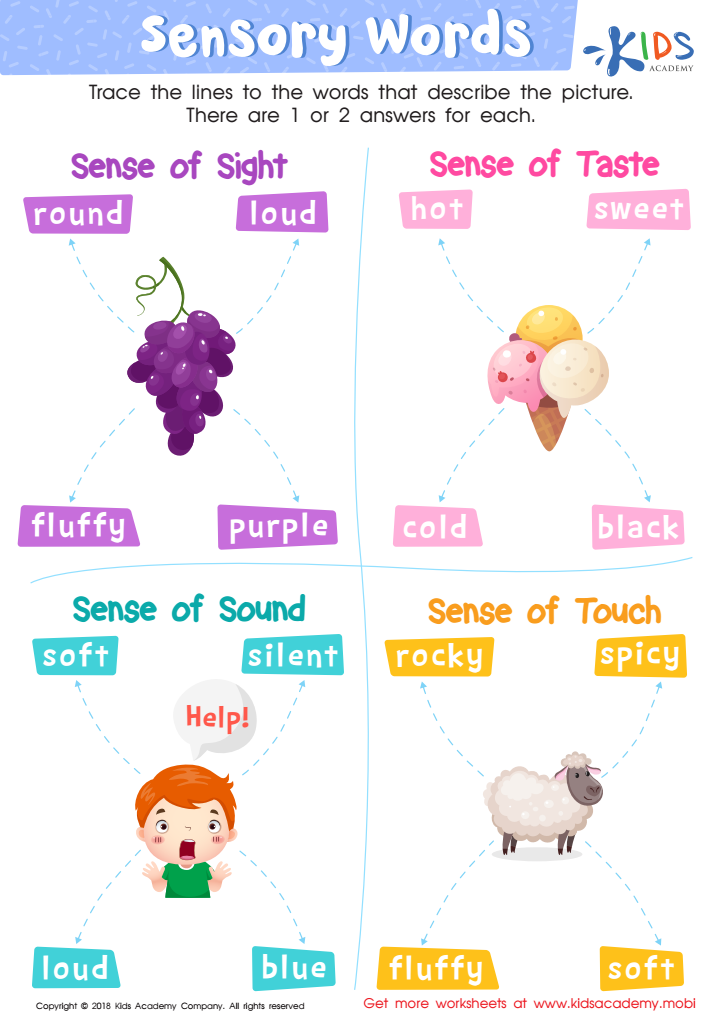
Sensory Words Worksheet
This worksheet helps students explore sensory words by looking at pictures and selecting one or two words to describe how it looks, feels, tastes, smells or sounds. Adding sensory words to texts makes them more interesting and helps students comprehend stories and articles better.
Sensory Words Worksheet
Worksheet
Join Kids Academy for Free
Who is primarily going to use this learning content?







Enhancing vocabulary in normal science education for ages 7-9 holds pivotal significance as it forms the bedrock for future academic success and curiosity. At this formative stage, children’s cognitive development is incredibly receptive, making it an ideal window to introduce scientific terminology and concepts. By expanding their vocabulary, students are better able to comprehend textbooks, follow along with teachers, and express their thoughts clearly during discussions. Proficiency in scientific language innately fosters critical thinking, enabling students to ask insightful questions and make connections between different concepts.
Moreover, a robust vocabulary aids in literacy retention, as complex science texts become less daunting with a foundation of familiar words. Language skills enhance other areas of learning, such as reading comprehension and analytical reasoning. Beyond academics, possessing a strong scientific vocabulary nurtures a lifelong curiosity and excitement about the world around them. This enthusiasm can evolve into a deeper engagement with STEM subjects (Science, Technology, Engineering, and Mathematics) in higher grades.
Finally, mastering scientific vocabulary at a young age instills confidence in young learners, as they can participate fully in class activities and discussions. Investing in their linguistic and cognitive arsenal today primes them not just for success within the classroom but equips them for innovative thinking in tomorrow’s world.







