
Understanding forces Normal Science Worksheets for Ages 7-9
6 filtered results
Difficulty Level
Grade
Age
-
From - To
Subject
Activity
Standards
Boost your child's science skills with our "Understanding Forces" worksheets designed for ages 7-9. These engaging, printable activities from Kids Academy make learning about gravity, friction, and other forces both fun and educational. Perfect for use at home or in the classroom, our worksheets help young learners explore the world of physics through hands-on experiments and clear explanations. Dive into interactive science exercises that enhance learning and curiosity, enriching your child's knowledge and critical thinking skills. Empower them today with Kids Academy's expertly crafted worksheets, ensuring a solid foundation in understanding fundamental forces.
Favorites
With answer key
Interactive
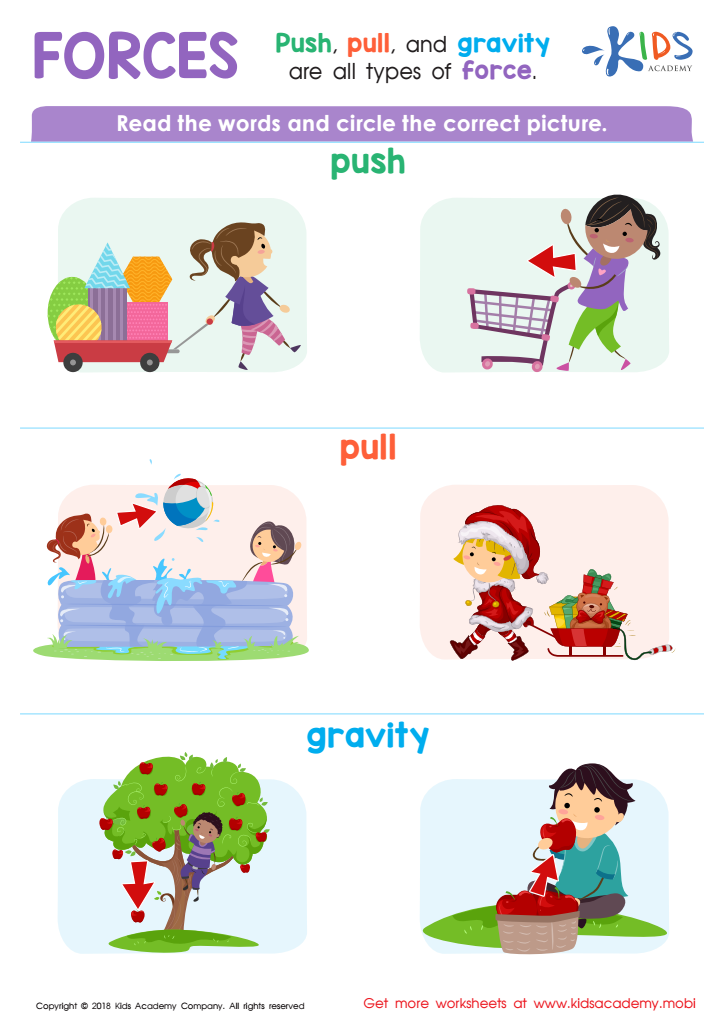
Forces Worksheet
Teach your child about forces! Ask them to identify which of six pictures shows push, pull or gravity. Read the words beside each picture and have them circle the correct one. It's a great way to learn about forces; push, pull and gravity!
 Assign to My Students
Forces Worksheet
Worksheet
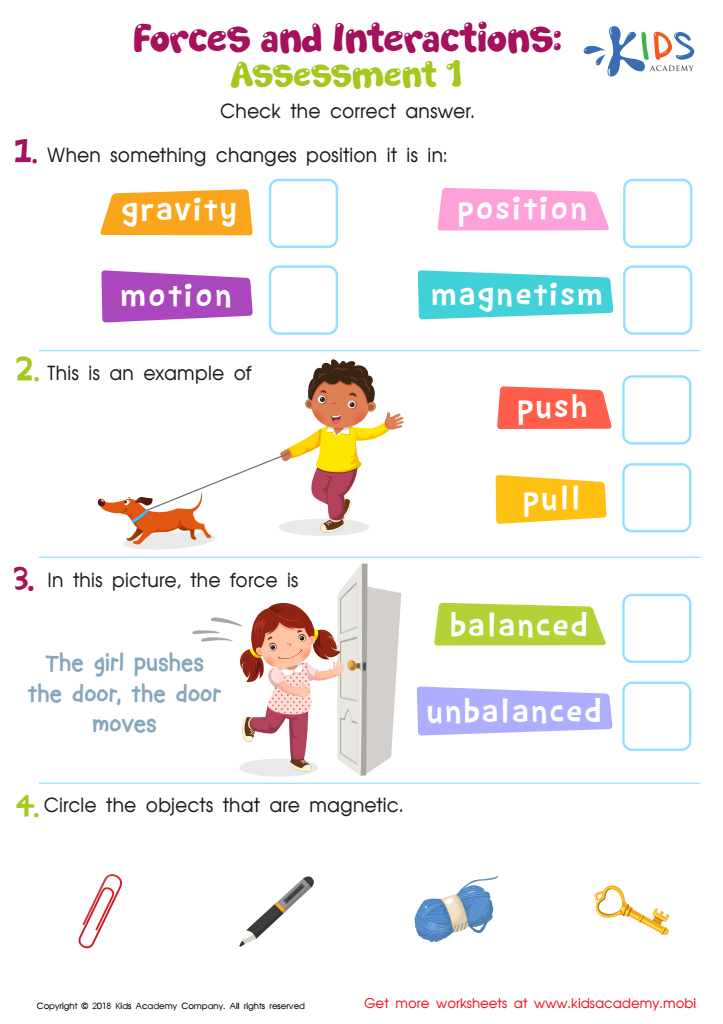
Forces and Interactions Printable
Test your child's physics know-how with this vibrant forces and interactions printable worksheet! Kids can assess their understanding of the different types of forces while they complete it. Read each example and check the boxes to show what they know!
Forces and Interactions Printable
Worksheet
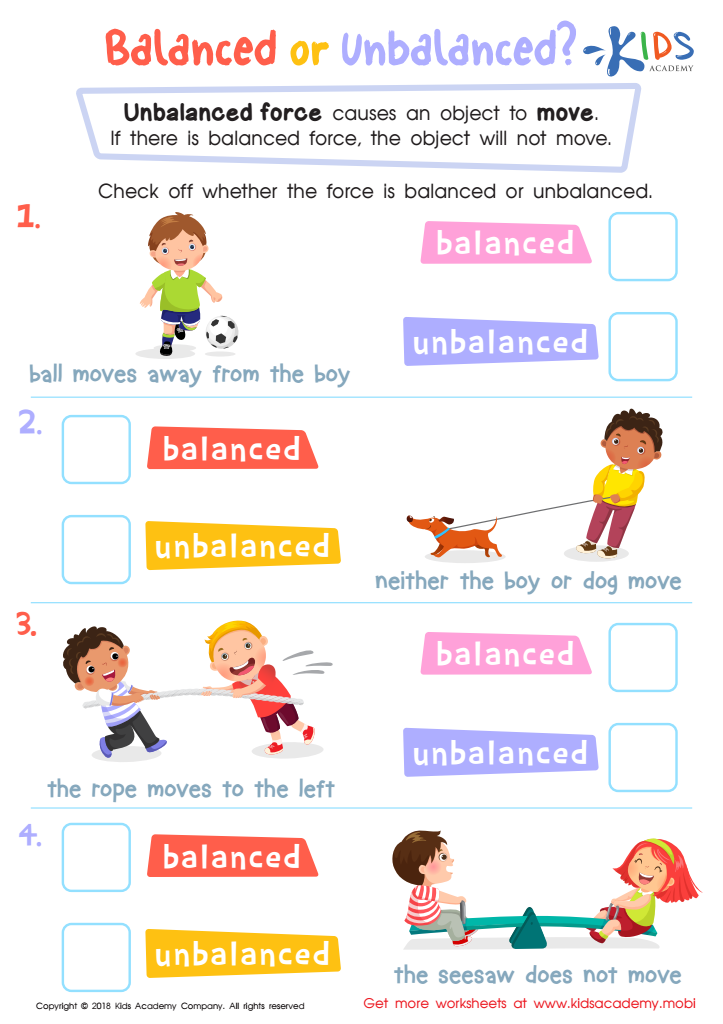
Balanced or Unbalanced Science Worksheet
Check out the kids on the worksheet. Is the force equal or unbalanced? This science worksheet helps little learners evaluate forces and understand physics - in a fun way! Have them explore the forces behind movement and see the results!
Balanced or Unbalanced Science Worksheet
Worksheet
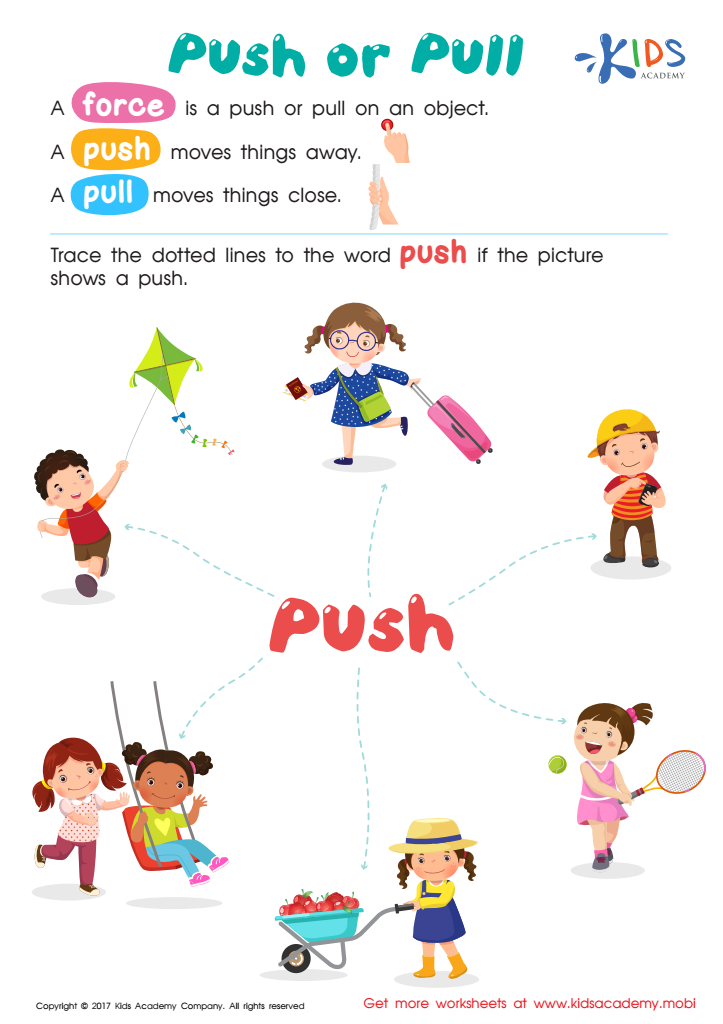
Push or Pull Worksheet
and which involve pulling! With this fun worksheet, your child will learn about force and its simple application in everyday activities. Get them started with Push or Pull! (80 words)
Push or Pull Worksheet
Worksheet
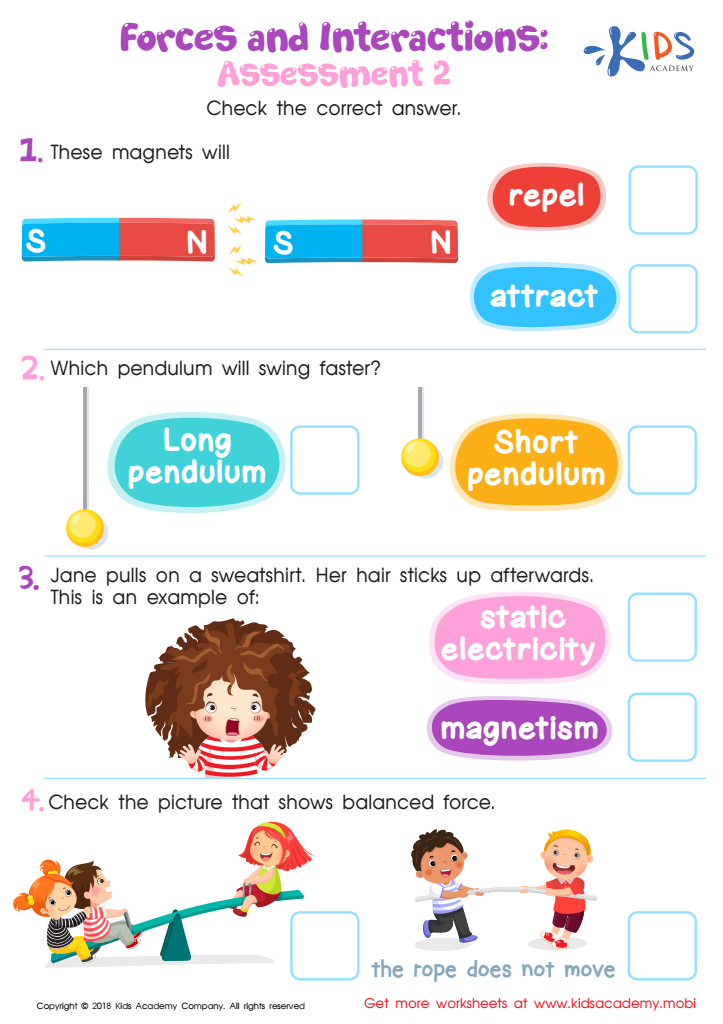
Forces and Interactions Worksheet For 3rd Grade
Review forces and interactions with your 3rd grader! This worksheet helps them recall key concepts like static, magnetic attraction, and pull. Repetition through similar illustrations from previous worksheets aids comprehension of the topic before moving on to other fun physics topics.
Forces and Interactions Worksheet For 3rd Grade
Worksheet
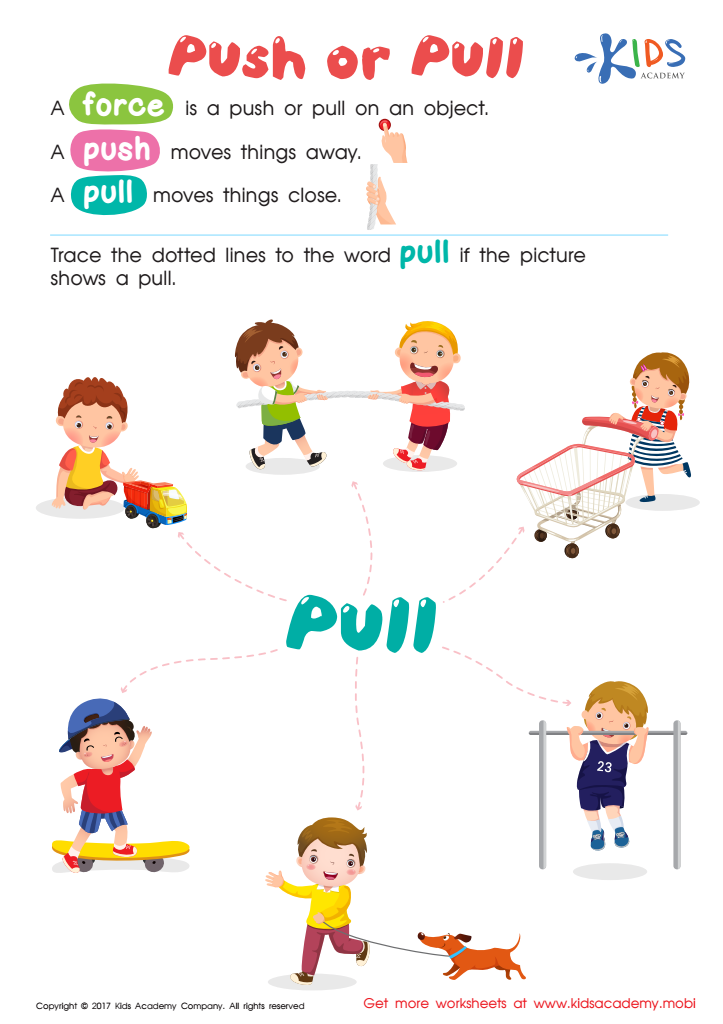
Pull or Push Worksheet
With this fun worksheet, they'll explore physics by sorting objects into categories according to their mode of motion. It's a great way to get them interested in science.
Pull or Push Worksheet
Worksheet
Join Kids Academy for Free
Who is primarily going to use this learning content?






Understanding forces is fundamental to developing young students' scientific thinking. For children aged 7-9, grasping concepts like pushes, pulls, gravity, and magnetism lays the groundwork for future learning in physics and engineering. Parents and teachers should care about this because it cultivates curiosity, critical thinking, and problem-solving skills early on. Exploring forces helps children make sense of everyday phenomena—why things fall, how they slide, or why some objects stick together. These hands-on experiments and observations foster engagement and drive enthusiasm for science.
Moreover, developing an understanding of forces enhances cognitive development. It encourages children to ask questions, make predictions, test hypotheses, and learn from outcomes, promoting scientific literacy. This base of knowledge not only supports future academic success but also nurtures an inquisitive mindset essential in all aspects of learning and discovery.
Teachers can integrate this knowledge with other curricula like math and technology, while parents can reinforce these ideas through play and practical activities at home. For example, using magnets, building simple machines, or observing swings and slides at a playground can tie theoretical concepts to real-world experiences. Ultimately, this early grasp of scientific principles equips children with the tools to understand and interact with the world more effectively.







