Categorizing objects Normal Physical Science Worksheets for Ages 7-9
3 filtered results
-
From - To
Discover our engaging Normal Physical Science Worksheets designed specifically for children ages 7-9! These worksheets focus on the essential skill of categorizing objects, helping young learners explore the world of physical science through fun and interactive activities. Each worksheet is crafted to challenge children’s reasoning and classification abilities while reinforcing concepts like matter and properties. Ideal for home or classroom use, our worksheets encourage critical thinking and foster a love for science. Whether sorting by color, size, or material, these activities promote sensory engagement and enhance observational skills. Dive into a world of learning with our thoughtfully designed resources!
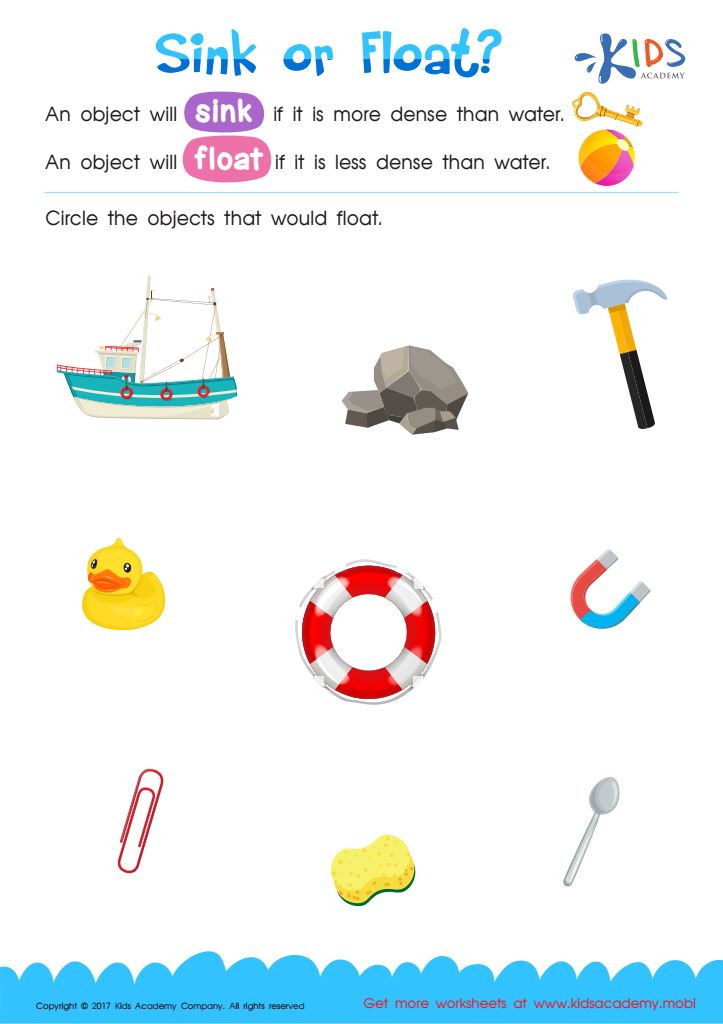
Sink or Float Printable
 Assign to My Students
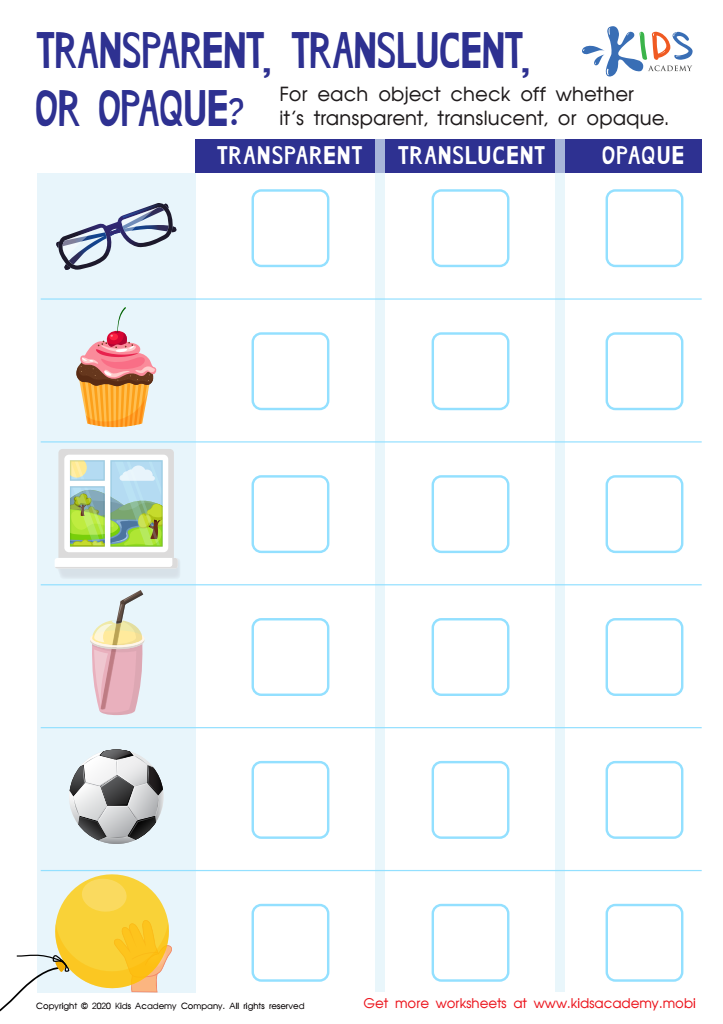
Transparent, Translucent, or Opaque Worksheet
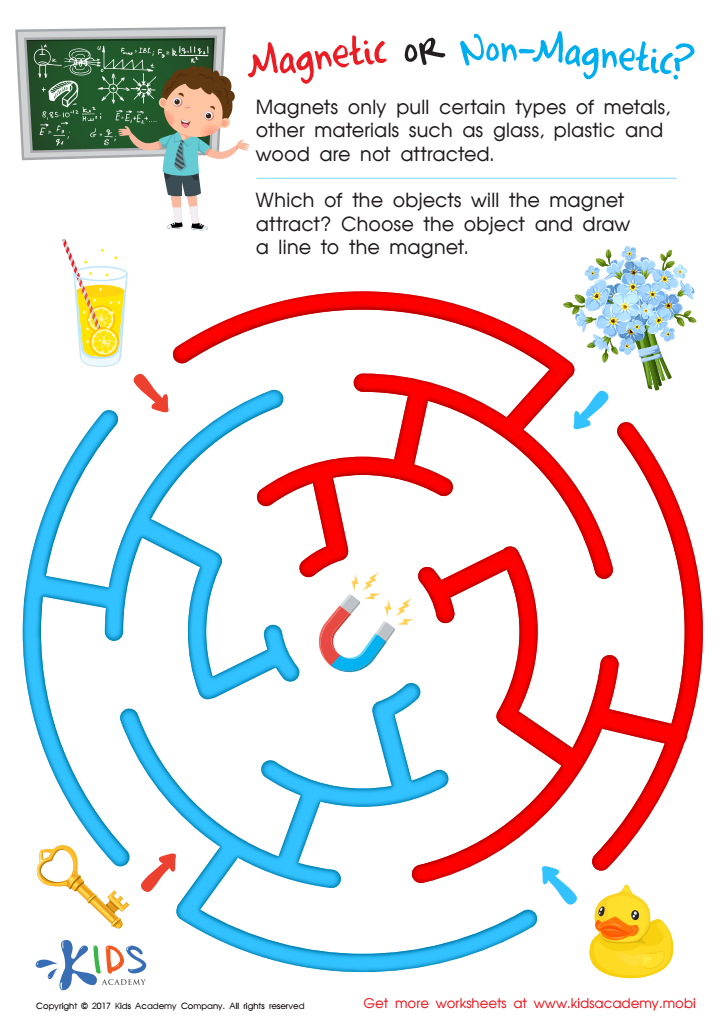
Magnetic or Non–Magnetic Worksheet




.jpg)

Categorizing objects is a fundamental aspect of early physical science education for children aged 7-9. Parents and teachers should care about this skill because it lays the groundwork for critical thinking and cognitive development. When children learn to categorize objects, they begin to recognize patterns and relationships, which fosters logical reasoning abilities essential for scientific inquiry.
Furthermore, categorization helps enhance a child's observational skills. By identifying common properties such as size, shape, color, or material, children become more aware of their surroundings. This awareness is vital in developing science literacy, enabling them to ask questions, make predictions, and test their ideas against reality—a critical component of the scientific method.
Moreover, understanding how to categorize goes beyond textbook learning; it facilitates problem-solving skills. Children learn to simplify complexity by grouping related items, making it easier to draw conclusions and find solutions in various contexts.
Encouraging parents and teachers to actively engage students in categorizing activities—like sorting objects or exploring collections—can spark curiosity and excitement for science, promoting a lifelong interest in learning. Ultimately, these foundational skills set the stage for more advanced concepts in science, fostering inquisitive, informed, and analytical thinkers.







