
Counting skills Normal Plants and Animals Worksheets for Ages 7-9
4 filtered results
Difficulty Level
Grade
Age
-
From - To
Subject
Activity
Standards
Enhance your child's counting skills with our engaging "Plants and Animals Worksheets" designed for ages 7-9! These interactive worksheets seamlessly blend science with mathematics, helping young learners explore the fascinating world of plants and animals while developing essential counting abilities. Each worksheet features colorful illustrations and fun activities that encourage children to count various elements, from insects to trees. Ideal for classroom or home use, our resources aim to make learning enjoyable and effective. Join us in fostering a love for nature and numeracy as your child counting thrives in this vibrant educational journey! Explore our collection today!
Favorites
With answer key
Interactive
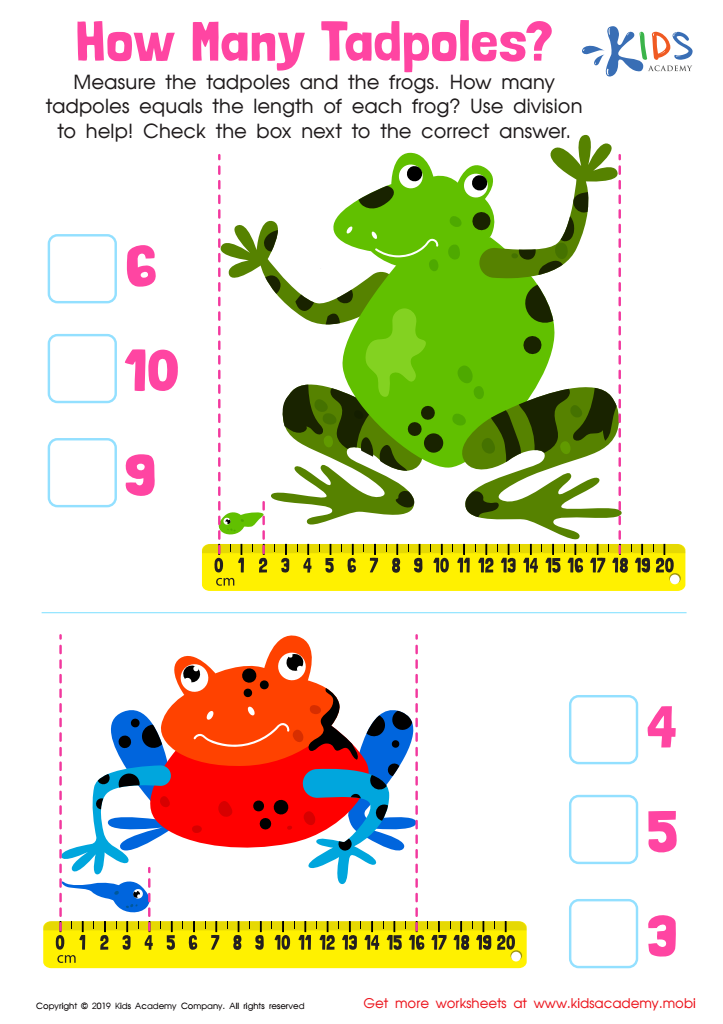
How Many Tadpoles Worksheet
Kids love tadpoles! They'll have fun using them to work out the measurements of their frog friends. By dividing the length of the frogs by the length of the tadpoles, children can deduce how many tadpoles it takes to equal a frog. With the use of 'how many' and 'each' they'll solve math problems without realizing it!
 Assign to My Students
How Many Tadpoles Worksheet
Worksheet











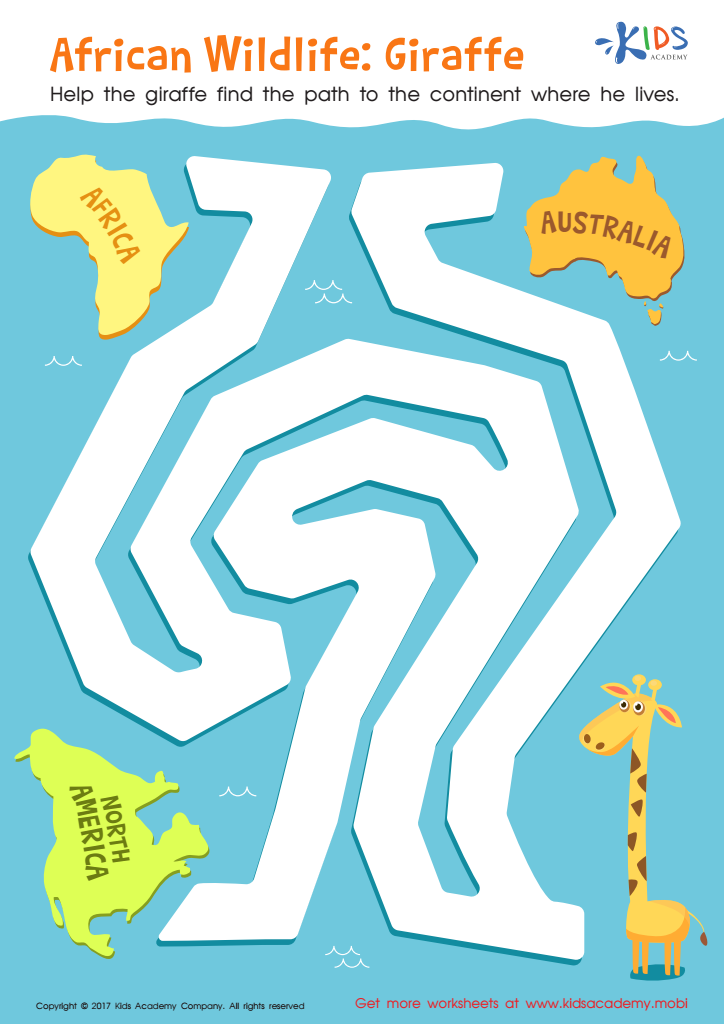
African Wildlife: Giraffe Worksheet
Help the giraffe get home! This African wildlife giraffe worksheet will boost your child's logical reasoning skills while they complete a maze to help the giraffe navigate choppy waters. Learn about different continents and their unique climates, practice problem solving and expand knowledge of the world and its habitats. Perfect for inspiring little learners!
African Wildlife: Giraffe Worksheet
Worksheet
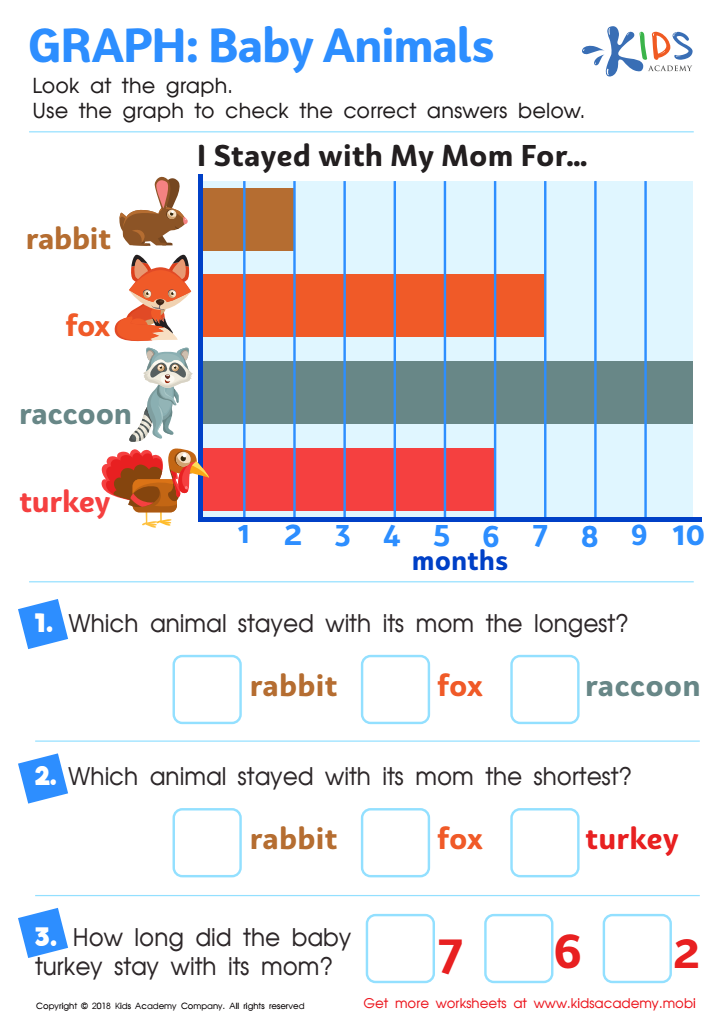
Graph: Baby Animals Worksheet
Graphs are essential for learning in math, science and ELA. This worksheet featuring baby animals is a fun way to practice reading graphs. Look at the graph and answer the questions below it. Check the boxes for the right answers based on the data.
Graph: Baby Animals Worksheet
Worksheet
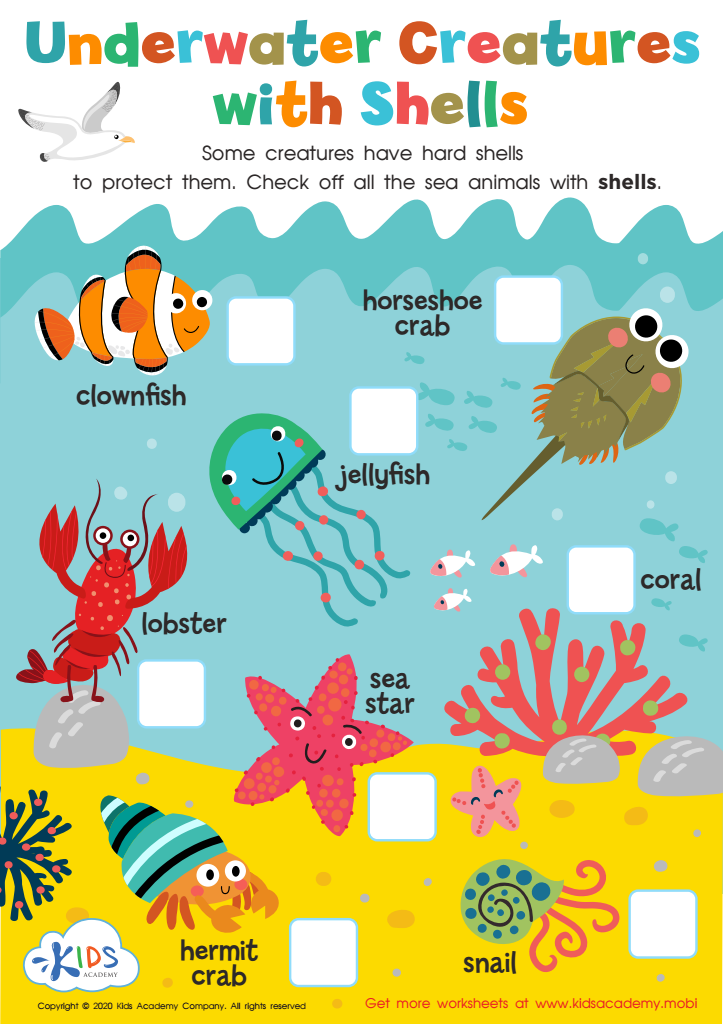
Underwater Creatures with Shells Worksheet
Teach your child about sea creatures with this vibrant PDF science worksheet! Comb through the colorful image to identify animals with shells; compare them to others and check them off. Let them know shells don't just wash up on beach, they serve as protection for sea creatures!
Underwater Creatures with Shells Worksheet
Worksheet
Join Kids Academy for Free
Who is primarily going to use this learning content?








Counting skills in the context of normal plants and animals are essential for children aged 7-9 as they form the foundation for mathematical understanding and scientific inquiry. During this developmental stage, children begin to grasp more complex concepts, making it vital to integrate their growing numeracy with observations of the natural world.
Encouraging students to count various plants and animals fosters not only mathematical skills but also enhances their observational abilities and curiosity about nature. This integration helps children develop important concepts such as composition and decomposition and understanding data by counting species, leaves, or other natural elements. It also lends itself to engaging discussions about ecosystems, biodiversity, and the environment, reinforcing the connection between math and science.
Moreover, counting-related activities can improve fine motor skills and boost confidence in problem-solving. Parents and teachers should recognize that these experiences promote critical thinking and analytical skills. Understanding counting in the realm of nature is not just a fundamental math skill; it nurtures a child's appreciation for the world around them and lays the groundwork for future STEM learning. In a collaborative environment, children can work together to compare quantities, fostering teamwork and communication skills while deepening their engagement with both math and science.







