
Understanding life cycles Normal Plants and Animals Worksheets for Ages 7-9
3 filtered results
Difficulty Level
Grade
Age
-
From - To
Subject
Activity
Standards
Explore the fascinating world of life cycles with our engaging worksheets designed for children aged 7-9. Our "Understanding Life Cycles: Normal Plants and Animals" resources offer a comprehensive and interactive approach to learning. Through fun exercises and activities, young learners will discover the various stages of growth for both plants and animals, enhancing their knowledge of biology. Each worksheet encourages critical thinking and observation, making science enjoyable and accessible. Perfect for classroom or home use, these materials support curricular goals while fostering a deeper appreciation for nature. Ignite curiosity and inspire future scientists with our thoughtfully crafted worksheets today!
Favorites
With answer key
Interactive
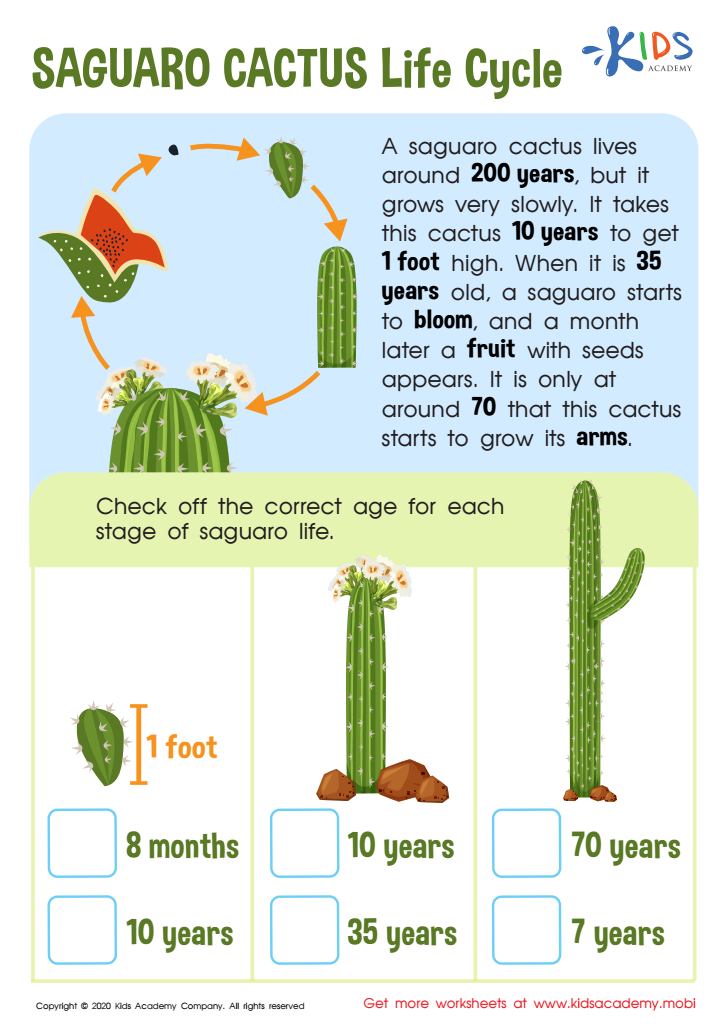
Saguaro Cactus Life Cycle Worksheet
Teach your child about the saguaro cactus, which takes 35 years to bloom and can live up to twice the lifespan of a human! Print this free PDF worksheet to engage learners with an interesting passage. Check off the correct answers to reflect their learning!
 Assign to My Students
Saguaro Cactus Life Cycle Worksheet
Worksheet











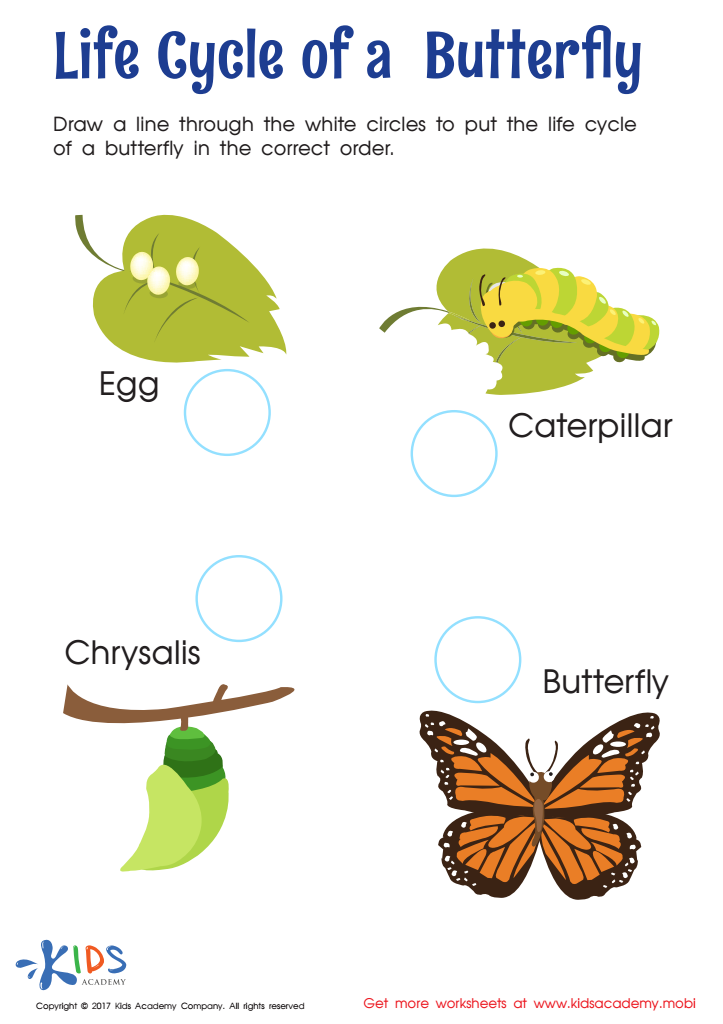
Life Cycle of Butterfly Worksheet
Kids Academy offers an exciting activity – a Life Cycle of a Butterfly Worksheet PDF. It shows four stages in the lifecycle of a butterfly with vivid pictures. Kids put the stages in the correct order to study the lifecycle.
Life Cycle of Butterfly Worksheet
Worksheet
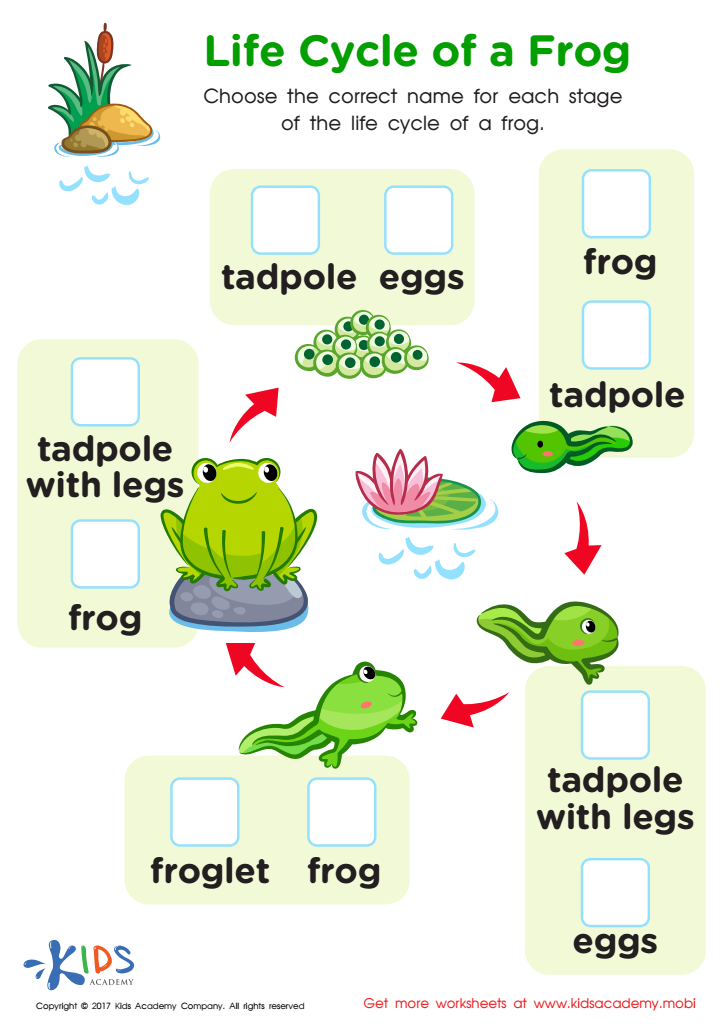
Life Cycle Frog Printable
Kids can explore the life cycle of frog with this fun worksheet! Draw lines from one stage to the next to follow the transformation from tadpole to frog and learn about the cycle of life.
Life Cycle Frog Printable
Worksheet
Join Kids Academy for Free
Who is primarily going to use this learning content?








Understanding the life cycles of plants and animals is crucial for children aged 7 to 9, as it lays a foundational understanding of biology and ecology. At this age, children are naturally curious, and exploring life cycles captivates their interest in the natural world around them. This knowledge fosters a sense of responsibility and respect for living creatures and the environment.
Moreover, studying life cycles helps children grasp key concepts such as growth, change, and adaptation. They learn that all living organisms go through stages—birth, development, reproduction, and death—instilling an appreciation for the interconnectedness of life. This understanding promotes critical thinking skills as children observe and compare the similarities and differences between various species.
For parents and teachers, emphasizing life cycles enhances scientific inquiry. Engaging activities, like observing the metamorphosis of a caterpillar to a butterfly or planting seeds and nurturing plants, brings learning to life and encourages hands-on experiences. Additionally, these lessons correlate with essential topics such as sustainability and conservation, vital for nurturing future stewards of the planet. Ultimately, knowledge of life cycles enriches children's cognitive, emotional, and ethical development, making it an important focus in their educational journey.







