Understanding constellations Normal Space Worksheets for Ages 7-9
3 filtered results
-
From - To
Unlock the secrets of the night sky with our exciting "Understanding Constellations" Normal Space Worksheets, designed especially for ages 7-9. At Kids Academy, we provide fun and educational activities that teach young explorers to identify and understand various constellations. Through engaging exercises, children enhance their scientific knowledge, improve critical thinking, and foster a love for space exploration. Each worksheet is packed with vibrant illustrations and step-by-step instructions to ensure a fun learning experience. Ideal for both classroom and homeschool settings, our resources help pupils build a solid foundation in astronomy. Let's make stargazing educational and memorable for your child!
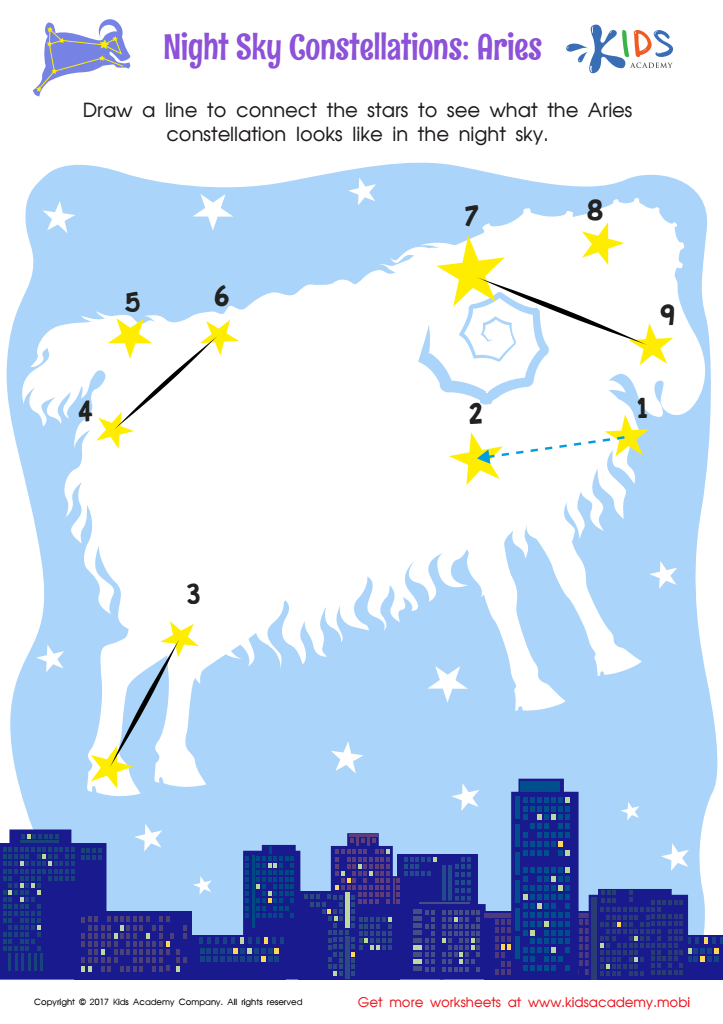
Night Sky Constellations: Aries Worksheet
 Assign to My Students
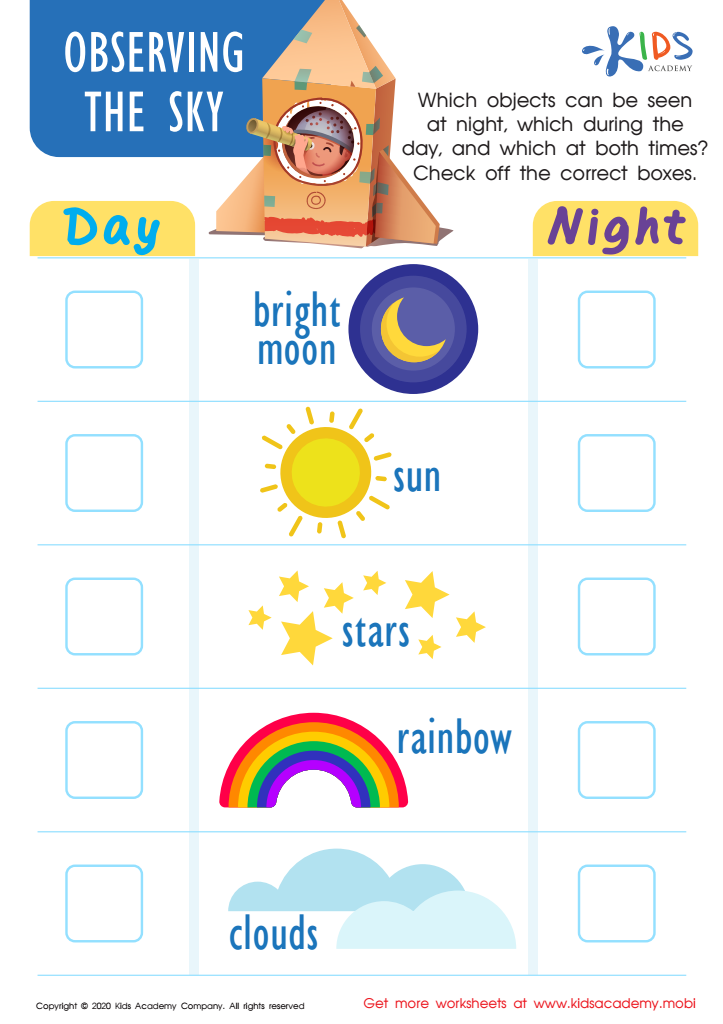
Observing the Sky Worksheet
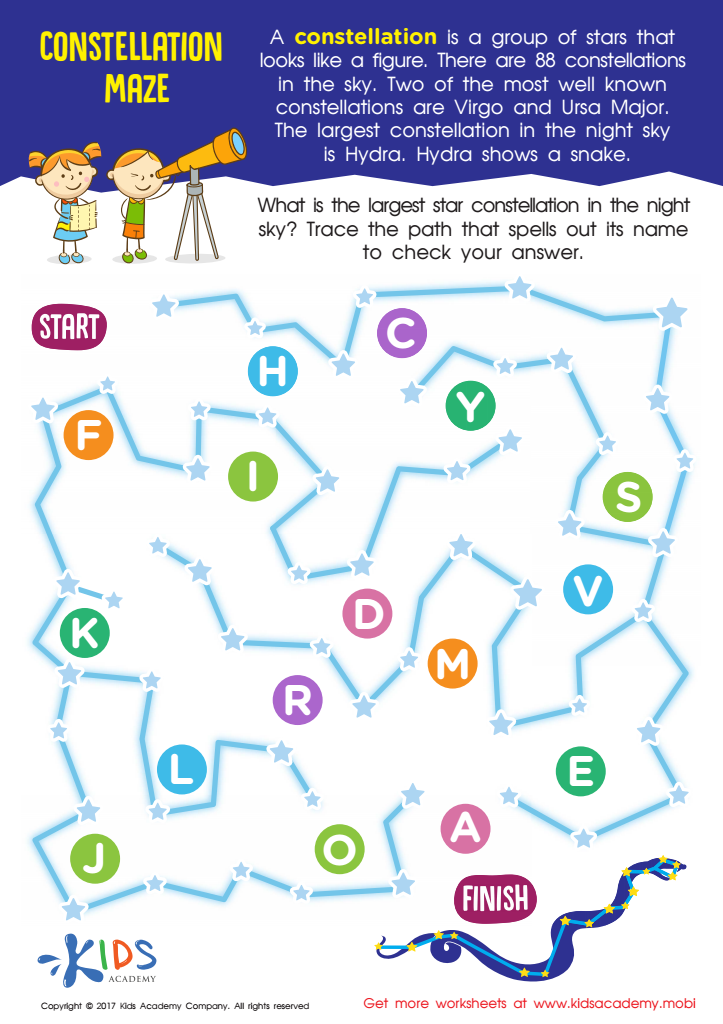
Constellations Worksheet








Understanding constellations offers a wealth of benefits for children aged 7-9, making it highly valuable for both parents and teachers to prioritize. At this formative age, learning about constellations cultivates a sense of curiosity and wonder about the universe, helping to spark an interest in astronomy and science as a whole. This initial intrigue can foster a lifelong appreciation for scientific inquiry and critical thinking skills.
Additionally, mapping and identifying constellations enhances a child's spatial awareness and visual orientation abilities. Recognizing patterns in the night sky requires observational skills and precision, promoting cognitive development. It also encourages children to spend time outdoors, connecting with nature, and engaging in experiences beyond digital screens.
Furthermore, constellations link children to cultural stories and mythologies from around the world. These stories enrich a child's understanding of global perspectives and histories, providing a multicultural dimension to their education. Discussing constellations can be a collaborative activity, strengthening core communication and collaboration skills eloquent in peer discussions and classroom activities.
In summation, understanding constellations for young children intersects science, critical thinking, cultural education, and outdoor learning, aligning perfectly with their natural curiosity. Prioritizing this can amplify both academic foundations and holistic personal growth.







