Understanding timelines Normal Social Studies Worksheets for Ages 7-9
3 filtered results
-
From - To
Discover the engaging world of timelines with our 'Understanding Timelines' worksheets designed for kids aged 7-9. These printable resources help young learners comprehend the concept of time through eye-catching visuals and interactive exercises. Our worksheets cover essential skills, encouraging students to sequence events, grasp chronological order, and connect historical milestones with personal experiences. Ideal for both classroom and home learning, these materials foster critical thinking, boost comprehension, and make learning about history enjoyable. Empower your child with the tools to create their own timelines and explore the past, turning history into an exciting adventure! Download now and inspire their curiosity!
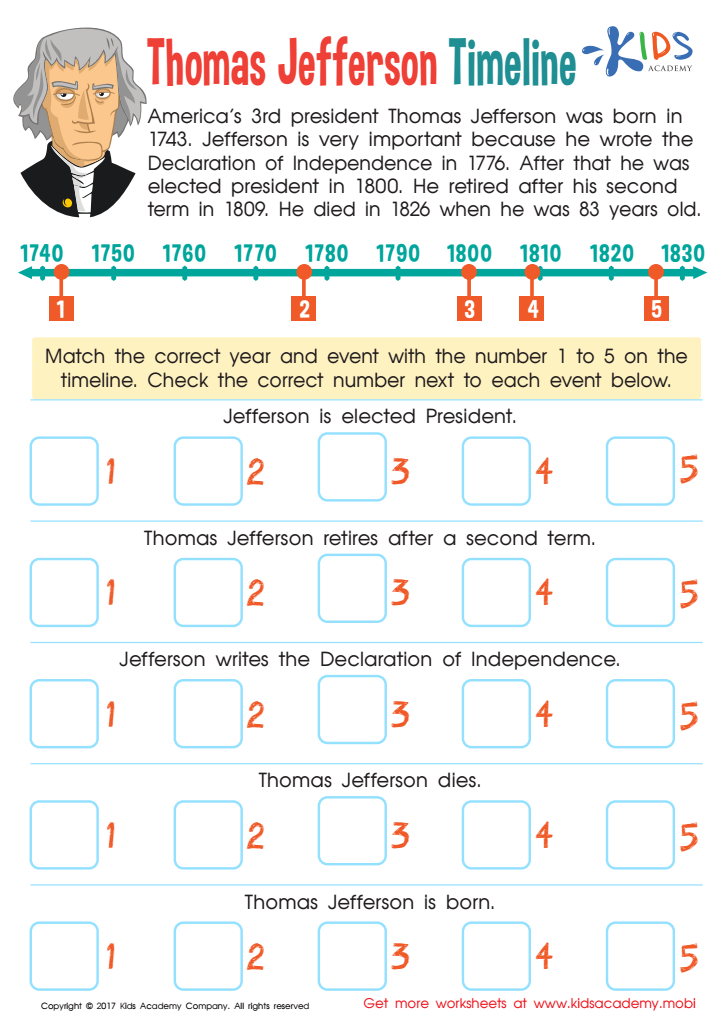
Thomas Jefferson Timeline Worksheet
 Assign to My Students
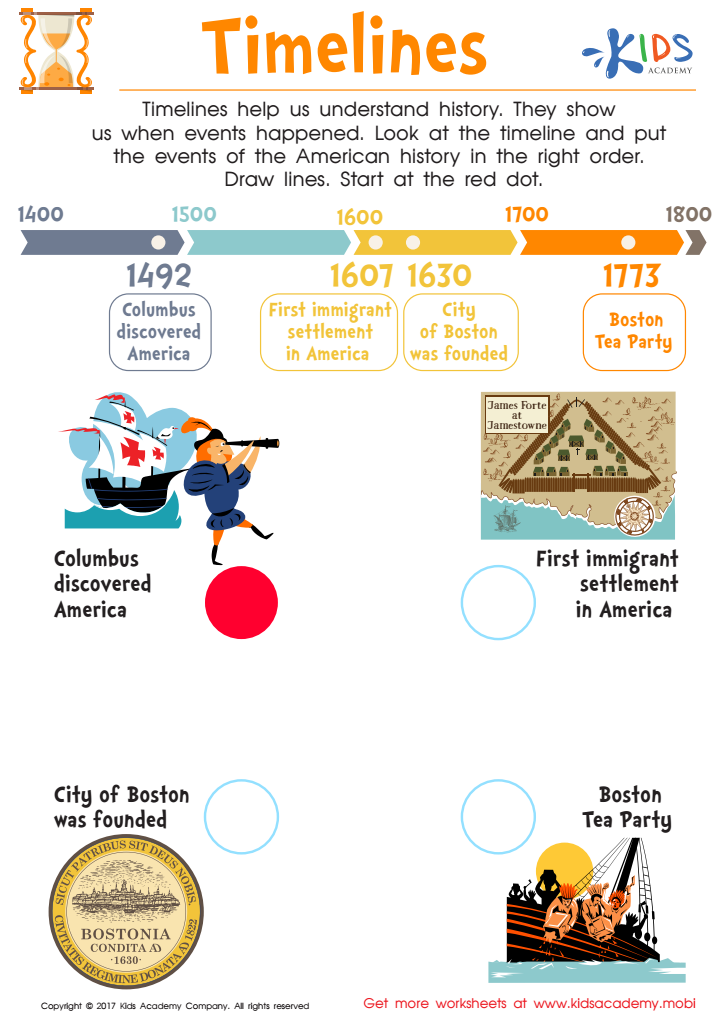
American History Timeline Worksheet
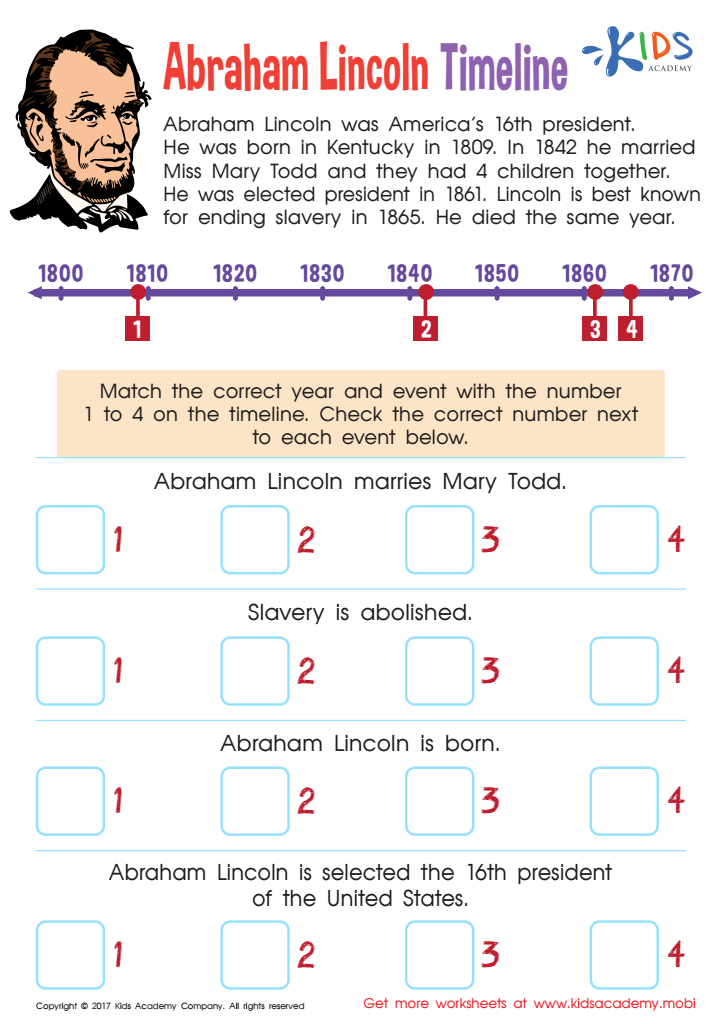
Abraham Lincoln Timeline Worksheet







Understanding timelines is crucial for children ages 7-9 as it develops essential cognitive skills and enhances their grasp of history and social studies. By learning to create and interpret timelines, children cultivate their ability to organize events chronologically. This skill is vital not only for academic success but also for understanding the progression of real-world events and their interconnections.
Timelines help children visualize and comprehend significant historical occurrences, making abstract concepts more tangible. This ability fosters critical thinking, as students must analyze the causes and effects of events, differentiate between primary and secondary sources, and engage in discussions about their relevance. Furthermore, by learning about various cultures and significant figures through timelines, children enhance their empathy and appreciation for diversity.
Parents and teachers play a key role in this learning process. Encouraging kids to explore family histories or local events on a timeline can reinforce the lesson, making history relatable and interesting. Ultimately, understanding timelines empowers children to make sense of their world, developing them into informed, engaged citizens who are more equipped to navigate the complexities of societal issues as they grow. Educators can build a foundation of knowledge that students will carry with them lifelong.