Vowel Recognition Normal Grammar Worksheets for Ages 7-9
3 filtered results
-
From - To
Introduce your 7-9-year-old to the essential skill of vowel recognition with our engaging and educational grammar worksheets! Specially designed for young learners, these worksheets help children identify and understand vowels within various contexts. Featuring fun activities, colorful illustrations, and interactive exercises, our materials ensure that grammar lessons are both enjoyable and effective. Perfect for classroom or home use, these worksheets will enhance your child's literacy and set a solid foundation for future learning. Equip your child with the knowledge and confidence they need to recognize vowels and excel in grammar today! Visit Kids Academy for more resources.
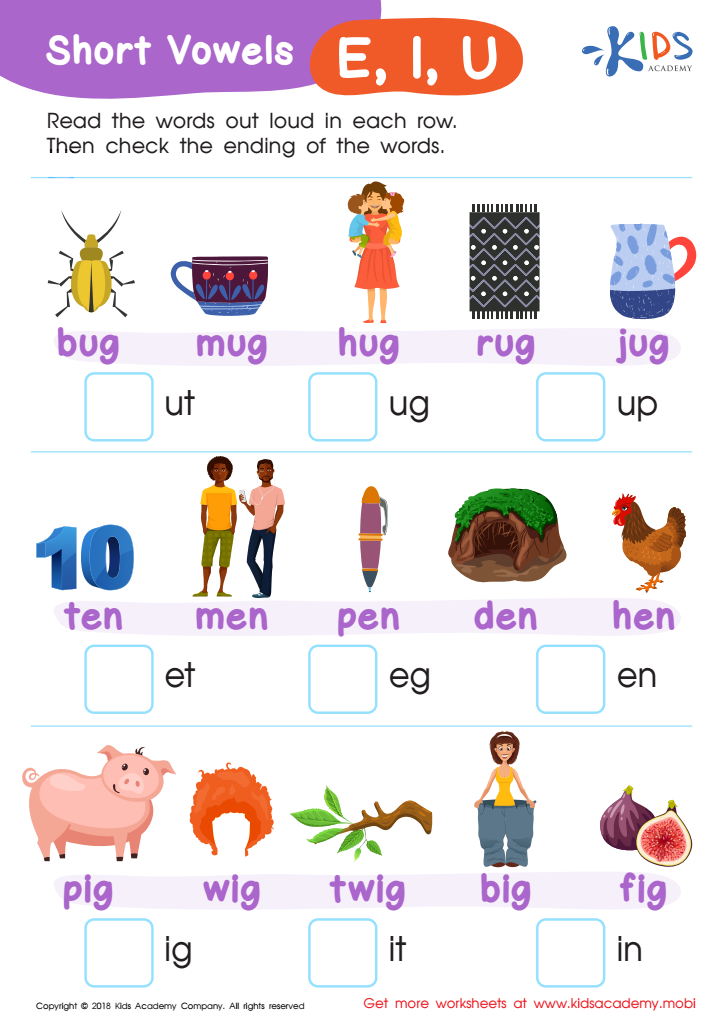
Short Vowels /e/, /i/, and /u/ Worksheet
 Assign to My Students
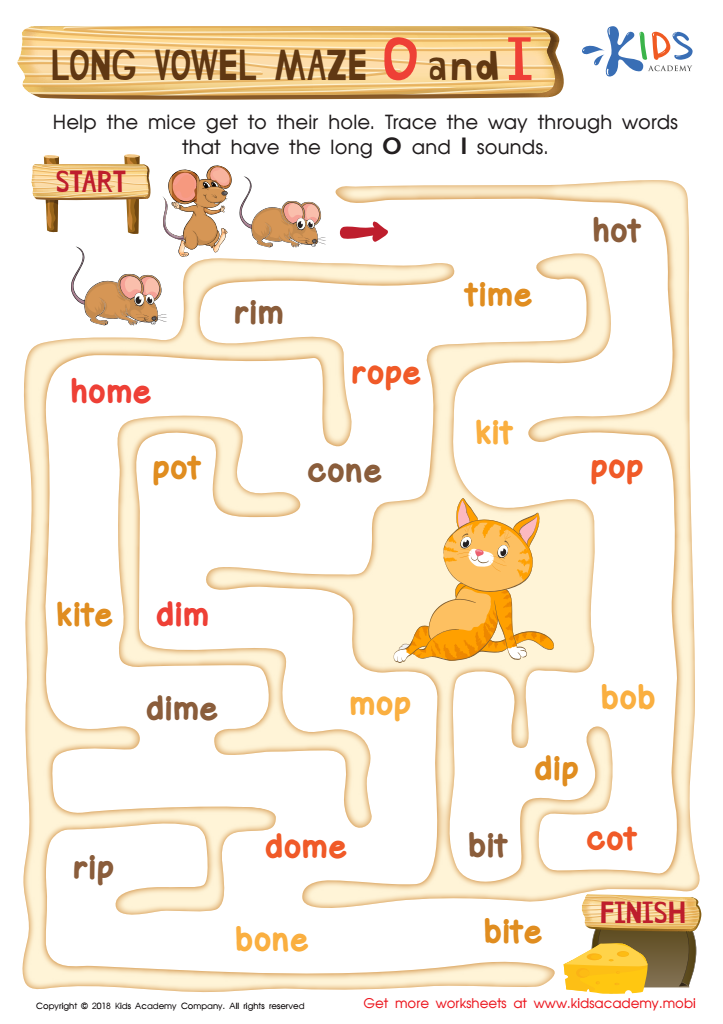
Long Vowel Maze /o/ and /i/ Worksheet
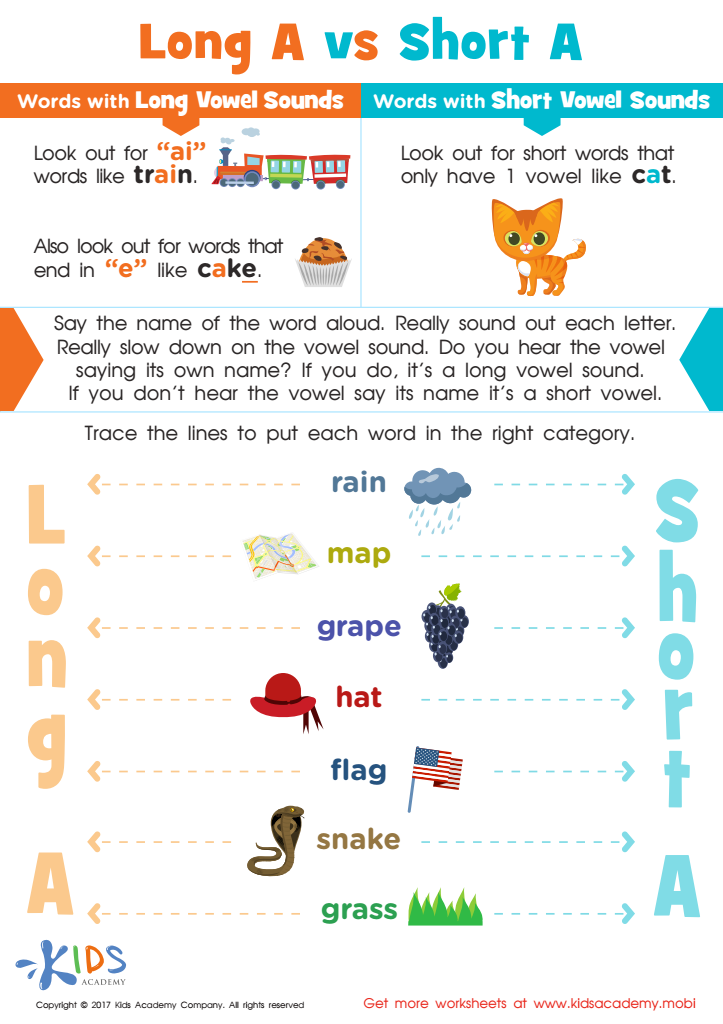
Long and Short Vowel A Spelling Worksheet








Vowel recognition plays a pivotal role in developing normal grammar skills in children ages 7-9. At this critical stage, young learners are transitioning from basic reading abilities to more advanced literacy skills. Understanding vowels is key to this progression for several reasons.
First and foremost, vowels are the building blocks of English phonetics, being present in almost all words. Proper vowel recognition aids in accurate pronunciation, which in turn supports effective communication. Mispronunciations can lead to misunderstandings and hinder the child's ability to express ideas clearly.
Furthermore, mastering vowel sounds enhances reading fluency. Children who can effortlessly distinguish and pronounce vowels are likely to read more smoothly and at a quicker pace. This fluency is essential for comprehension; the less cognitive effort children expend on decoding words, the more they can focus on understanding the text.
Correct vowel usage is also crucial for proper grammar and spelling. The English language has many vowel combinations that dictate specific spelling rules. Children who recognize these patterns are more adept at writing coherent sentences and using the correct grammatical structures.
In summary, focusing on vowel recognition during these formative years sets a strong foundation for linguistic proficiency, thus benefiting both academic success and everyday communication. Parents and teachers should prioritize this aspect of language learning to ensure comprehensive cognitive and social development.