Enhancing Reading Comprehension Normal Writing Worksheets for Ages 7-9
3 filtered results
-
From - To
Boost your child's reading skills with our "Enhancing Reading Comprehension Normal Writing Worksheets" designed specifically for ages 7-9. These engaging worksheets provide a fun, interactive way to improve comprehension abilities through various reading and writing exercises. Tailored to align with curriculum standards, our resources help children analyze texts, answer questions, and summarize main ideas, fostering a deeper understanding of what they read. Perfect for both classroom and at-home learning, these worksheets seamlessly integrate critical thinking and creativity in writing. Equip your young learners with the tools they need to excel in reading comprehension while enjoying the process of learning!
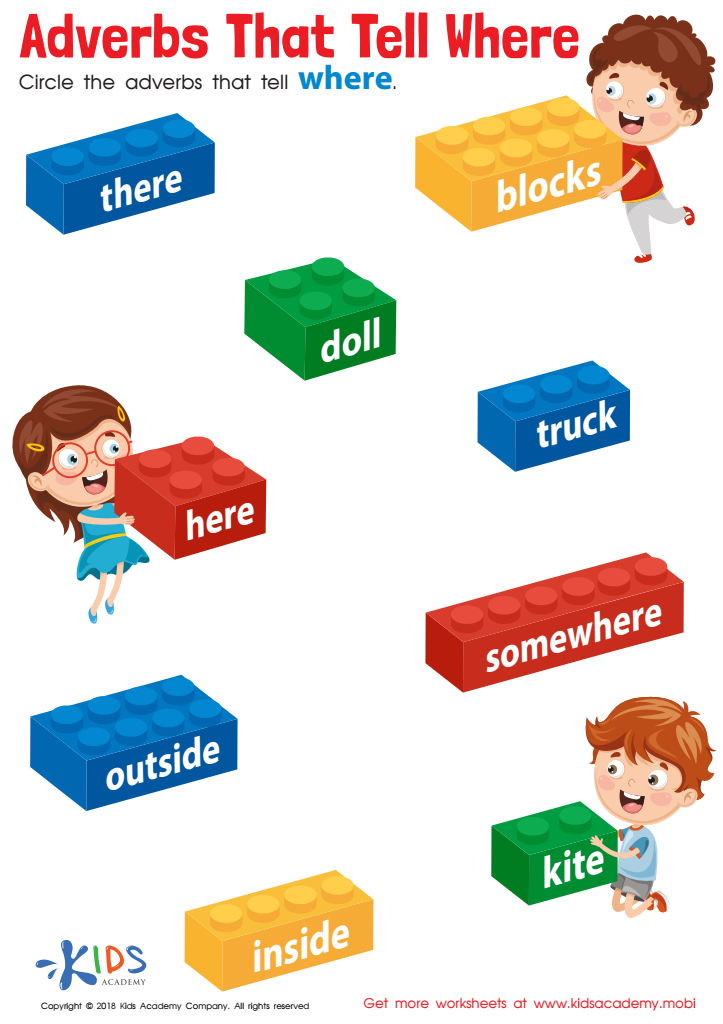
Adverbs That Tell Where Worksheet
 Assign to My Students
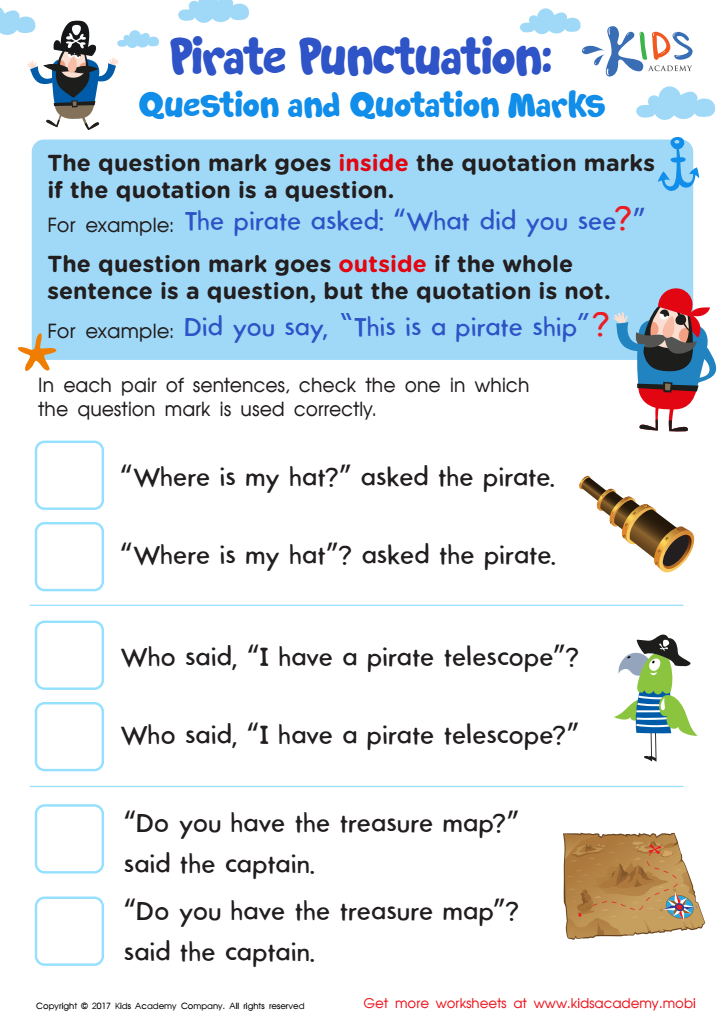
Question and Quotation Marks Worksheet
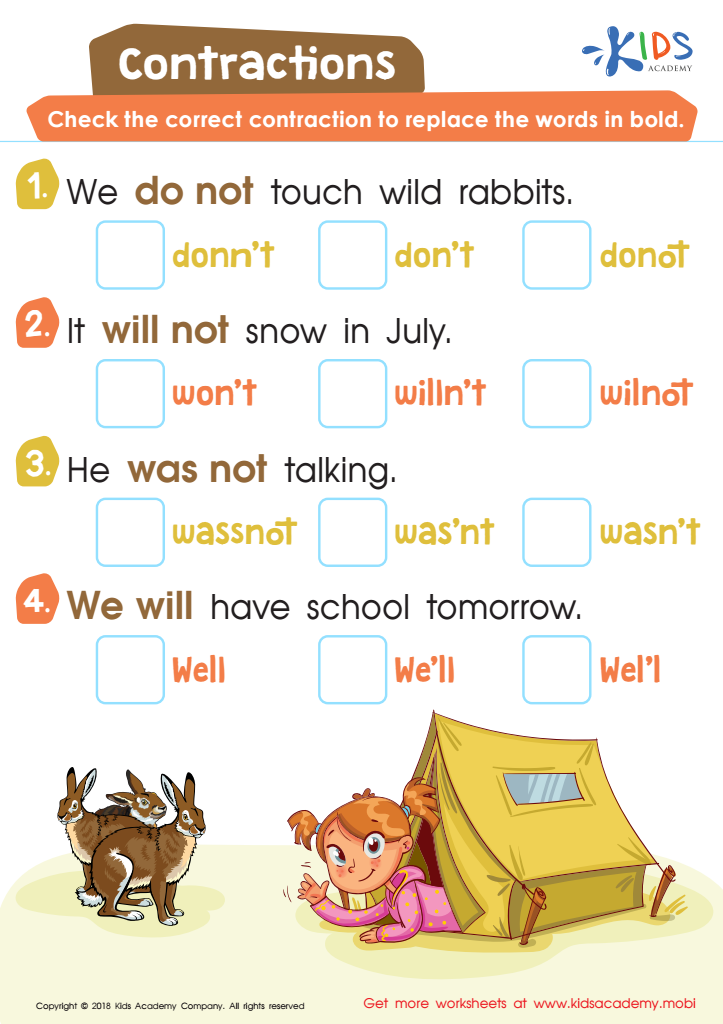
Contractions Worksheet






Enhancing reading comprehension in children aged 7-9 is crucial for their academic success and overall development. At this stage, children transition from learning to read to reading to learn, making comprehension skills essential. When parents and teachers prioritize comprehension, they empower students to engage with texts more deeply, fostering critical thinking and analytical skills that extend beyond reading.
Improved comprehension facilitates better vocabulary acquisition and language development. Children who understand what they read are more likely to enjoy reading, creating a lifelong love for literature and learning. Additionally, strong comprehension skills correlate with performance across subjects; students can better understand instructions, engage in discussions, and perform well on assessments.
Furthermore, fostering reading comprehension aids in emotional and social growth. Understanding characters' motivations and recognizing thematic elements in stories allows children to develop empathy and relate to diverse perspectives. By focusing on enhancing reading comprehension, parents and teachers help equip children with essential life skills, enabling them to navigate challenges effectively, communicate more clearly, and build confidence in their abilities.
In summary, prioritizing reading comprehension from ages 7-9 nurtures intelligent, empathetic, and motivated learners, setting the foundation for future academic and personal success.