Understanding suffixes Normal Writing Worksheets for Ages 7-9
6 filtered results
-
From - To
Explore our engaging "Understanding Suffixes Normal Writing Worksheets" designed for young learners aged 7-9! These worksheets introduce students to suffixes and their vital role in word formation. Through fun activities and exercises, children will enhance their vocabulary, spelling, and overall writing skills. Each worksheet is crafted to encourage critical thinking and creativity while helping students understand how adding suffixes can modify the meaning of root words. Ideal for both classroom use and homeschooling, these resources make learning enjoyable and interactive. Empower your child’s writing journey as they unlock the power of suffixes with our comprehensive and user-friendly worksheets!
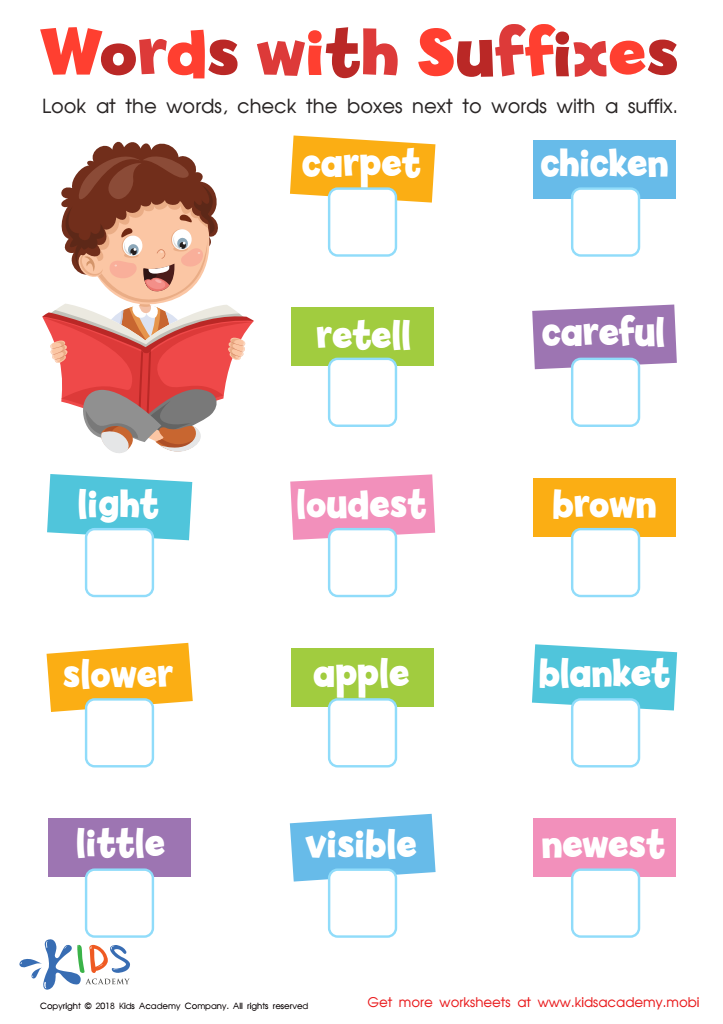
Reading: Words With Suffixes Worksheet
 Assign to My Students
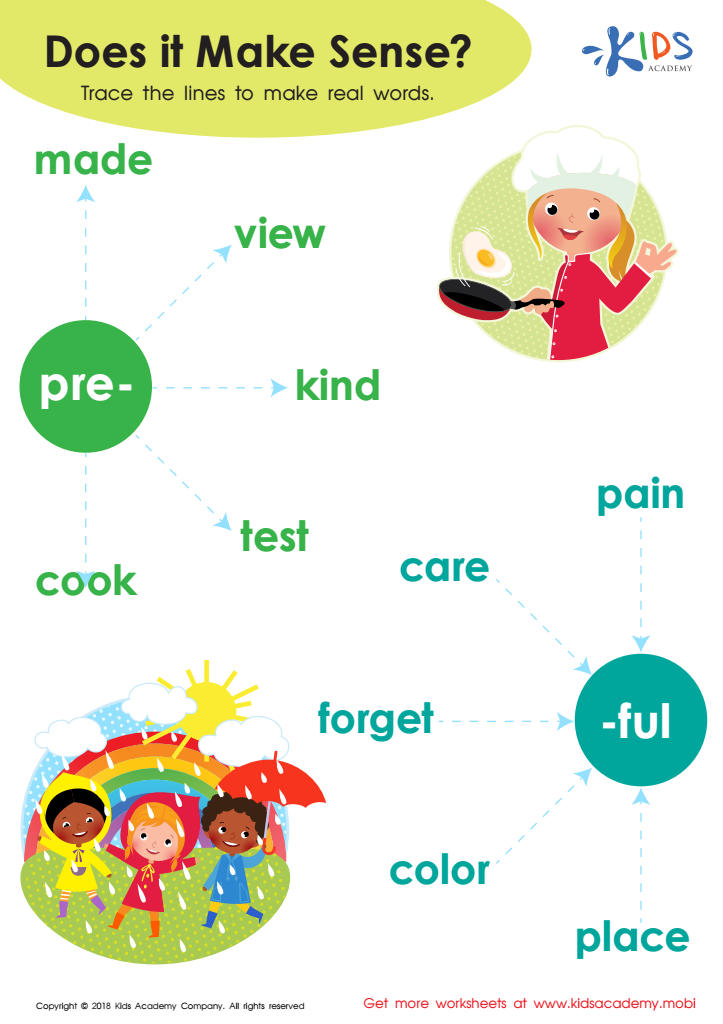
Prefix pre– and Suffix ful– Worksheet
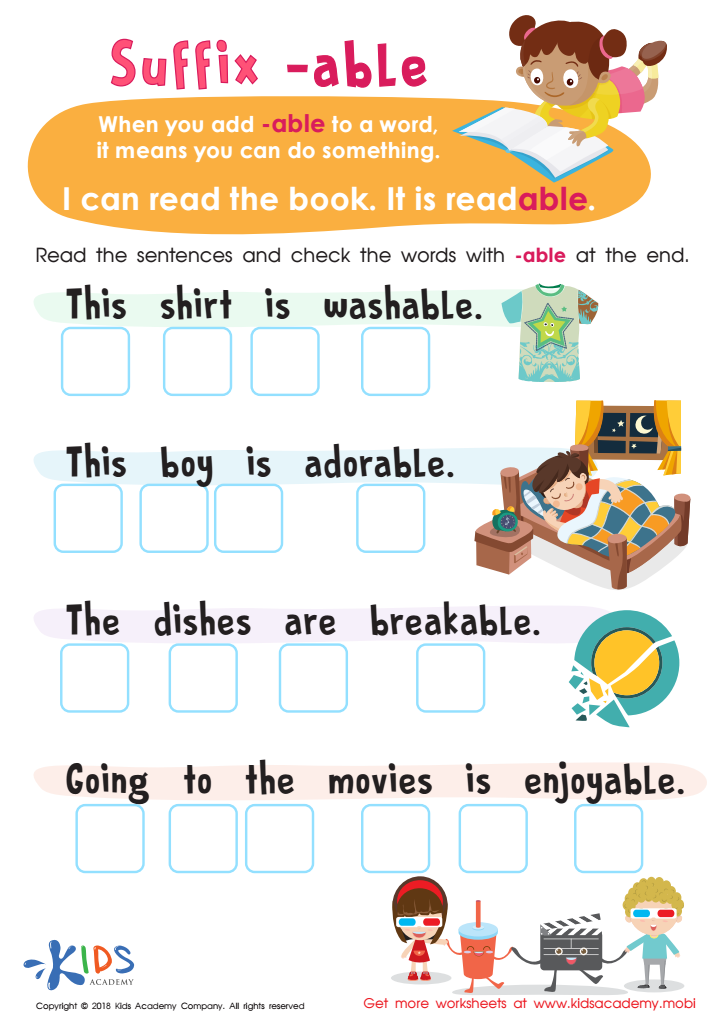
Suffix -Able Worksheet
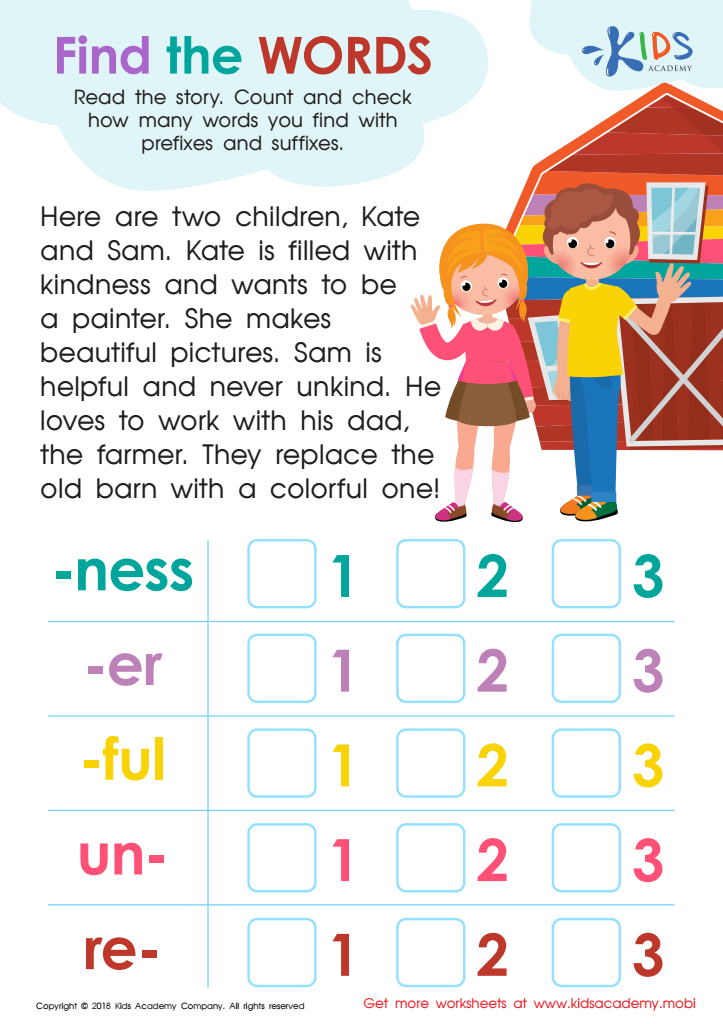
Prefix and Suffix Worksheet For Grade 3
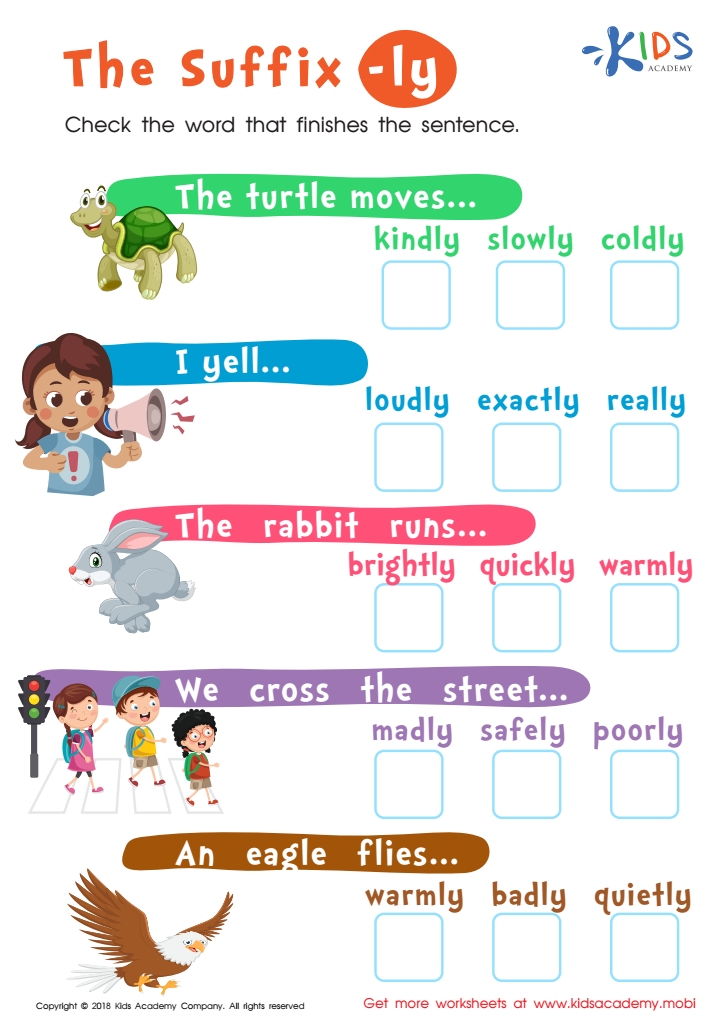
The Suffix -Ly Worksheet
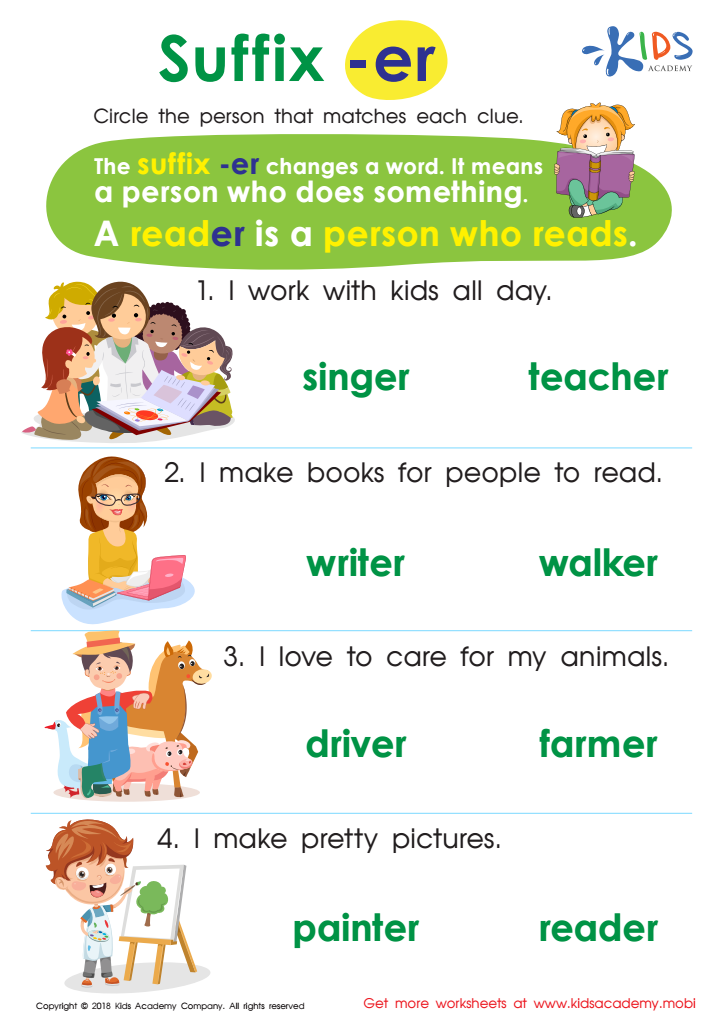
Suffix –er Printable Worksheet




.jpg)


Understanding suffixes is essential for young learners aged 7-9, as it lays the groundwork for strong reading and writing skills. Suffixes are letter combinations added to the end of words that can change their meaning and grammatical function. For example, adding "-ed" to "walk" turns it into "walked," indicating past action.
When parents and teachers emphasize suffixes, they help children expand their vocabulary. By learning suffixes, children can decode unfamiliar words more easily and understand their meanings in context. This skill boosts confidence and encourages more extensive reading, which is crucial for academic success.
Moreover, knowledge of suffixes aids in writing proficiency. Young writers can experiment with word forms to express their ideas more clearly and creatively. For instance, they can transform “happy” into “happiness” or “care” into “careful,” enriching their language use.
By nurturing this understanding, parents and teachers go beyond mere literacy; they foster critical thinking and comprehension. Engaging with suffixes will inspire children to explore language, enhancing both their enjoyment of reading and their ability to communicate effectively. Therefore, creating activities that include suffix recognition can be a fun and impactful way to support children’s overall language development.