Sound-letter association Normal Alphabet Worksheets for 7-Year-Olds
3 filtered results
-
From - To
Boost your child's reading skills with our Sound-Letter Association Normal Alphabet Worksheets designed specifically for 7-year-olds. These engaging, educational worksheets help children connect letters with corresponding sounds through fun activities and exercises. Each worksheet reinforces phonics and early literacy, providing a strong foundation for reading proficiency. Our expertly crafted resources support various learning styles, making phonics enjoyable and accessible. Ideal for both classroom and at-home learning, these worksheets will keep your child motivated and excited about reading. Encourage your young learner towards mastery of sound-letter associations with high-quality printable worksheets from Kids Academy.
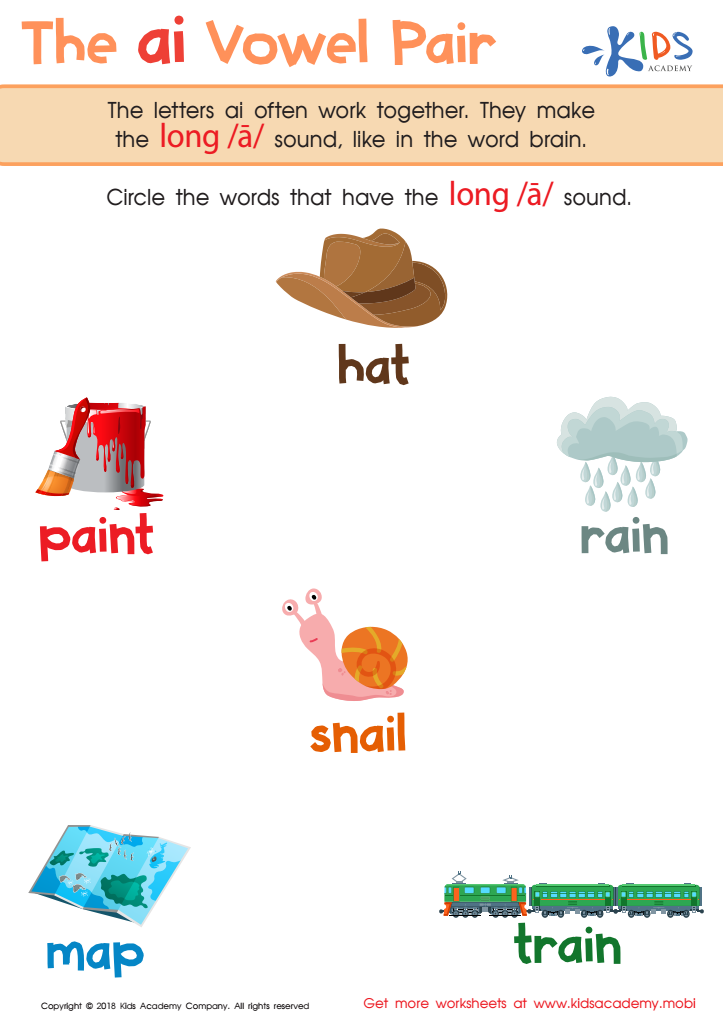
The AI Vowel Pair Worksheet
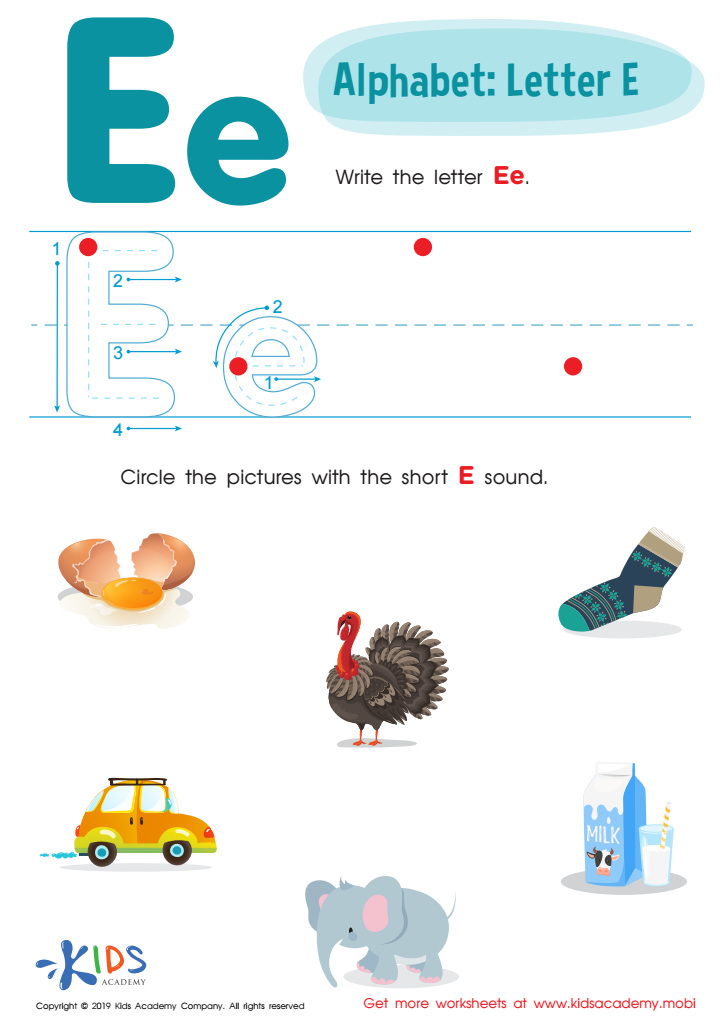
Letter E Tracing Worksheet
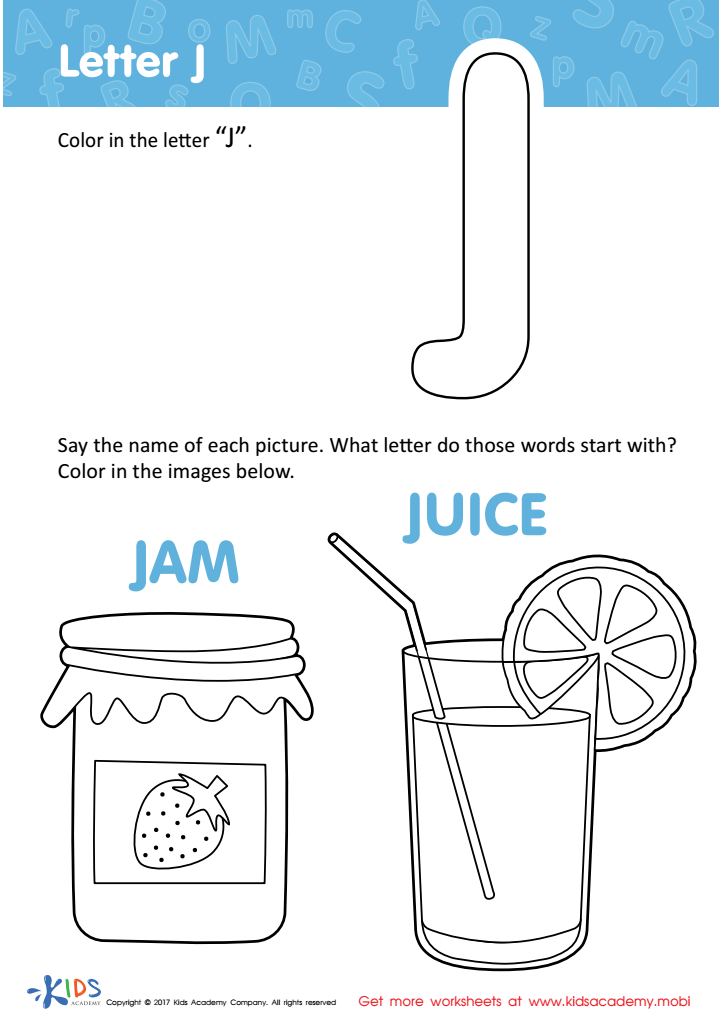
Letter J Coloring Sheet
 Assign to My Students





.jpg)

Understanding sound-letter associations, also known as phonics, is crucial for 7-year-olds because it forms the foundation of reading and writing proficiency. At this age, children transition from recognizing basic letters to connecting these visual symbols with their corresponding sounds. This skill is fundamental for decoding words, enabling children to read independently and comprehend text more effectively.
Firstly, a robust grasp of phonics enhances a child's reading fluency, which is the ability to read text smoothly and accurately. Fluent readers can focus on comprehension rather than struggling with individual words, fostering a deeper understanding of the material. Phonics also aids in spelling, as children learn to segment words into their basic sounds and recognize common spelling patterns.
Additionally, strong phonics skills empower children with confidence in their literacy capabilities, encouraging a positive attitude towards learning. This confidence can extend across subjects, as reading and comprehension skills are critical in every academic discipline.
Lastly, early mastery of sound-letter associations can help prevent future learning difficulties. Delays in literacy skills can have long-term effects on academic progress and self-esteem, making early intervention essential.
Therefore, parents and teachers should prioritize phonics education to support their children’s overall academic success and lifelong love for reading.







