Sound Association Normal Phonics Worksheets for 7-Year-Olds
6 filtered results
-
From - To
Discover our engaging "Sound Association Normal Phonics Worksheets for 7-Year-Olds" designed to enhance your child's reading and spelling skills. These worksheets are tailored for second graders, helping them connect sounds with corresponding letters and letter combinations. Each activity is thoughtfully created to make phonics practice both fun and effective, ensuring kids develop a strong foundation in sound recognition and word formation. Perfect for classroom use or at-home learning, our printable worksheets support young learners on their journey to becoming confident readers. Download now from Kids Academy and watch your child’s phonics skills flourish!
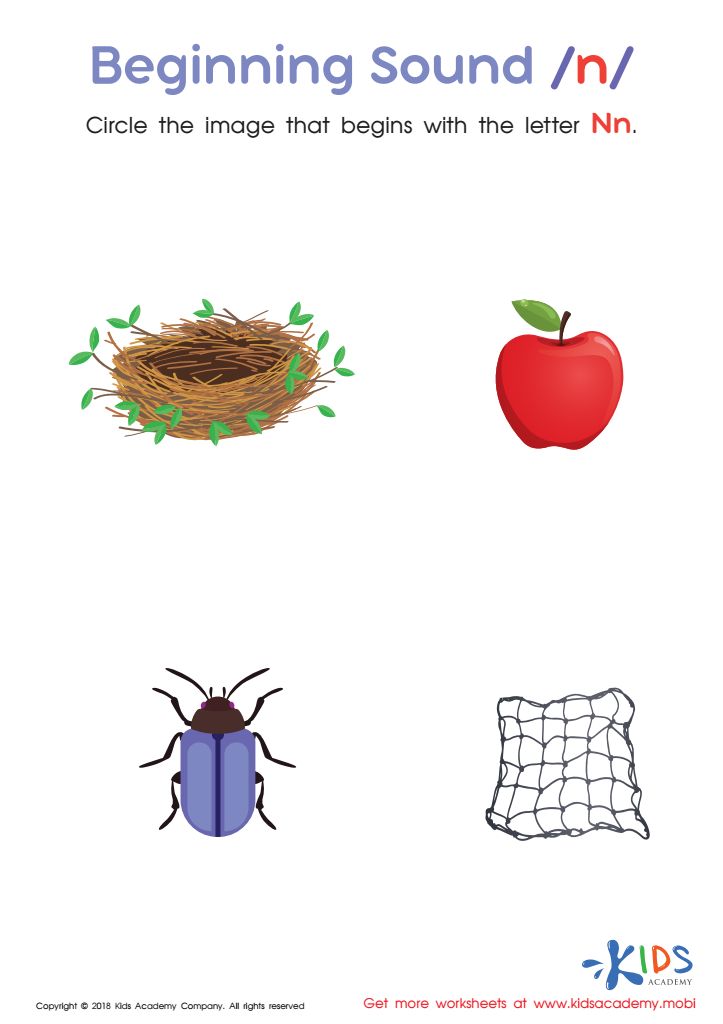
Beginning Sound «n» Worksheet
 Assign to My Students
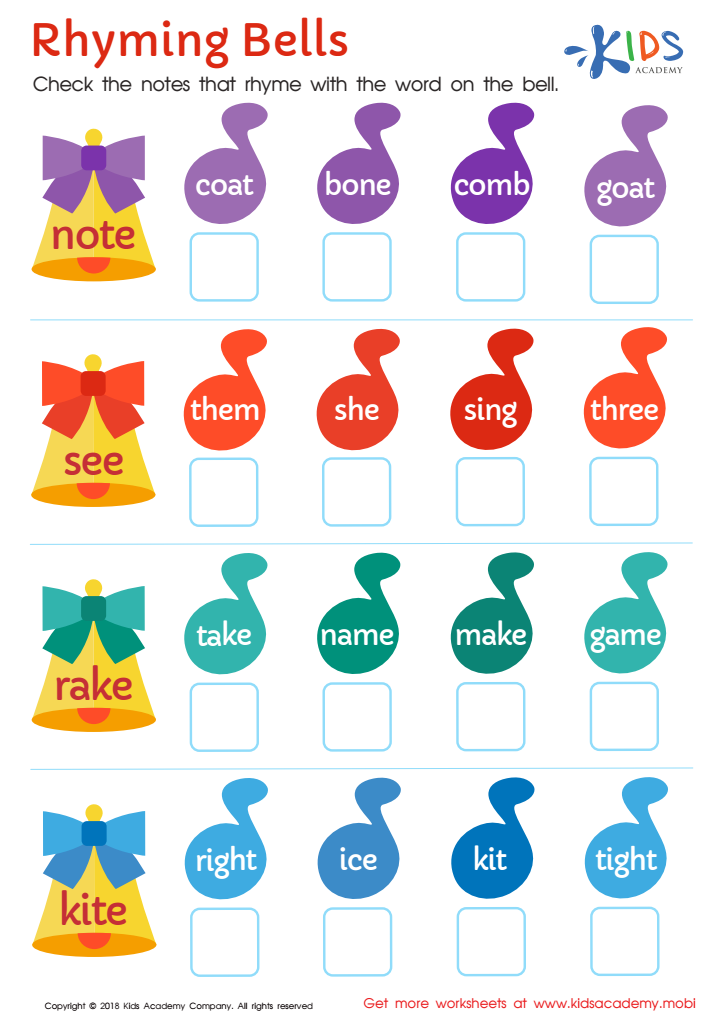
Rhyming Bells Worksheet
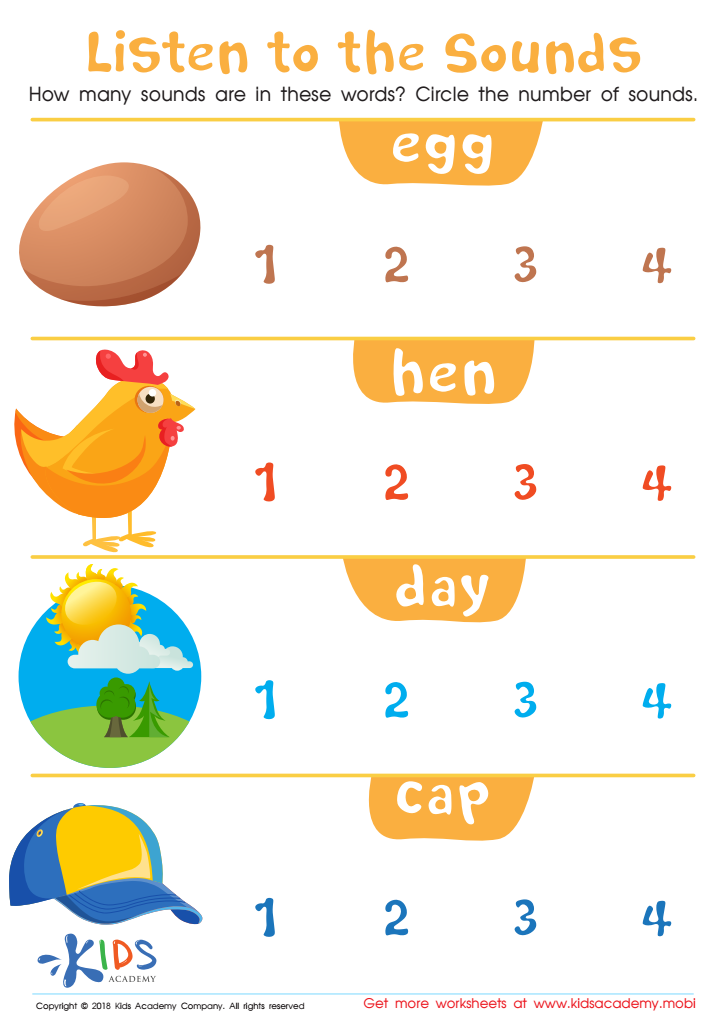
Listen to the Sounds Worksheet
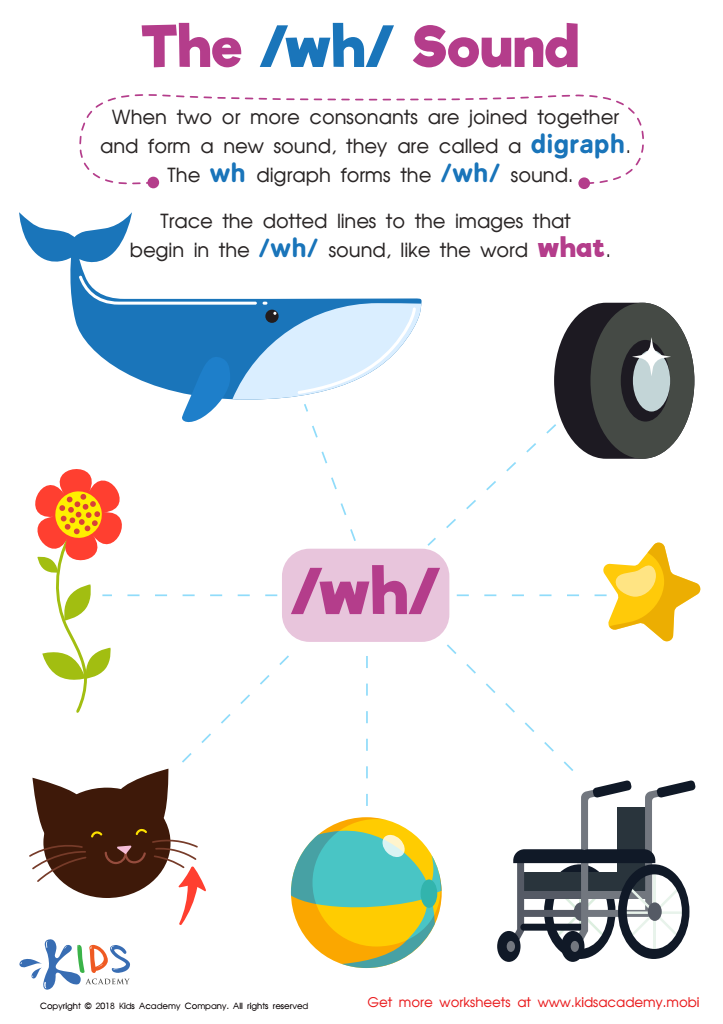
The /wh/ Sound Worksheet
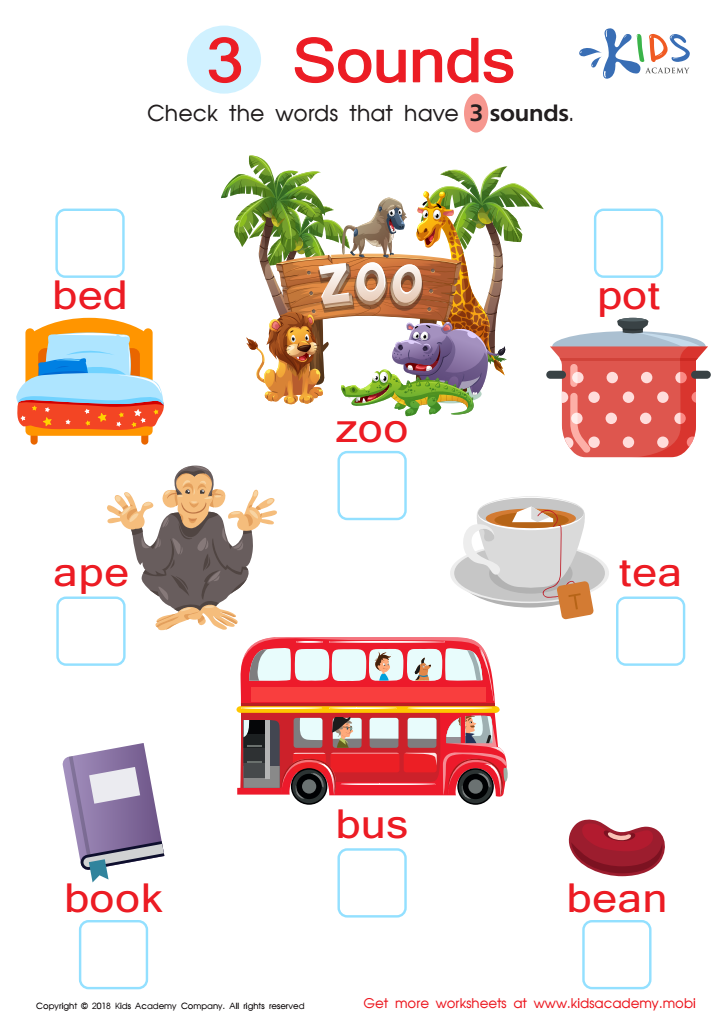
3 Sounds Worksheet
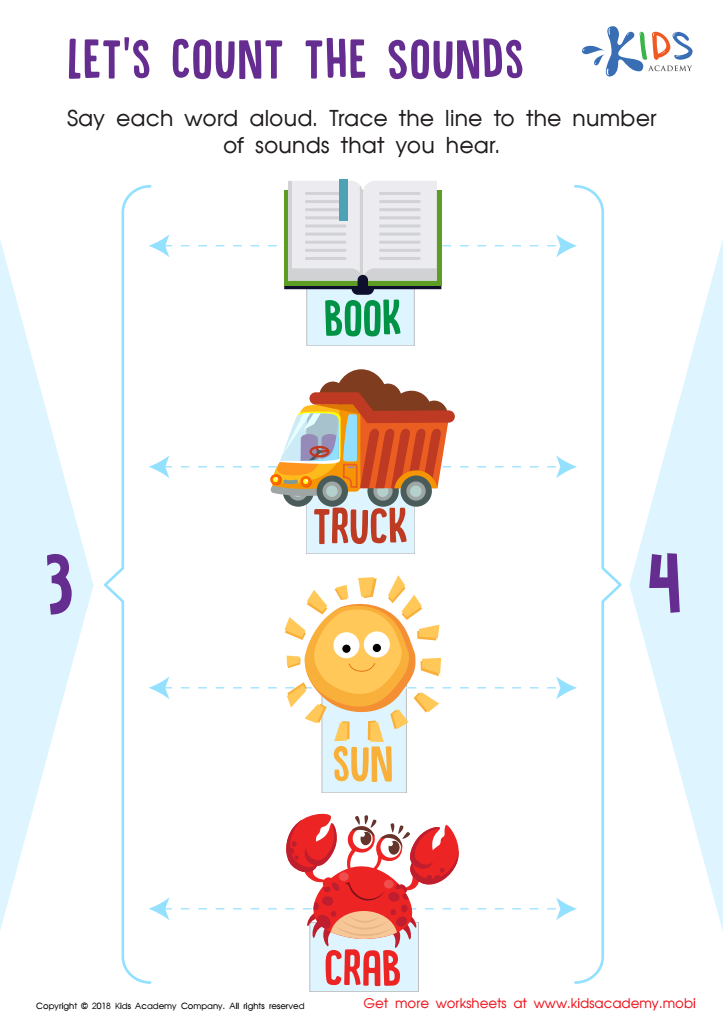
Let's Count the Sounds Worksheet








Sound association and normal phonics are crucial components in early literacy, especially for 7-year-olds who are typically in the process of honing their reading skills. Sound association involves recognizing the relationship between letters and their corresponding sounds. Phonics goes further by helping children decode written language, thereby enabling them to read, spell, and write more effectively.
For parents and teachers, understanding and emphasizing these skills can make a considerable difference in a child's academic journey. First, strong phonics skills contribute to reading fluency. As children become proficient in sound association and phonetic rules, they can tackle unfamiliar words more confidently and read more smoothly. This not only enhances comprehension but also fosters a love for reading.
Second, a solid foundation in phonics supports better spelling and writing. When children understand how sounds connect to form words, they can apply this knowledge in their written work, leading to more accurate spelling and more complex sentence construction.
Lastly, phonetic awareness can boost a child's self-esteem. Conquering reading challenges through sound association and phonics helps kids build confidence. This newfound self-assurance translates into other areas of learning, encouraging a more robust and enthusiastic approach to education.
In essence, caring about sound association and phonics sets the stage for academic success, personal growth, and a lifelong appreciation for literacy.







