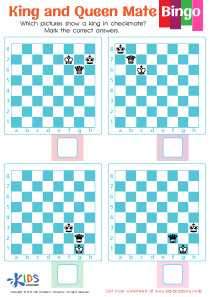
Problem-solving practice Normal Chess Worksheets for 7-Year-Olds
3 filtered results
Difficulty Level
Grade
Age
-
From - To
Subject
Activity
Standards
Introduce your 7-year-old to the exciting world of chess with our Problem-Solving Practice Normal Chess Worksheets. Designed to develop essential skills, these engaging worksheets focus on enhancing critical thinking, strategic planning, and foresight using intriguing chess scenarios. Each sheet challenges young minds, encouraging them to solve problems step-by-step, fostering a love for the game while bolstering intellectual growth. With a variety of puzzles and activities tailored for budding chess enthusiasts, our worksheets provide an enjoyable way to improve cognitive abilities, patience, and concentration. Empower your child with the tools they need to excel in chess and beyond! Visit our website to get started.
Favorites
With answer key
Interactive
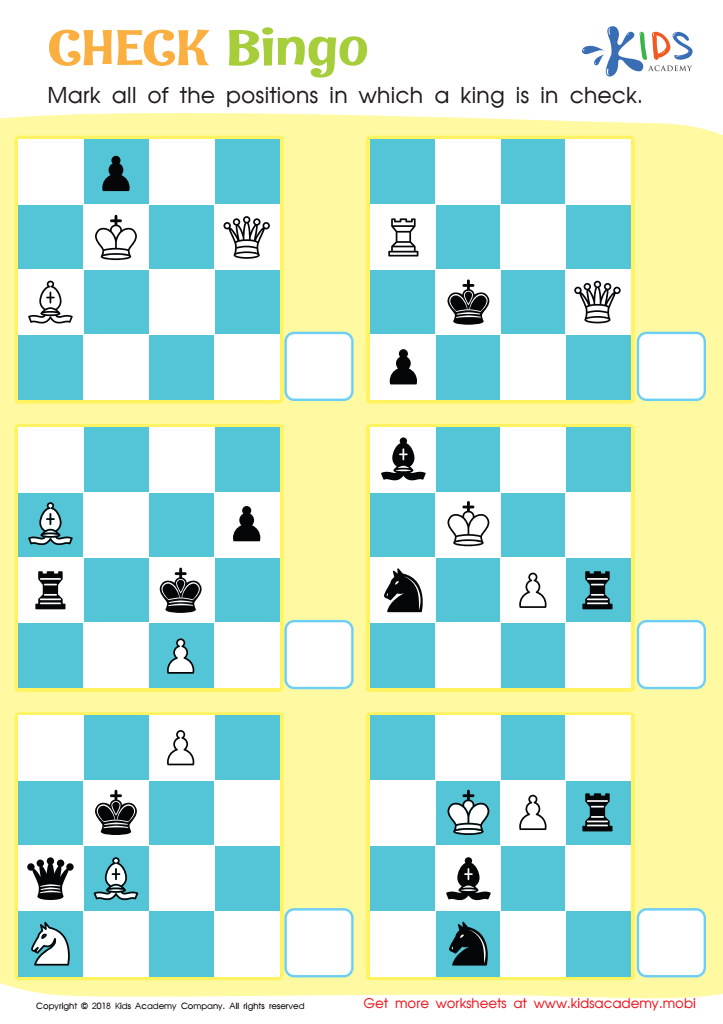
Check Bingo Worksheet
Chess helps young minds build critical thinking, problem-solving and logical reasoning skills. This free PDF worksheet is a fun way to teach these skills. It explains the concept of check and includes gameboards with kings in various positions. Students mark off the boards where a king isn't in check, and they're ready to move onto checkmate!
 Assign to My Students
Check Bingo Worksheet
Worksheet
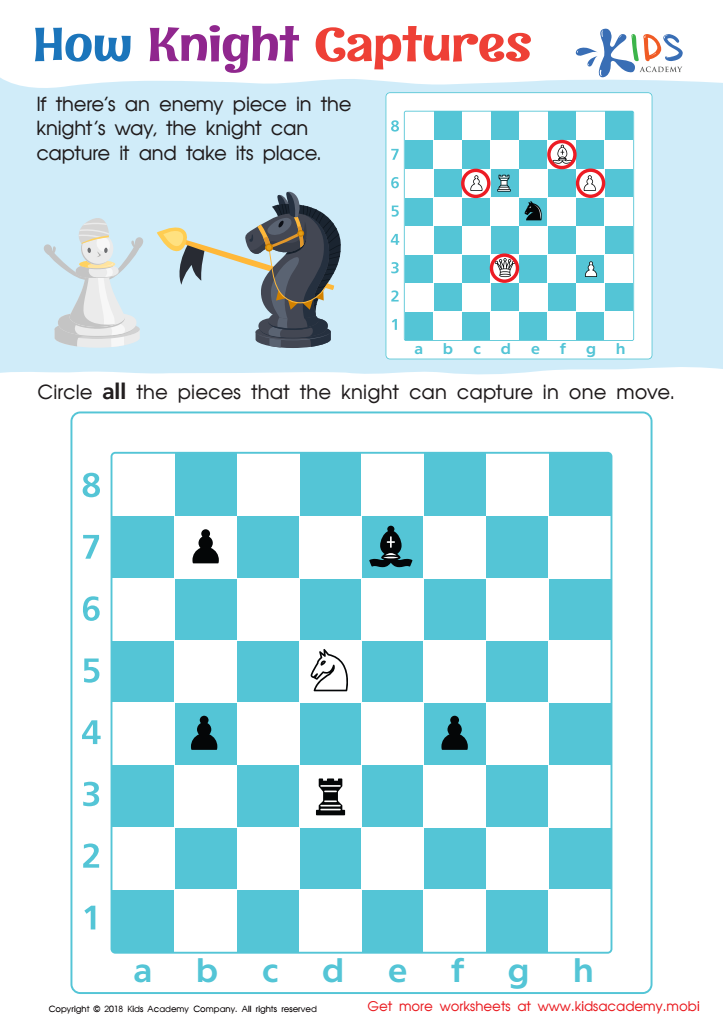
How Knight Captures Worksheet
Test your child's knowledge of chess pieces by asking them to identify the knight. It is shaped like a horse and its goal is to capture the enemy king in order to win the game. The knight has the advantage of being able to jump over other pieces, taking them out and taking their place. See how many pieces the knight can capture in one move with this worksheet.
How Knight Captures Worksheet
Worksheet
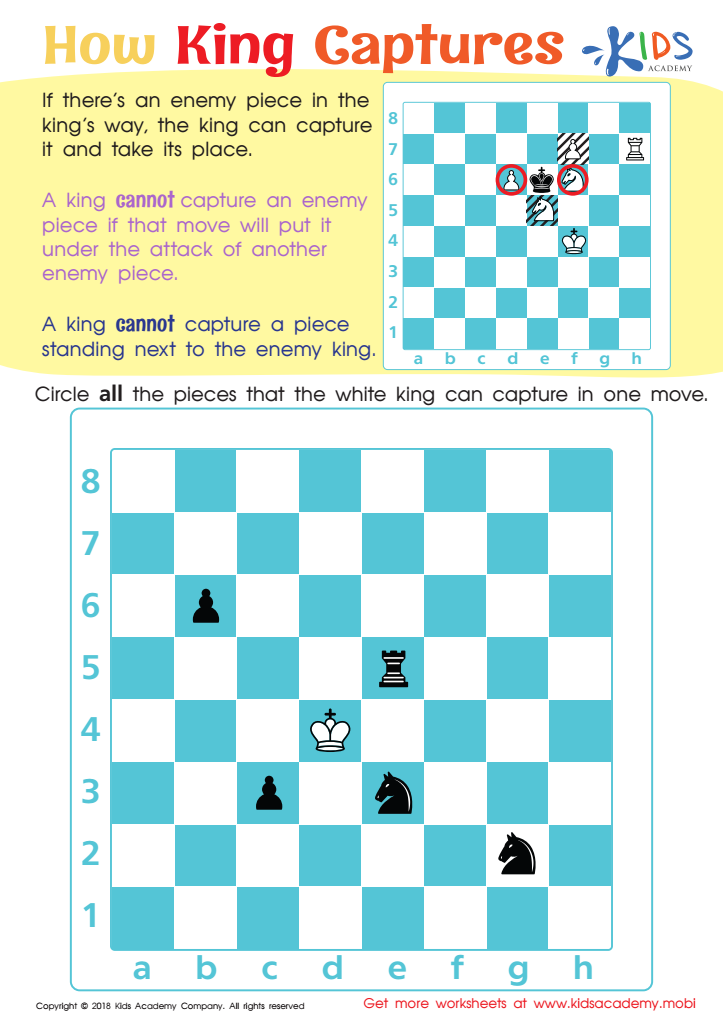
How King Captures Worksheet
The king can capture an enemy piece by taking its place. But it cannot move if the action will put it at risk of attack, or if it's next to the enemy king. On this worksheet, circle the places the white king can capture in one move. (80 words)
How King Captures Worksheet
Worksheet
Join Kids Academy for Free
Who is primarily going to use this learning content?



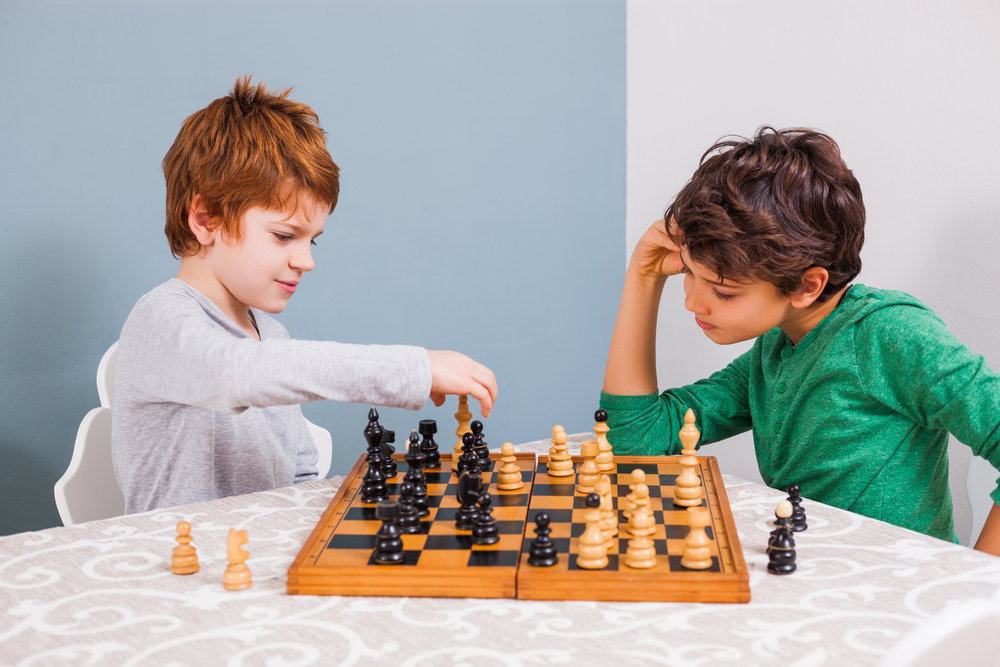

Introducing 7-year-olds to problem-solving practice through normal chess can be immensely beneficial for their cognitive and social development. Chess is a comprehensive game that not only requires strategic thinking but also teaches patience, foresight, and complex problem-solving skills.
Firstly, chess fosters critical thinking by requiring children to analyze possible moves and envision future consequences. This predictive thinking enhances a child's ability to plan ahead, assess risks, and make informed decisions. These cognitive processes are fundamental as they align closely with early academic skills such as mathematics and logical reasoning.
Additionally, engaging in chess helps children improve their concentration and attention span. In an age where distractions are abundant, the focus required to play chess can translate into better concentration in academic settings and other areas of life.
On a social level, chess provides an avenue for children to interact and bond with peers and adults. Playing chess teaches kids about sportsmanship—they learn to handle wins gracefully and deal with losses constructively. These experiences nurture emotional intelligence and resilience.
Finally, playing chess can be a source of immense enjoyment and satisfaction for children. The sense of achievement when solving a challenging problem or winning a game can boost their self-esteem and foster a positive attitude towards continuous learning and self-improvement. Therefore, encouraging 7-year-olds to practice chess should be a priority for both parents and teachers.