
Animal Classification Normal Worksheets for 7-Year-Olds
3 filtered results
Difficulty Level
Grade
Age
-
From - To
Subject
Activity
Standards
Discover the exciting world of animal classification with our engaging Normal Worksheets designed specifically for 7-year-olds! These printable activities help young learners understand the various animal groups, including mammals, birds, reptiles, insects, and more. With colorful illustrations and easy-to-follow instructions, kids will enjoy identifying and categorizing animals based on their characteristics. Each worksheet encourages critical thinking and builds foundational knowledge in biology, ensuring a fun and educational experience. Perfect for home or classroom use, our Animal Classification Normal Worksheets promote active learning while igniting a passion for wildlife exploration. Dive into the animal kingdom today!
Favorites
With answer key
Interactive
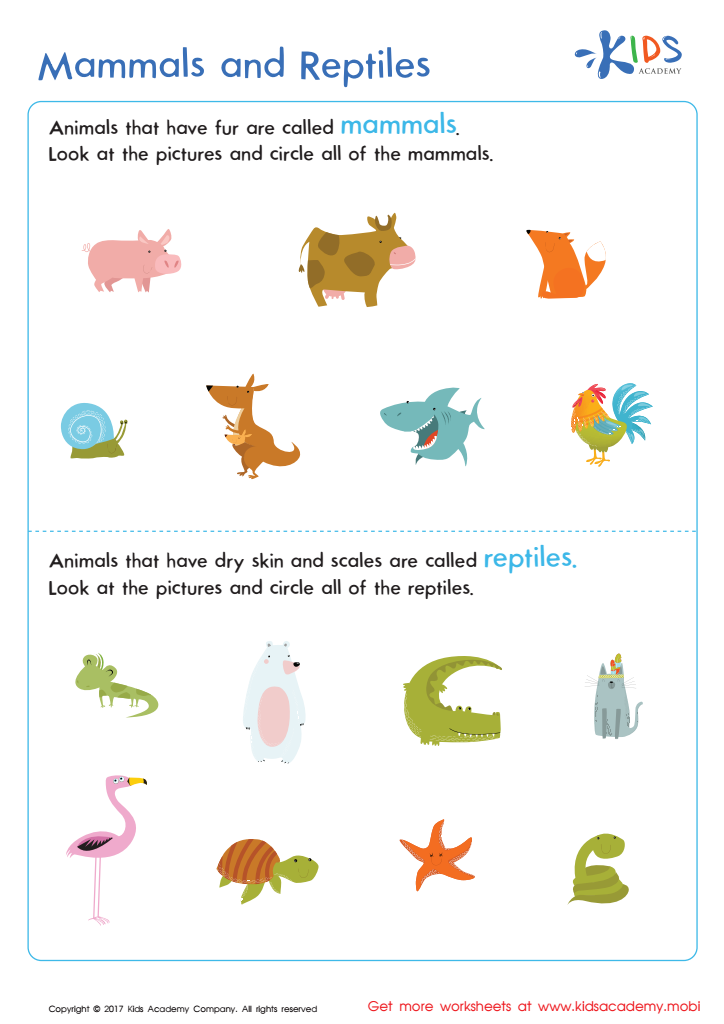
Mammals and Reptiles Worksheet
Challenge your child to identify mammals and reptiles with this worksheet. It's a great way to help them recognize the differences between these two types of animals.
 Assign to My Students
Mammals and Reptiles Worksheet
Worksheet
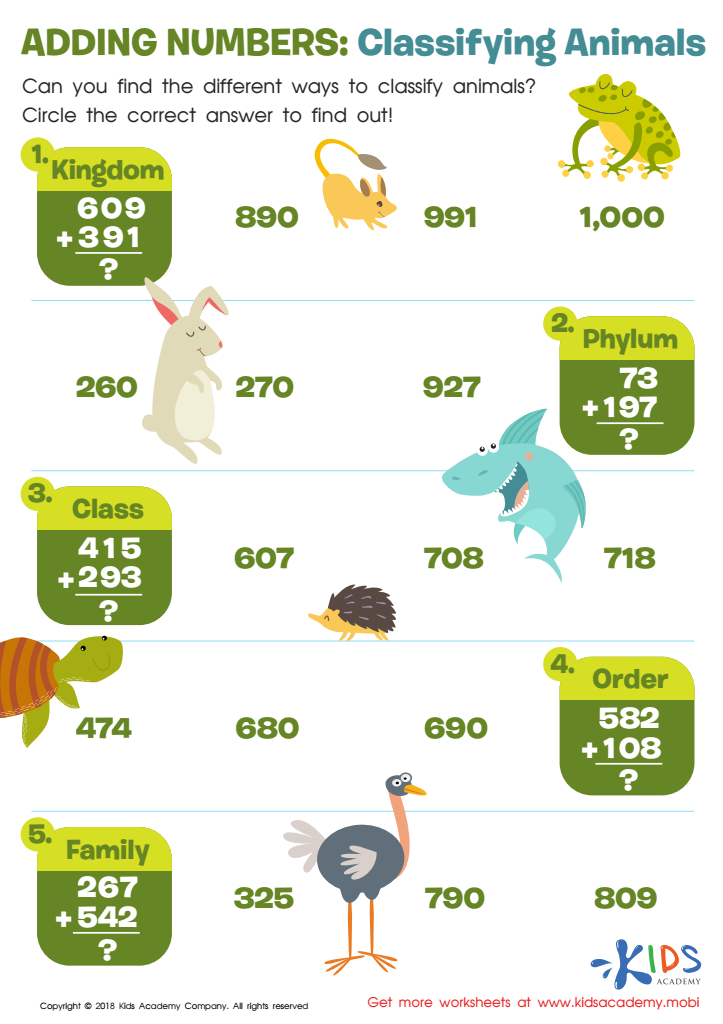
Adding Numbers: Classifying Animals Worksheet
Your kids can learn to classify animals in Biology. This worksheet helps them do this by solving 5 equations. Circle the right answer to complete the task.
Adding Numbers: Classifying Animals Worksheet
Worksheet
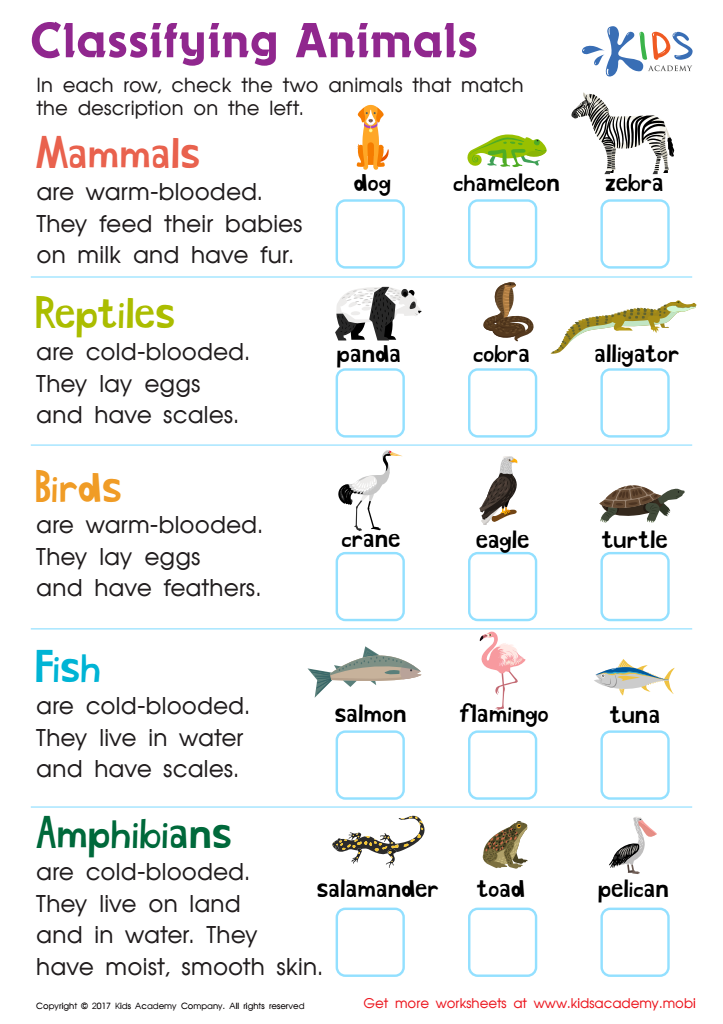
Classifying Animals Worksheet
Print the 2nd grade animal classification worksheet and help kids study the differences between mammals, reptiles, birds, fish and amphibians. Let them pick two examples from the options given.
Classifying Animals Worksheet
Worksheet
Join Kids Academy for Free
Who is primarily going to use this learning content?







Animal classification is an essential concept for young learners, and both parents and teachers should care about introducing it effectively. At the age of seven, children are naturally curious about the world around them, including animals. Understanding animal classification helps to foster this curiosity while promoting critical thinking and comprehension skills.
First, learning about classification introduces children to basic scientific principles. It teaches them how to categorize and make sense of the diversity of life on Earth, labeling animals as mammals, reptiles, birds, and more. This foundational knowledge supports their ability to engage in scientific discussions and inquiry as they grow.
Additionally, exploring animal classification can spark a love for nature and wildlife. When children comprehend the different traits and habitats of animals, they are more likely to appreciate biodiversity and the importance of conservation efforts. This awareness can nurture a sense of responsibility toward the environment as they recognize their role in protecting it.
Moreover, discussions around animals provide valuable opportunities for integrating language arts—through storytelling, writing, and vocabulary building. By emphasizing animal classification, parents and teachers create well-rounded educational experiences that enrich children’s understanding of the natural world.








