Number comprehension Normal Worksheets for 7-Year-Olds
3 filtered results
-
From - To
Our Number Comprehension Normal Worksheets for 7-Year-Olds are designed to build a solid mathematical foundation. These engaging activities help children enhance their number sense, improve counting skills, and master basic arithmetic operations. Each worksheet combines fun with learning, featuring colorful illustrations and interactive tasks that make math enjoyable. Ideal for both classroom use and home practice, these worksheets support critical thinking and problem-solving, encouraging kids to explore numbers in various contexts. Equip your child with the quantitative skills needed for future academic success with our expertly crafted worksheets, tailored specifically for young learners.
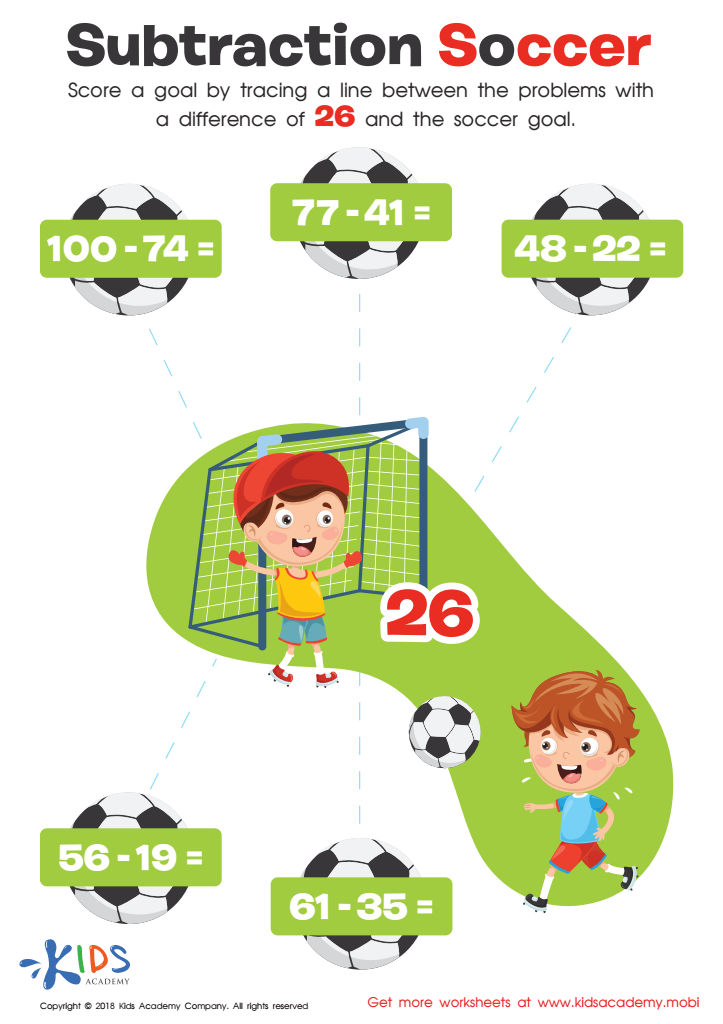
Subtraction Soccer Worksheet
 Assign to My Students
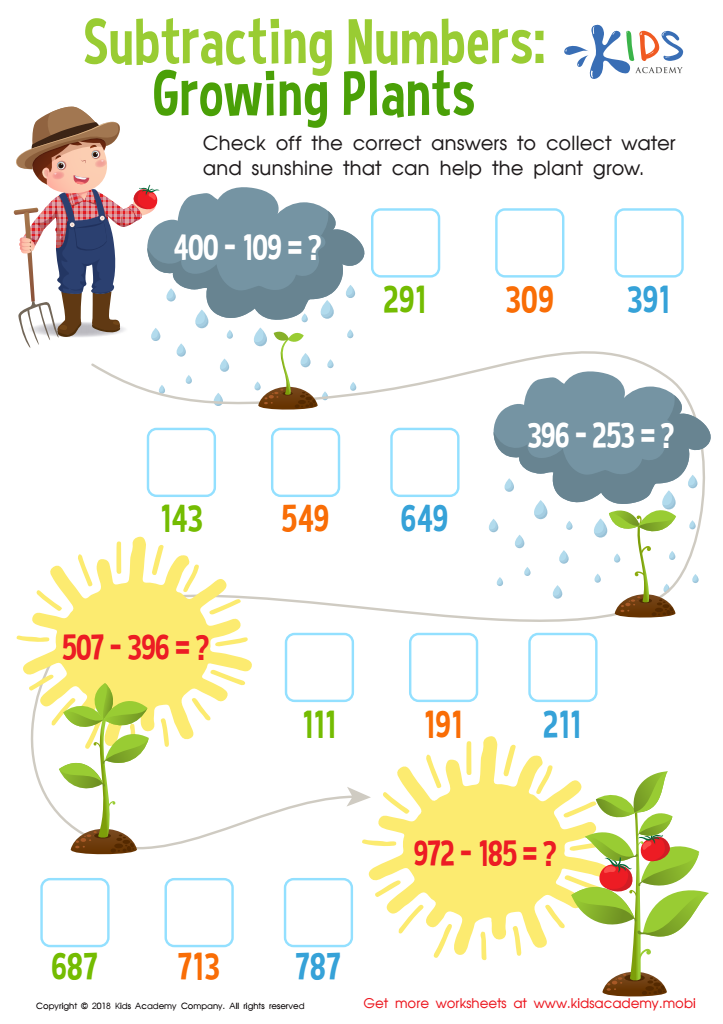
Subtracting Numbers: Growing Plants Worksheet
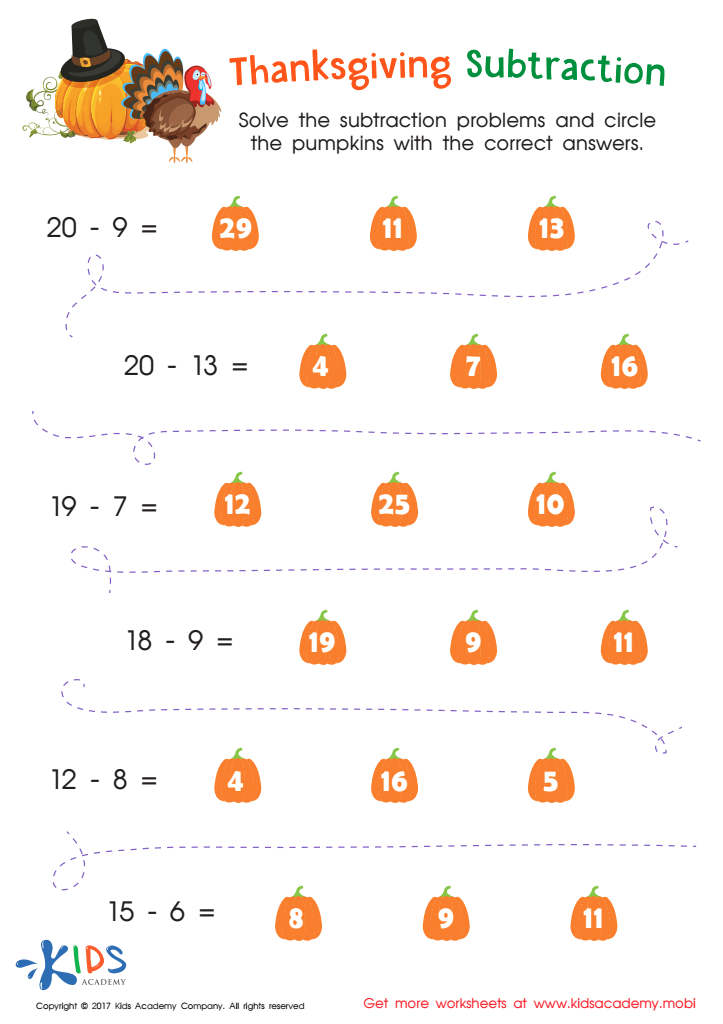
Thanksgiving Subtraction Substraction Worksheet








Understanding number comprehension is crucial for 7-year-olds because this foundational skill sets the stage for all future math learning and everyday activities that require numerical literacy. At this age, children typically transition from basic counting to more complex concepts such as addition, subtraction, and recognizing number patterns. These numeracy skills are core components of the curriculum and are essential for success in later grades.
For parents and teachers, fostering strong number comprehension helps children develop confidence and proficiency in math, which is pivotal for academic achievement in a range of subjects, including science and technology. Early number skills also form the basis for logical reasoning and problem-solving abilities, which are valuable life skills.
Furthermore, a solid grasp of numbers impacts practical aspects of daily life, such as telling time, understanding money, and measuring quantities. These everyday applications reinforce why it is important to ensure children are not just memorizing numbers, but truly comprehending them.
By paying attention to a child’s number comprehension, adults can identify early any learning challenges and provide targeted support, thereby preventing future struggles and fostering a positive attitude towards learning and mathematics. This early intervention is key to creating a strong, lasting foundation on which more advanced mathematical skills can be built.








