Reading analog clocks Normal Worksheets for 7-Year-Olds
3 filtered results
-
From - To
Discover our engaging "Reading Analog Clocks Normal Worksheets for 7-Year-Olds" designed to help young learners master time-telling skills. These worksheets provide a variety of interactive activities, including matching, drawing hands on clocks, and answering questions about time. Tailored to enhance reading and comprehension skills, they are an essential resource for any early grade classroom or home study. Encourage your child to develop confidence in telling time while having fun. Perfect for teachers and parents, these printable worksheets offer a structured yet enjoyable approach to learning, setting the foundation for important math skills. Bring the joy of learning to your child's day!
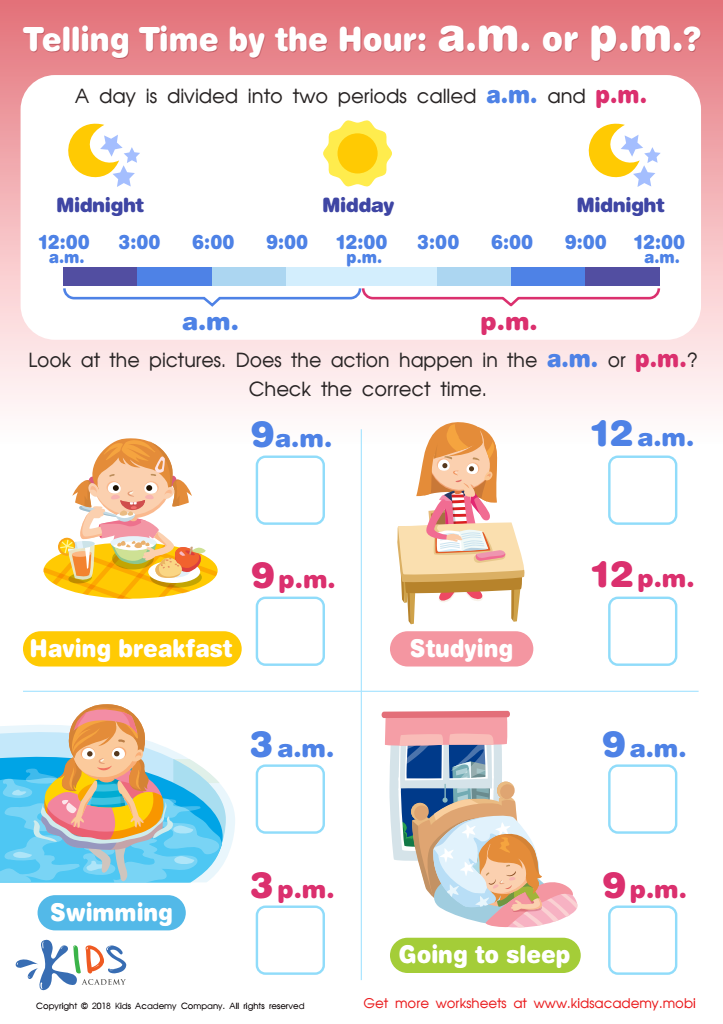
Tilling Time by the Hour: a.m. or p.m.? Worksheet
 Assign to My Students
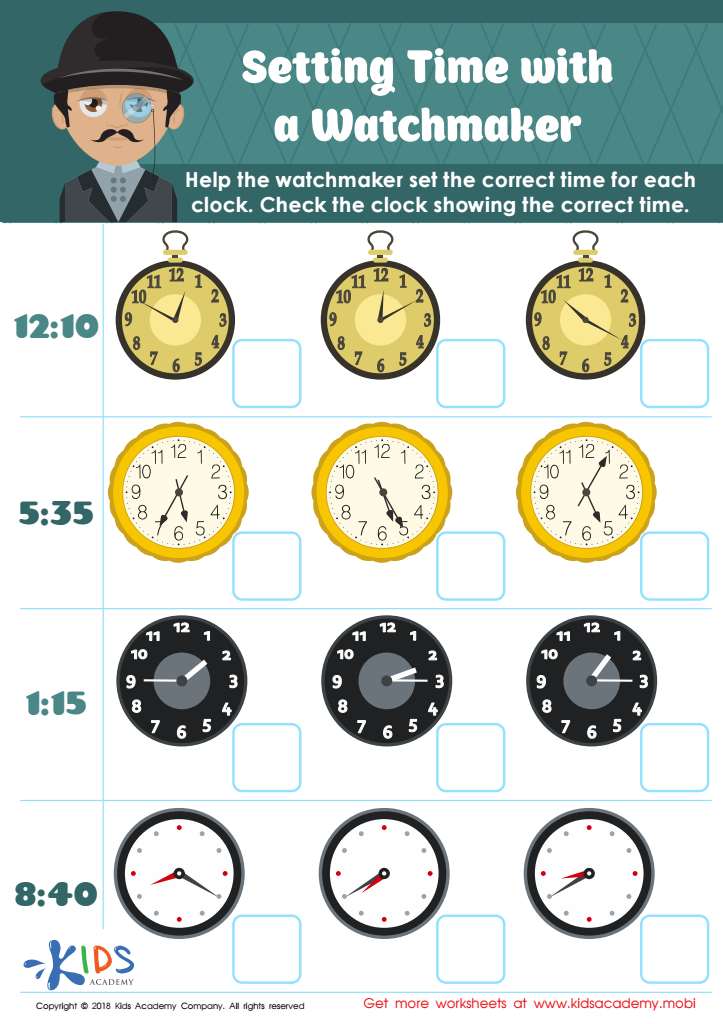
Setting Time with Watchmaker Worksheet
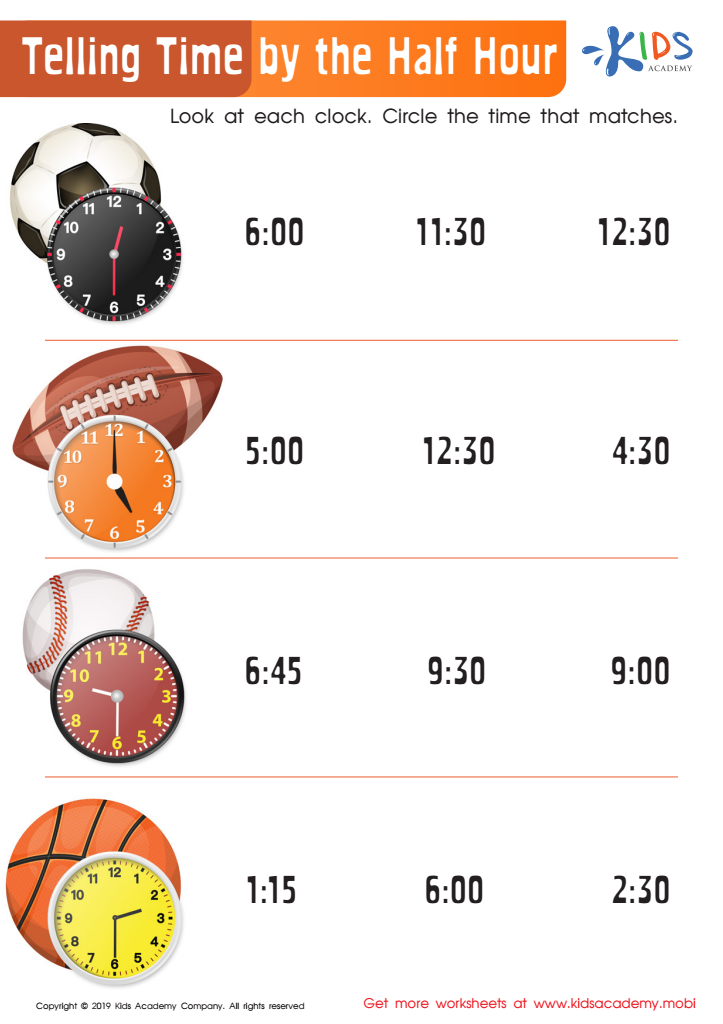
Telling Time by the Half Hour Worksheet








Understanding how to read analog clocks is an essential skill for 7-year-olds that supports their overall cognitive development and daily life skills. First, learning to read analog clocks fosters critical thinking and problem-solving abilities as children understand the relationship between numbers, time intervals, and the passage of time. This knowledge also enhances their visual and spatial awareness, as they learn to interpret the clock face and the position of the hands.
Additionally, in today’s digital world, the ability to read analog clocks can differentiate children in various scenarios, from following classroom schedules to participating in games that rely on timing. It nurtures a sense of independence, empowering them to manage their time and understand the concept of punctuality.
Moreover, teaching analog time can spark parents' and teachers' discussions with children about routines, responsibilities, and the importance of time management. Such conversations reinforce values like discipline and planning. In summary, helping 7-year-olds learn to read analog clocks not only enriches their mathematical understanding but also equips them with vital life skills that contributes to their maturity and independence as they navigate through their day-to-day experiences.








