Time recognition Normal Worksheets for 7-Year-Olds
5 filtered results
-
From - To
Introducing our "Time Recognition Normal Worksheets for 7-Year-Olds" at Kids Academy! These engaging activities are designed to help young learners master reading clocks and understanding time. Tailored specifically for second graders, our worksheets incorporate fun and interactive exercises that make learning to tell time enjoyable. From identifying hours and minutes to practicing AM and PM, each worksheet builds essential time-telling skills necessary for daily life. Provide your child with a head start in mastering time management while boosting their confidence. Download these printable worksheets today and watch your child excel in time recognition!
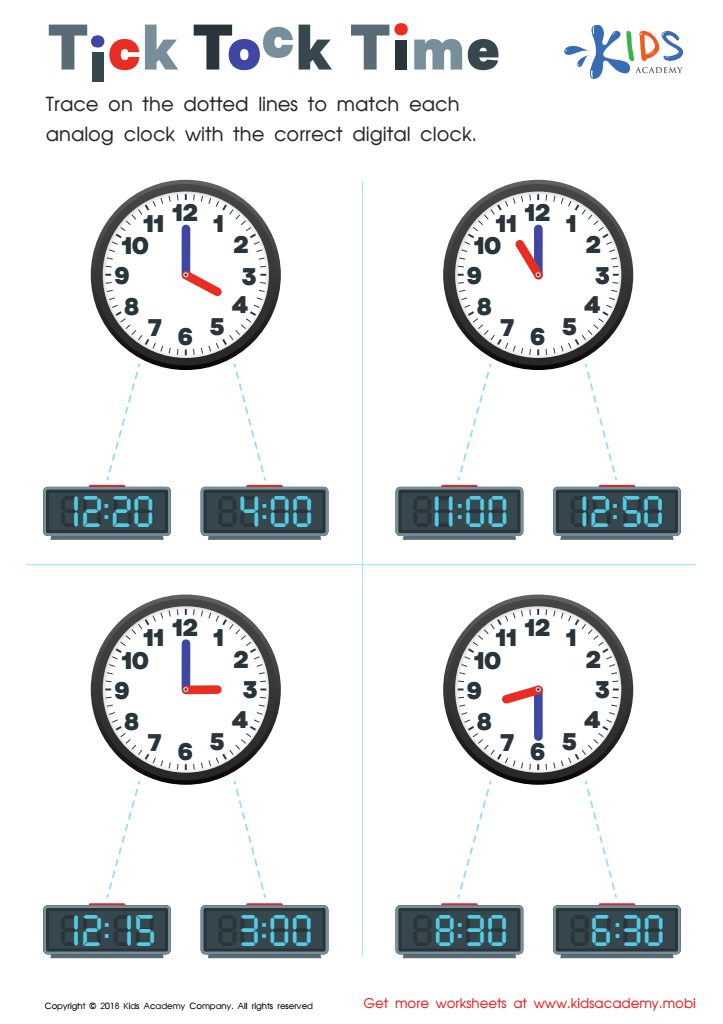
Tick Tock Time Worksheet
 Assign to My Students
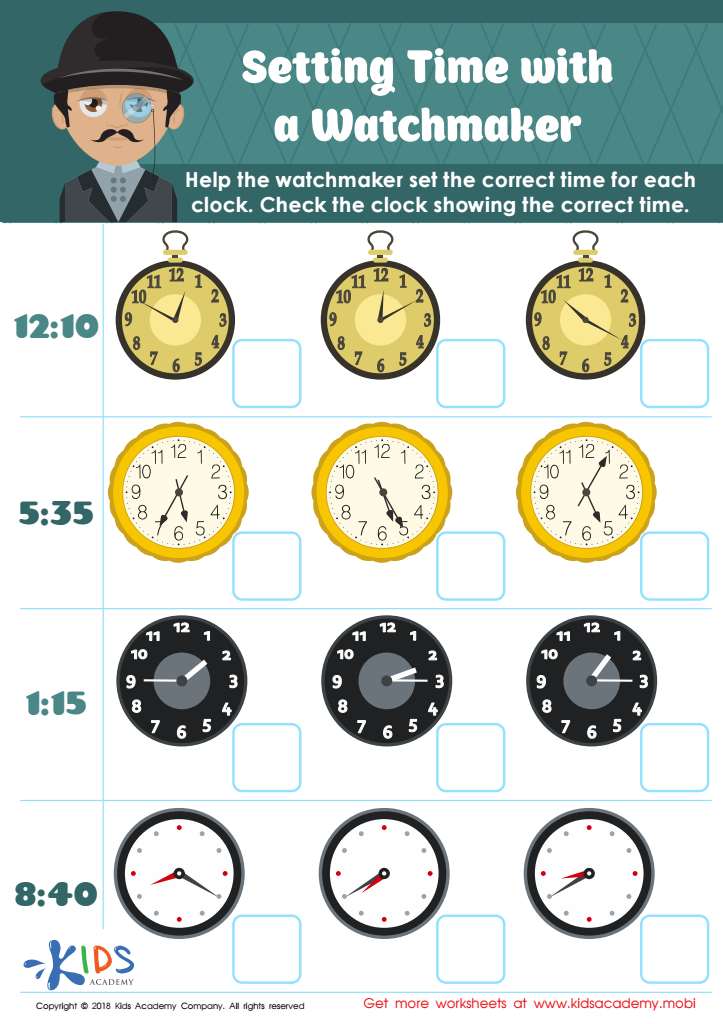
Setting Time with Watchmaker Worksheet
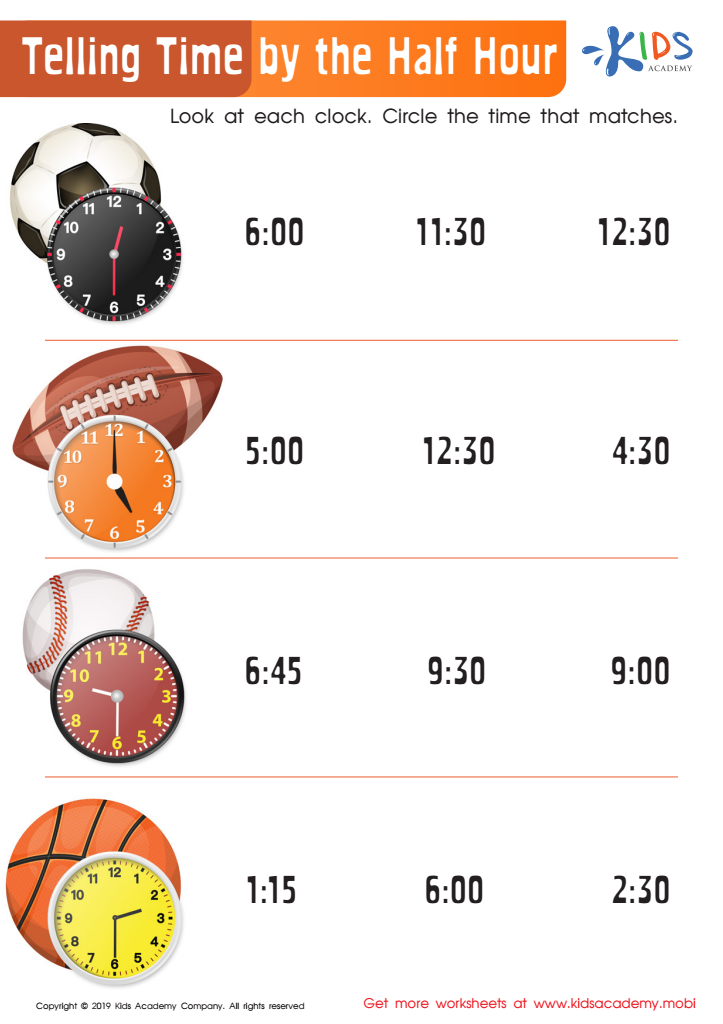
Telling Time by the Half Hour Worksheet
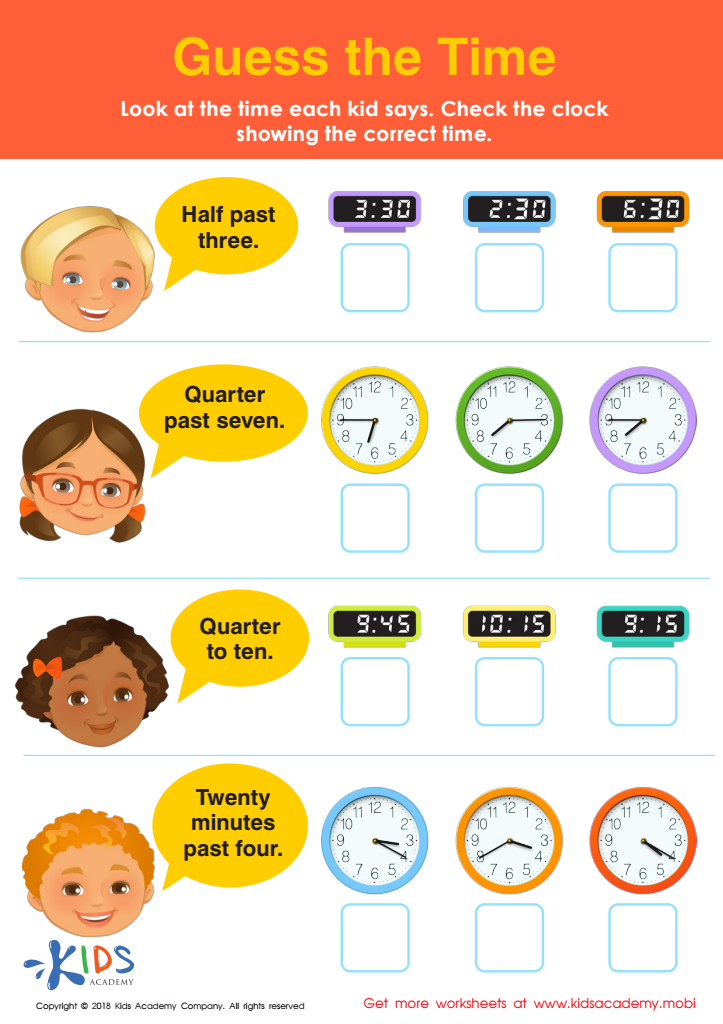
Guess the Time Worksheet
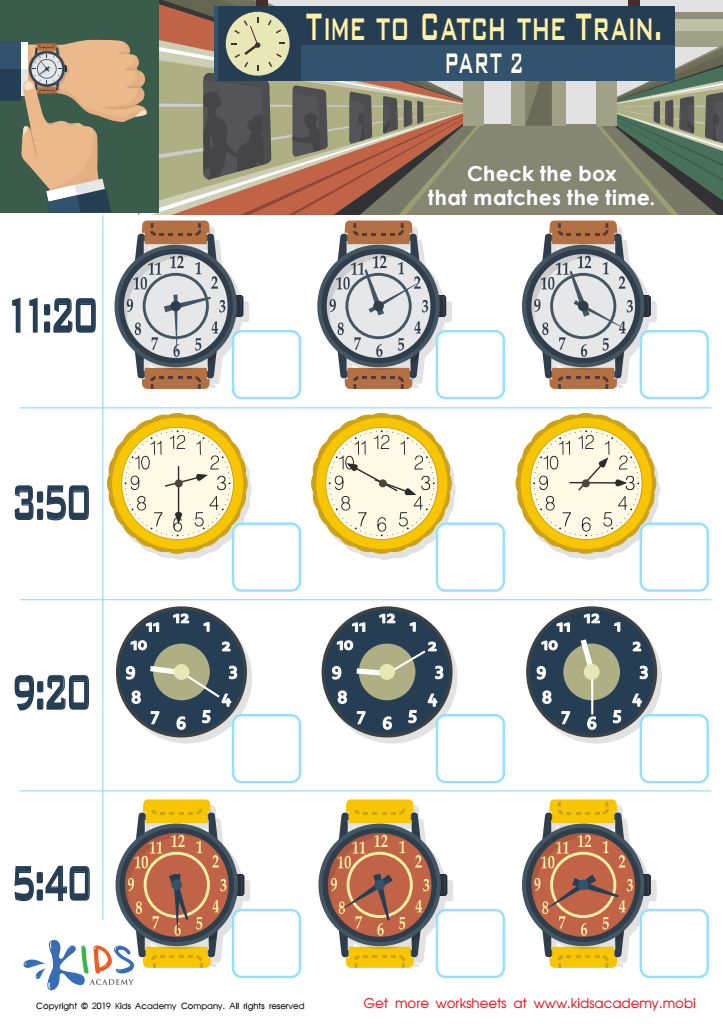
Time to Catch the Train Part 2 Worksheet


.jpg)




Parents and teachers should prioritize time recognition for 7-year-olds because it is a fundamental life skill that lays the foundation for future independence and academic success. At this age, children are beginning to develop an awareness of time, which helps them understand routines, schedules, and the importance of punctuality. By recognizing and being able to read hours, half-hours, and eventually minutes on a clock, children can better manage their daily activities such as school, homework, and leisure time.
Teaching time recognition also enhances mathematical skills. It introduces concepts like counting by fives, understanding fractions (half and quarter hours), and the cyclical nature of time (hours, minutes, seconds). Grasping these concepts strengthens cognitive development and logical thinking.
Moreover, time recognition supports social and emotional growth. Knowing how to tell the time helps children develop a sense of responsibility and self-discipline. It encourages goal setting and the capacity to plan ahead, which are valuable skills throughout life.
Finally, time literacy facilitates effective communication. Being able to say, "I’ll meet you at 3 PM" or "My class starts at 9 AM" conveys clear and precise information, crucial skill in both personal and academic interactions. Therefore, investing time in teaching this skill benefits children across multiple domains of their development.








