Understanding light sources Normal Worksheets for 7-Year-Olds
3 filtered results
-
From - To
Explore our 'Understanding Light Sources' worksheets tailored for 7-year-olds! These fun, engaging activities help kids distinguish between natural and artificial light sources, enhancing their learning skills through hands-on practice. Designed to spark curiosity and critical thinking, our worksheets include colorful illustrations and simple explanations to make complex concepts easy to grasp for young minds. Perfect for classroom use or at-home learning, these worksheets support science curriculum standards and promote foundational knowledge in a creative, interactive way. Join us at Kids Academy to turn your child's educational experience into a bright and illuminating adventure!
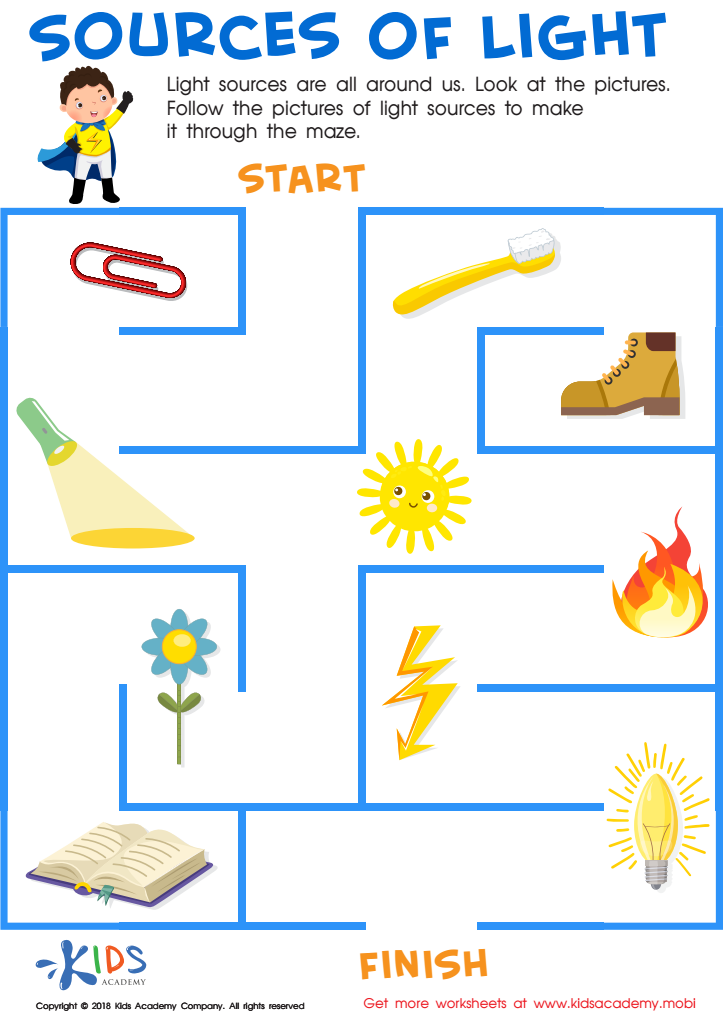
Sources of Light Worksheet
 Assign to My Students
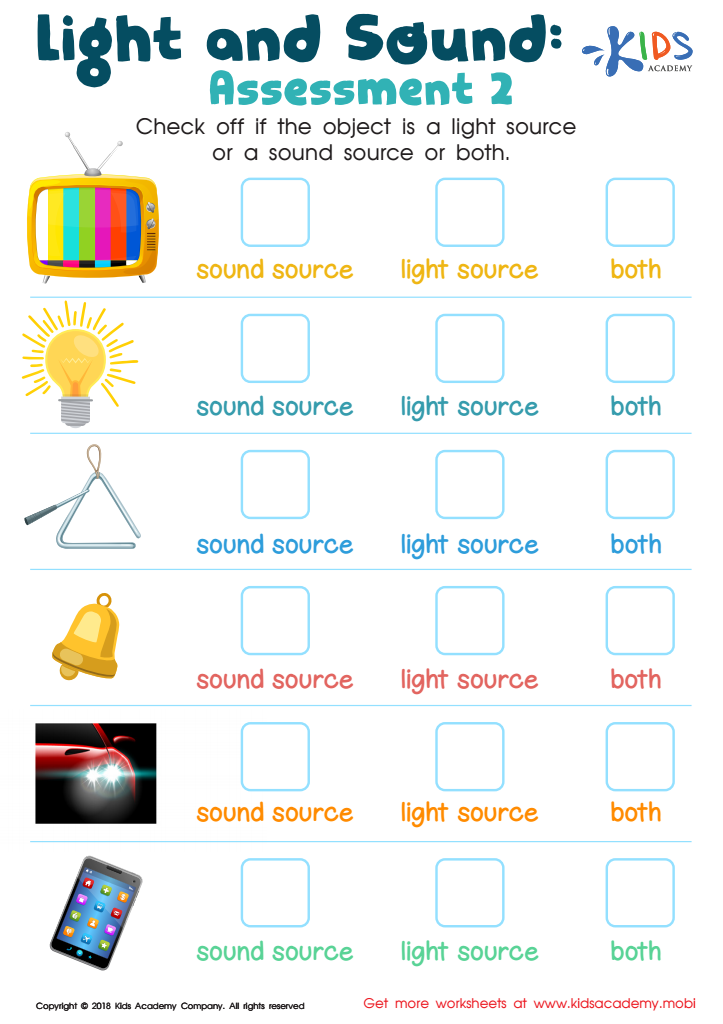
Light and Sound: Assessment 2 Worksheet
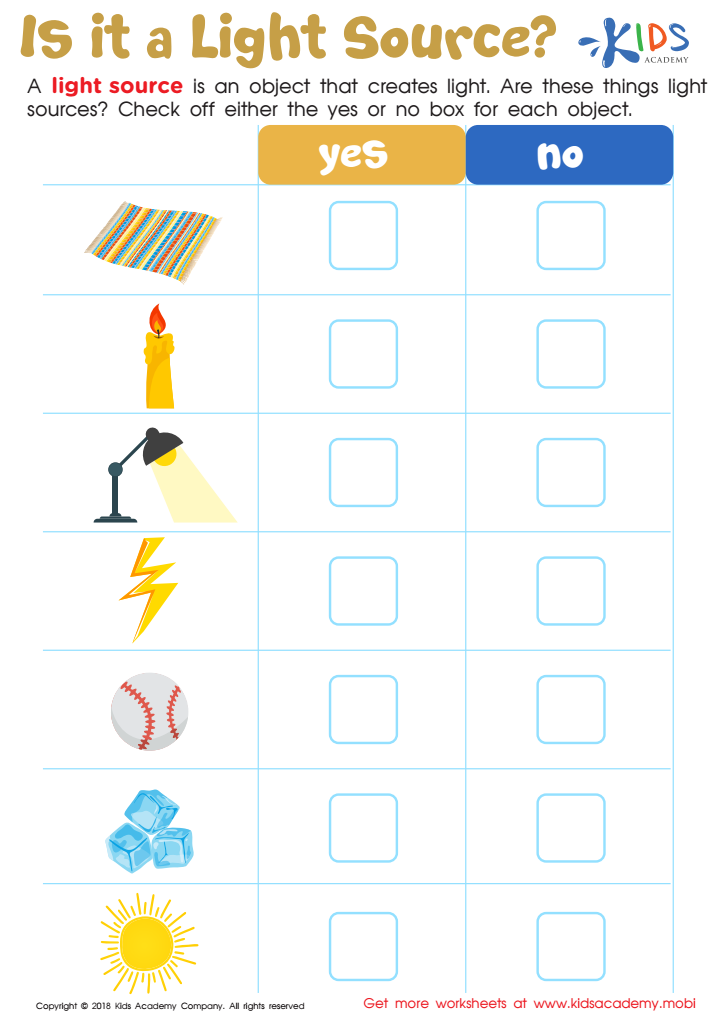
Is It a Light Source? Worksheet








Understanding light sources is fundamental for seven-year-olds as it builds foundational knowledge in science while sparking curiosity about the natural world. Parents and teachers should care because this topic is not just an academic requirement but also a gateway to critical thinking and exploration. By learning about different light sources—natural ones like the sun and artificial ones like light bulbs—children grasp essential concepts that pave the way for more advanced topics in physics and biology.
Exploring light helps kids understand day and night cycles, plant growth, and even safety (why wearing bright clothes at night is important). These practical connections enrich their learning experience and have real-world applications. Additionally, discussing various sources of light can improve their observational and classification skills, key components of scientific reasoning.
Equally important, the act of discovering how light behaves—through simple experiments with mirrors, prisms, and shadows—makes learning interactive and fun. This interactive approach aids in retention and nurtures a lifelong interest in science. When children see that light is a subject of both everyday relevance and endless fascination, it fosters a positive attitude towards learning. Therefore, investing time in teaching this topic brings academic, practical, and motivational benefits to young minds.








