
Understanding Sequences Normal Worksheets for 7-Year-Olds
3 filtered results
Difficulty Level
Grade
Age
-
From - To
Subject
Activity
Standards
Our "Understanding Sequences Normal Worksheets for 7-Year-Olds" are expertly designed to enhance children's cognitive abilities and logical thinking. These engaging activities help young learners identify patterns and order events logically. Perfect for home or classroom use, our worksheets encourage critical thinking and problem-solving skills in a fun, interactive way. Tailored specifically for 7-year-olds, each worksheet is colorful and easy to follow, making learning an enjoyable adventure. Boost your child's confidence and academic performance with our top-quality educational resources. Start today and watch your young one's understanding of sequences soar!
Favorites
With answer key
Interactive
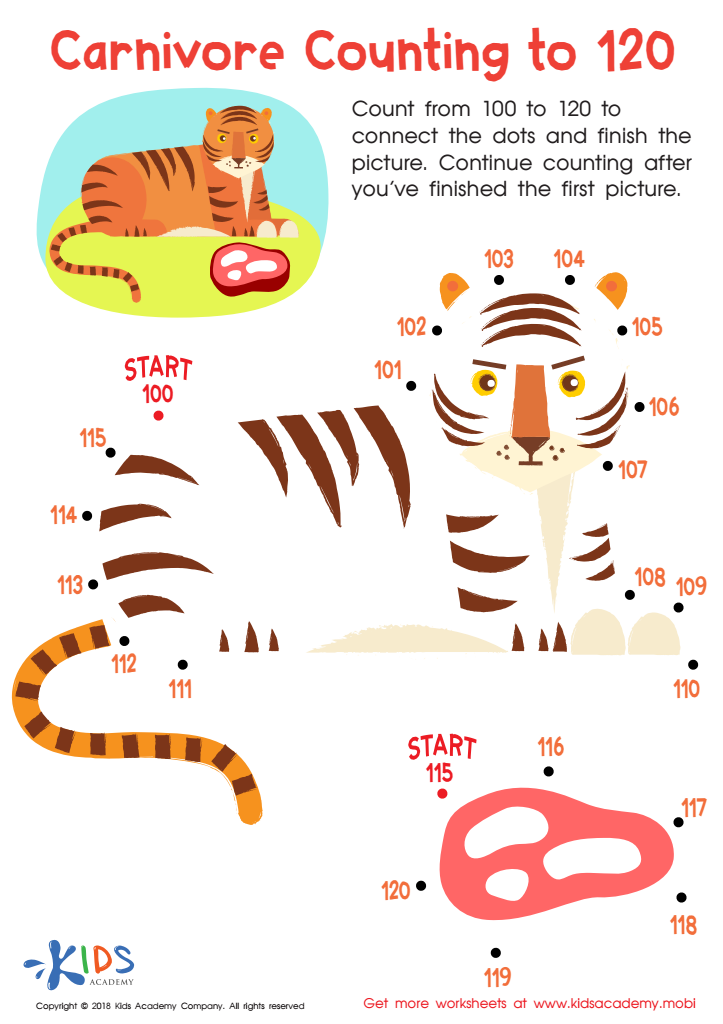
Carnivore Counting to 120 Worksheet
Ask your child to name some popular carnivores. Can they tell you what the animal in the worksheet is? A Tiger? Get them to count from 100 to 120 to connect the dots. After they finish the first picture, keep counting to help them practice!
 Assign to My Students
Carnivore Counting to 120 Worksheet
Worksheet
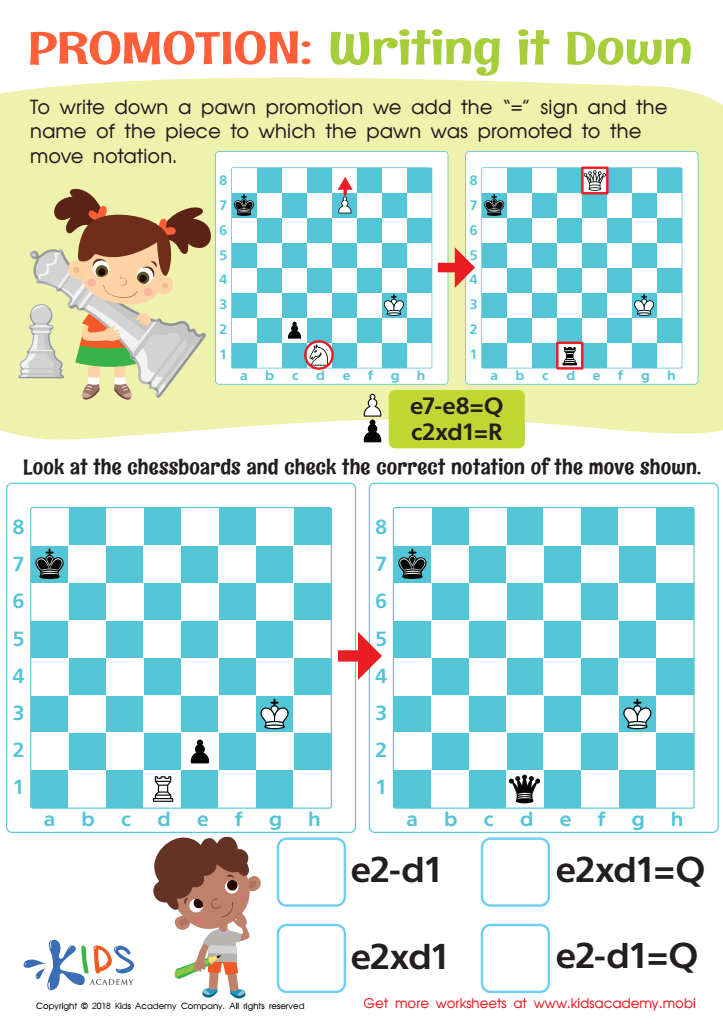
Writing it Down Worksheet
To document pawn promotion, add "=<piece name>" to the move notation. For example: e7-e8=Q. Ask your child to look at the chessboard and take note of the moves. Check the notations are correct. (80 words)
Writing it Down Worksheet
Worksheet
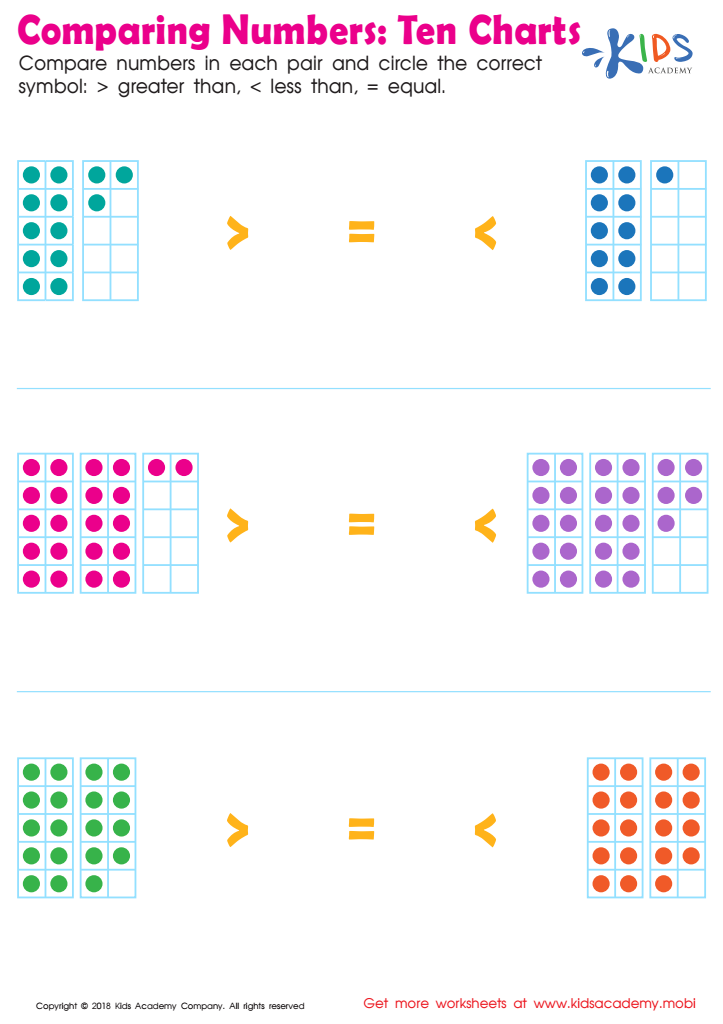
Ten Charts Worksheet
Help your child learn numbers in a creative way using this printable worksheet. They'll learn the difference between numbers, how to add them, and the symbols of "greater than", "less than" and "equals to". They can compare two sides, and identify which is greater, less or equal. Let their maths knowledge bloom!
Ten Charts Worksheet
Worksheet
Join Kids Academy for Free
Who is primarily going to use this learning content?







Parents and teachers should care about understanding sequences for 7-year-olds because it is a fundamental cognitive and mathematical skill that underpins many aspects of learning. Sequences help children recognize patterns, which is crucial for problem-solving and critical thinking. When children understand sequences, they can predict what comes next, fostering logical thinking and structure in their thought processes.
This understanding is not limited to mathematics; it extends to literacy as well. In reading, for instance, sequencing skills help children follow a story logically, understanding the beginning, middle, and end. This strengthens comprehension and retention, making learning more cohesive and integrated.
Moreover, sequences lay the groundwork for more complex mathematical concepts such as addition, subtraction, multiplication, and division. Grasping the idea of ordering numbers or events helps children perform these operations more intuitively.
Social skills can also benefit; for instance, sequential understanding aids in following rules and step-by-step instructions, essential in both academic tasks and daily life activities like tying shoes or cooking. Hence, understanding sequences equips children with essential, versatile tools for complex thinking, academic success, and practical life tasks, making early focus on this skill by parents and teachers invaluable.








