Logical thinking development Normal Math Worksheets for 7-Year-Olds
3 filtered results
-
From - To
Introducing our Logical Thinking Development Math Worksheets, expertly designed for 7-year-olds! These engaging printable resources focus on nurturing critical thinking and problem-solving skills in young learners. Each worksheet blends fun activities with educational content, allowing children to practice and develop logical thinking through exercises that are both challenging and exciting. Our comprehensive collection addresses key learning skills and mathematical concepts tailored to this age group, making learning math an enjoyable adventure. Ideal for parents and teachers, these worksheets support cognitive development and ensure a strong foundation in logical thinking. Start enhancing your child's learning journey today!
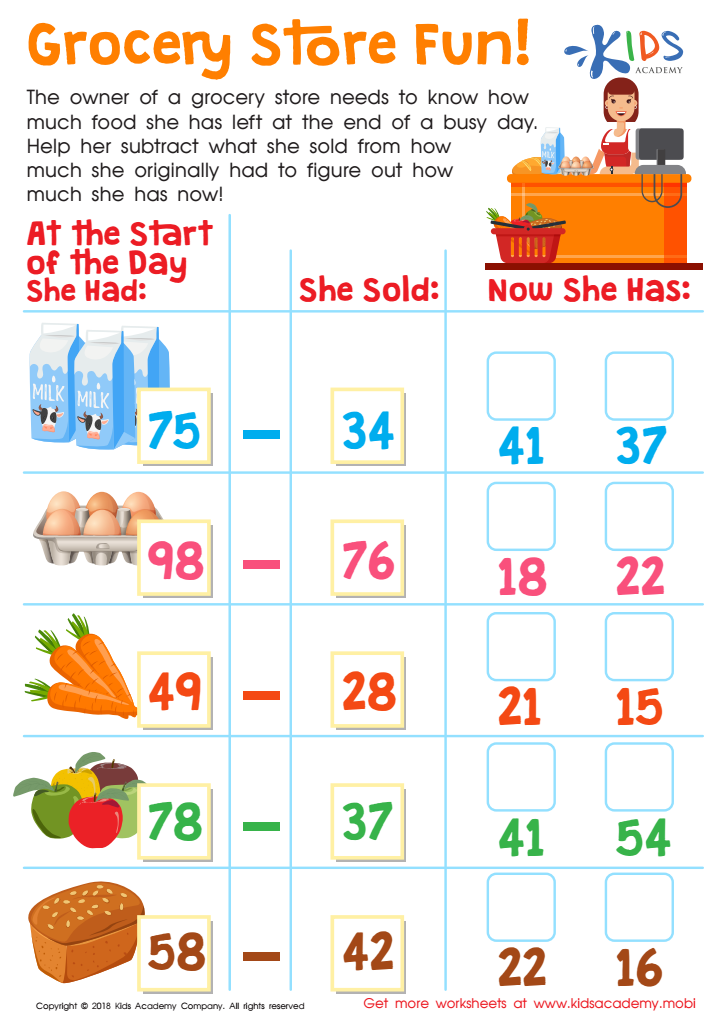
Grocery Store Fun! Worksheet
 Assign to My Students
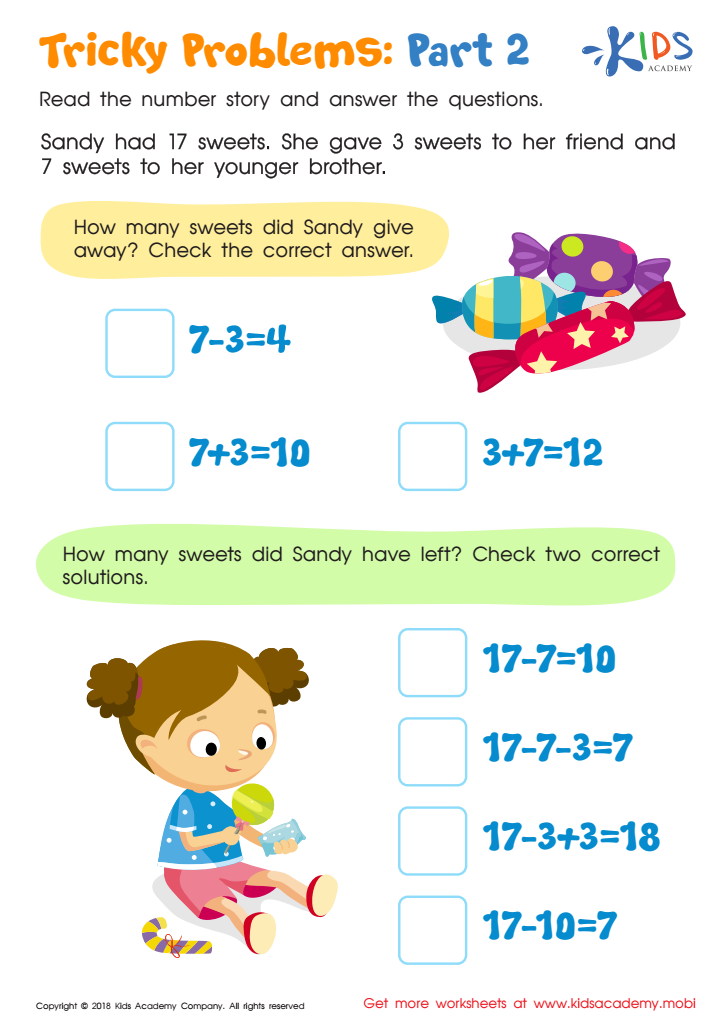
Tricky Problems Worksheet: Part 2
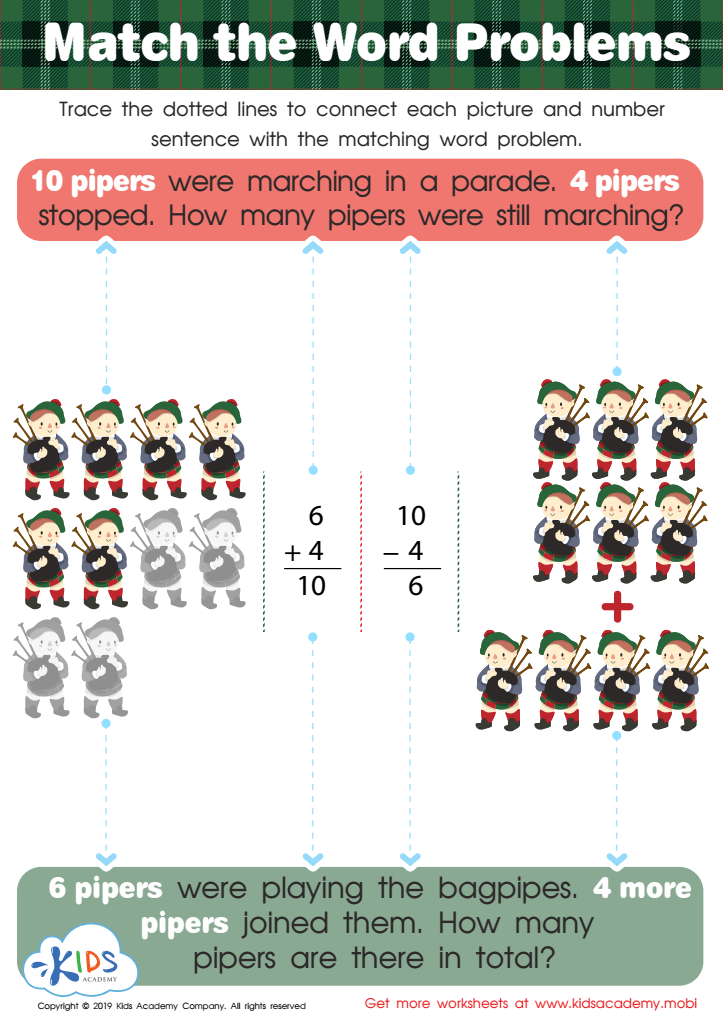
Match the Word Problems Worksheet








Logical thinking development and normal math proficiency in 7-year-olds are essential catalysts for lifelong learning and problem-solving skills. At this age, children's cognitive abilities are rapidly expanding, and fostering these skills can equip them with a solid foundation for both academic and real-world challenges.
Logical thinking enhances their ability to reason systematically and make sound decisions. This includes recognizing patterns, understanding cause-and-effect relationships, and developing strategies for solving problems. Enhancing these skills early on is critical because they serve as building blocks for more complex cognitive functions and academic subjects in the future.
Mathematical competence at this early age teaches children fundamental numerical concepts, spatial reasoning, and basic arithmetic operations, which are crucial for everyday activities and future academic success. Mathematics is not just about numbers; it involves a structured way of thinking that promotes critical analysis and logic.
Parents and teachers can nurture these abilities through engaging and practical activities, such as puzzles, games, and interactive educational tools. By prioritizing logical thinking and math skills, adults can support children's intellectual growth, boosting confidence and paving the way for sustained academic achievement and effective problem-solving abilities in their daily lives. This proactive approach can lead to a more well-rounded, capable, and self-sufficient individual in the long run.








