Number Recognition Normal Numbers up to 100 Worksheets for 7-Year-Olds
11 filtered results
-
From - To
Boost your child's confidence with our "Number Recognition Normal Numbers up to 100 Worksheets for 7-Year-Olds." At Kids Academy, we provide a variety of engaging worksheets designed to help young learners recognize, write, and understand numbers up to 100. Tailored for 7-year-olds, each worksheet combines fun activities like coloring, tracing, and matching to ensure an enjoyable learning experience. These resources aim to solidify foundational math skills, promote cognitive development, and foster a love for numbers. Empower your young scholar with tools that cater to their educational needs while making learning fun and effective. Explore today!
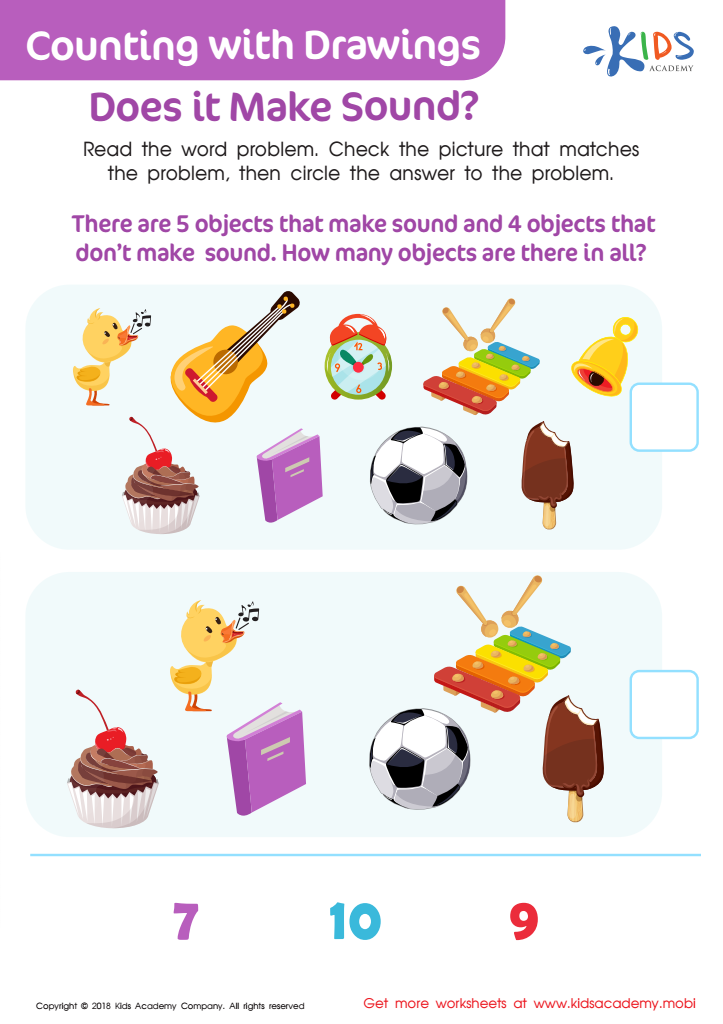
Counting With Drawings. Does It Make Sound? Worksheet
 Assign to My Students
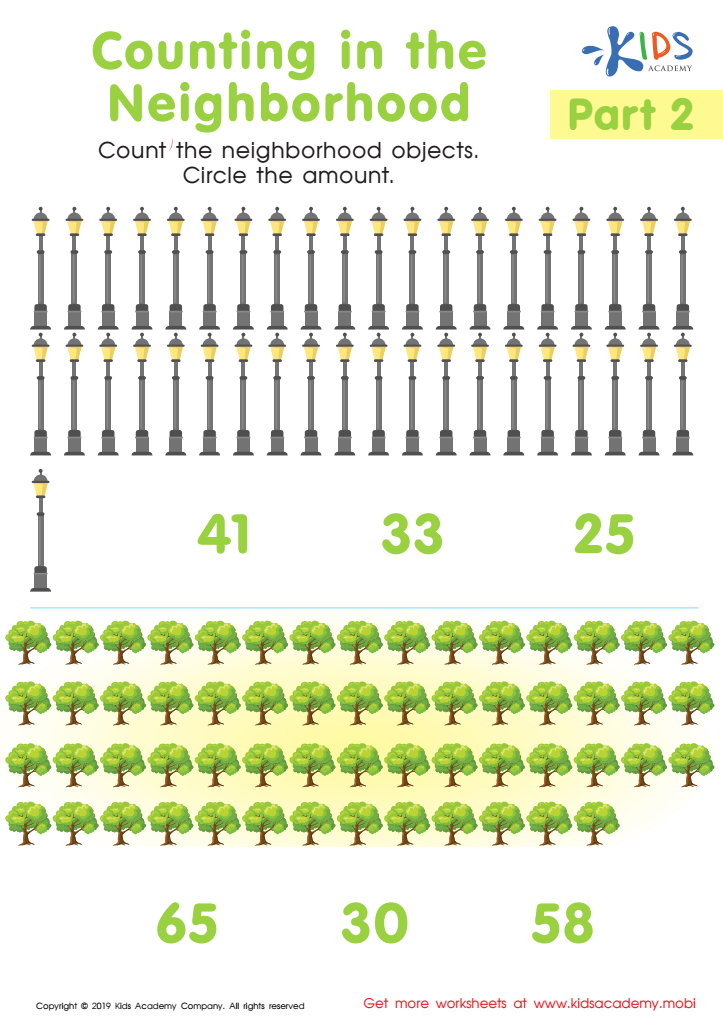
Counting In The Neighborhood Part 2 Worksheet
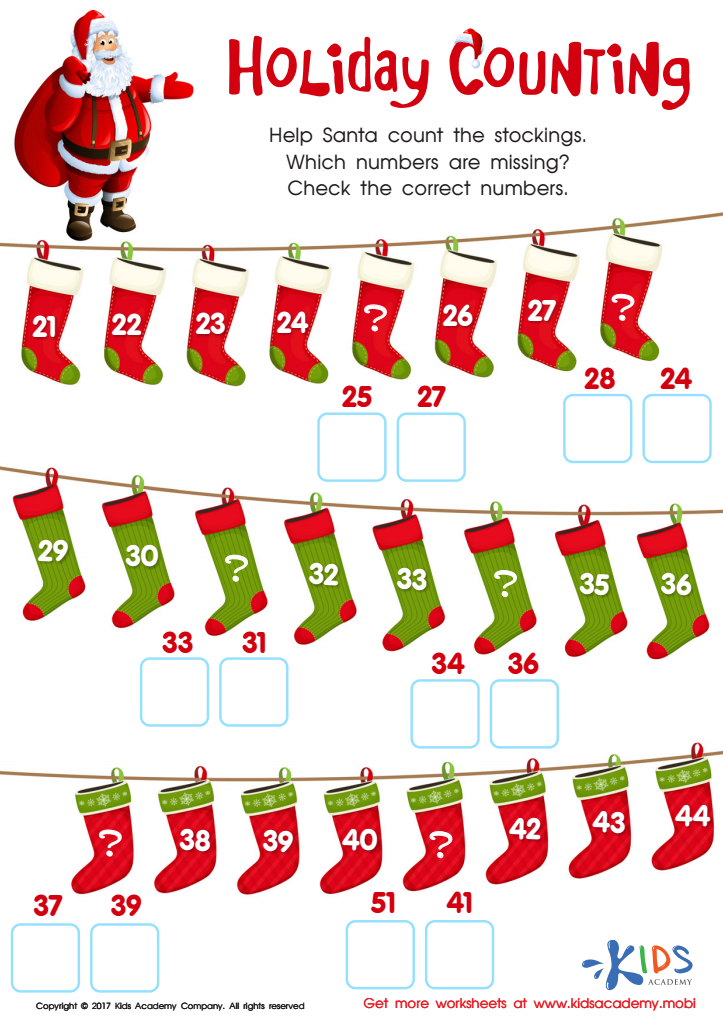
Holiday Counting Worksheet
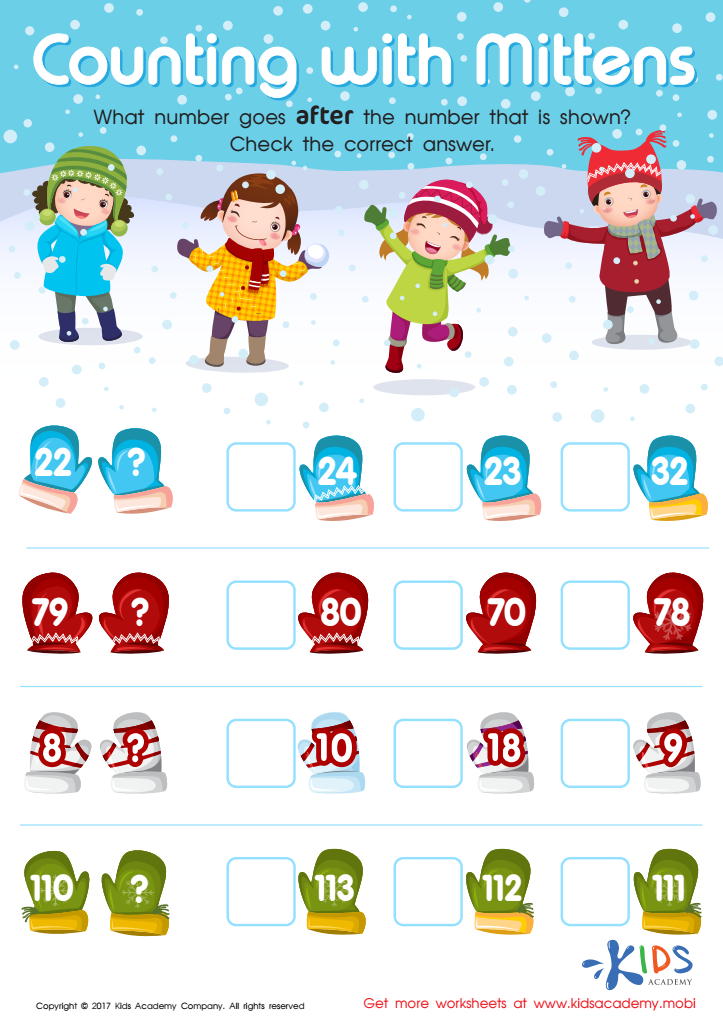
Counting with Mittens Worksheet
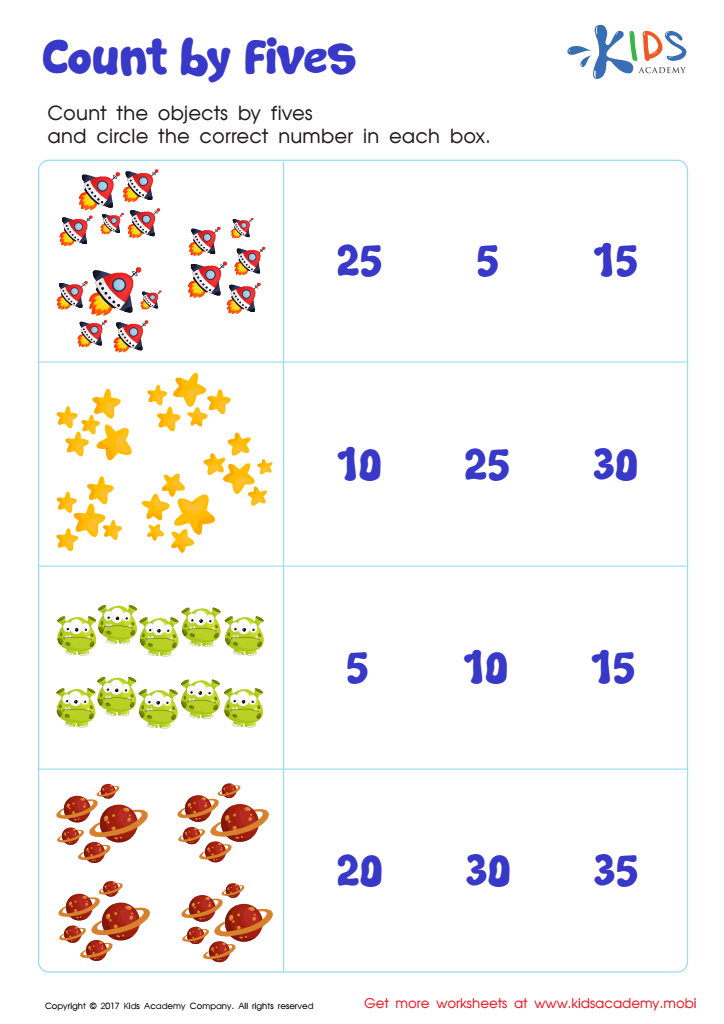
Skip Counting by 5s: Space Math Printable
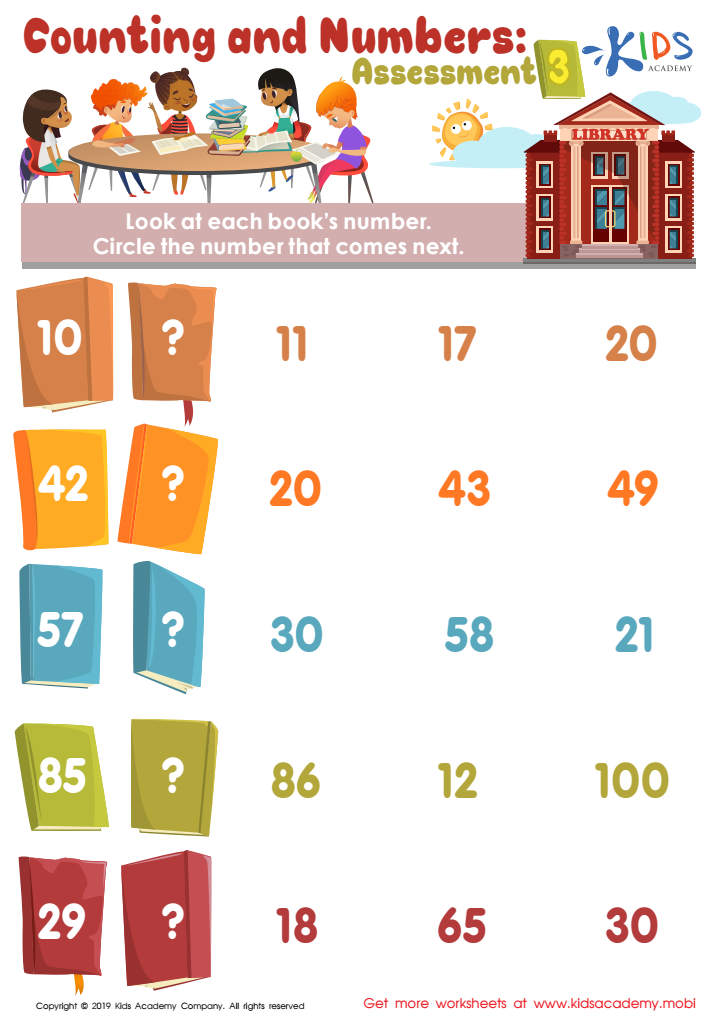
Counting and Numbers: Assessment Worksheet
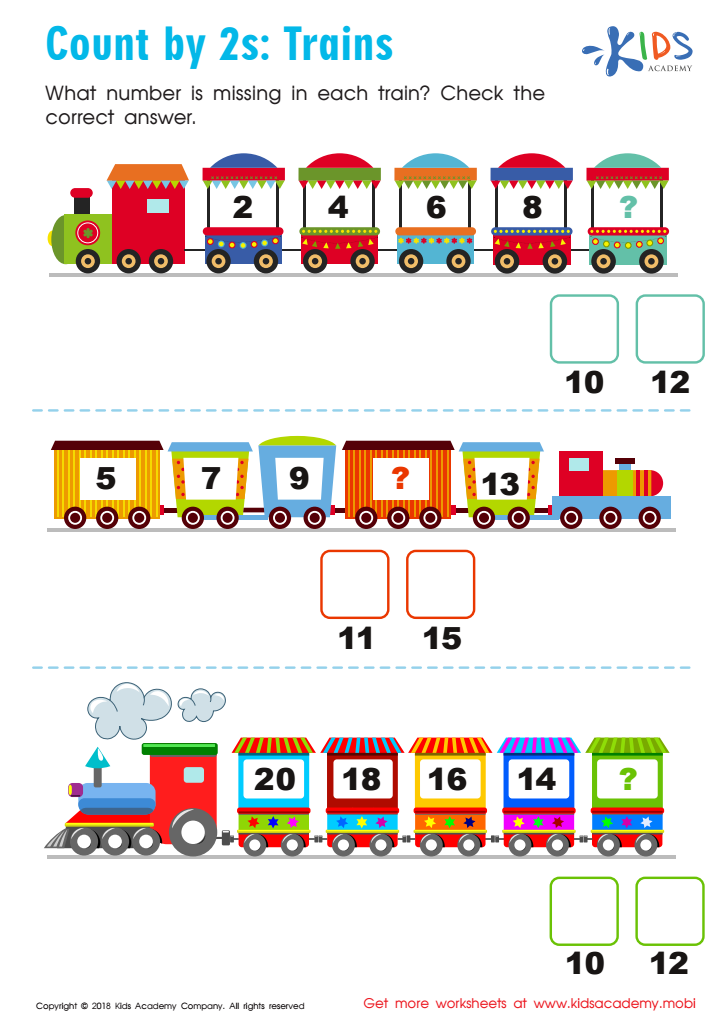
Count by 2's: Trains Worksheet
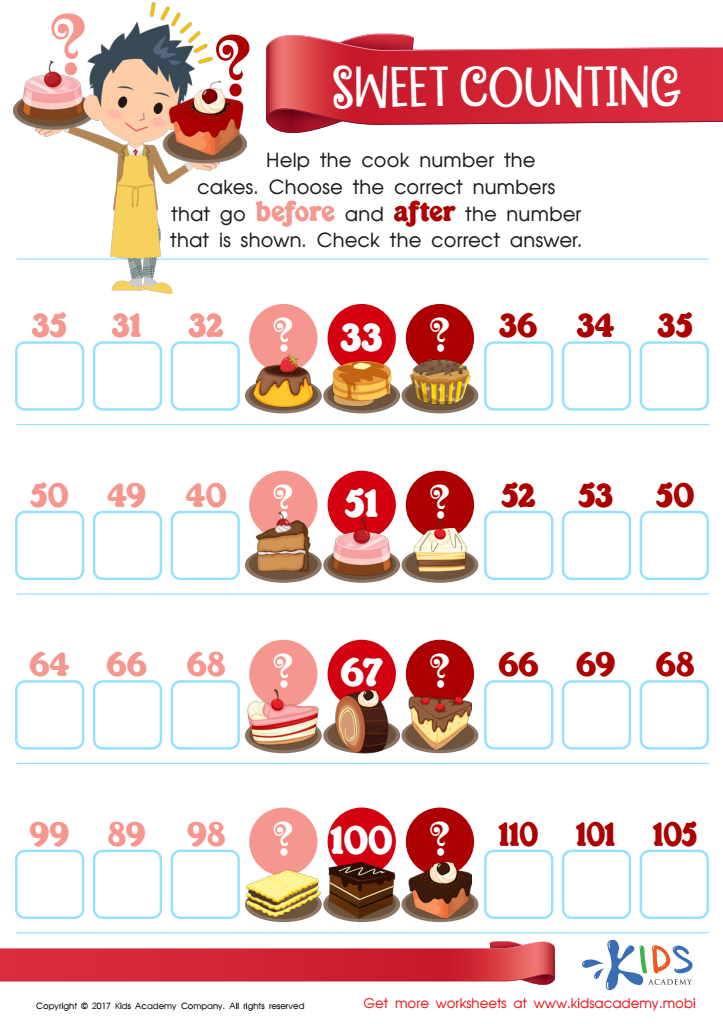
Sweet Counting - Part 1 Worksheet
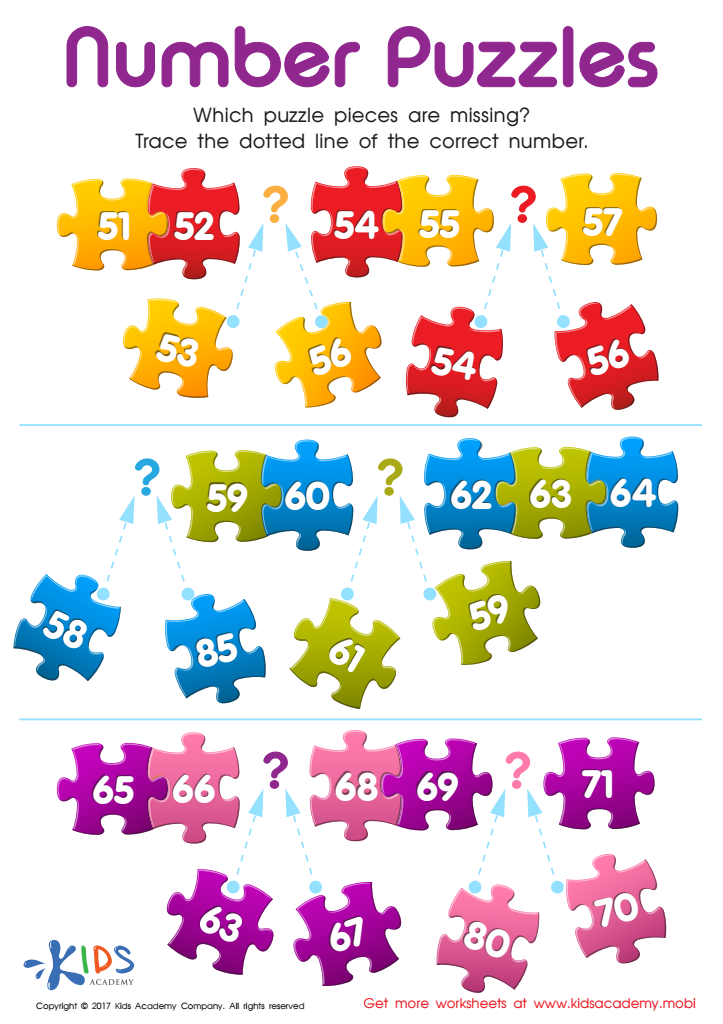
Number Puzzles Worksheet
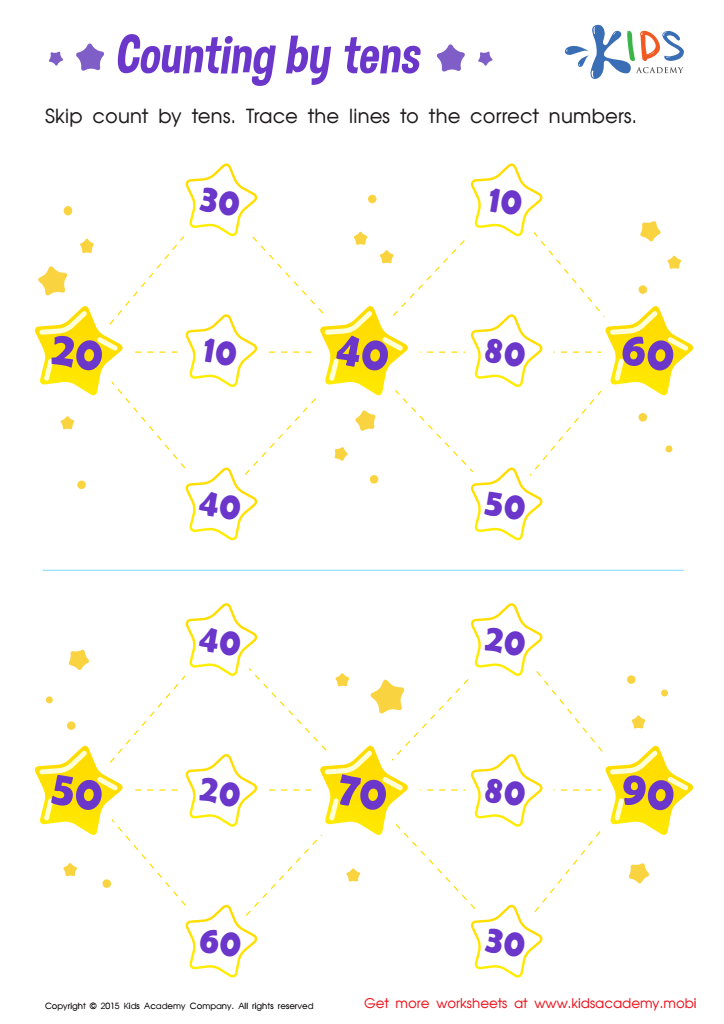
Learn Dozens: Counting by Tens Printable
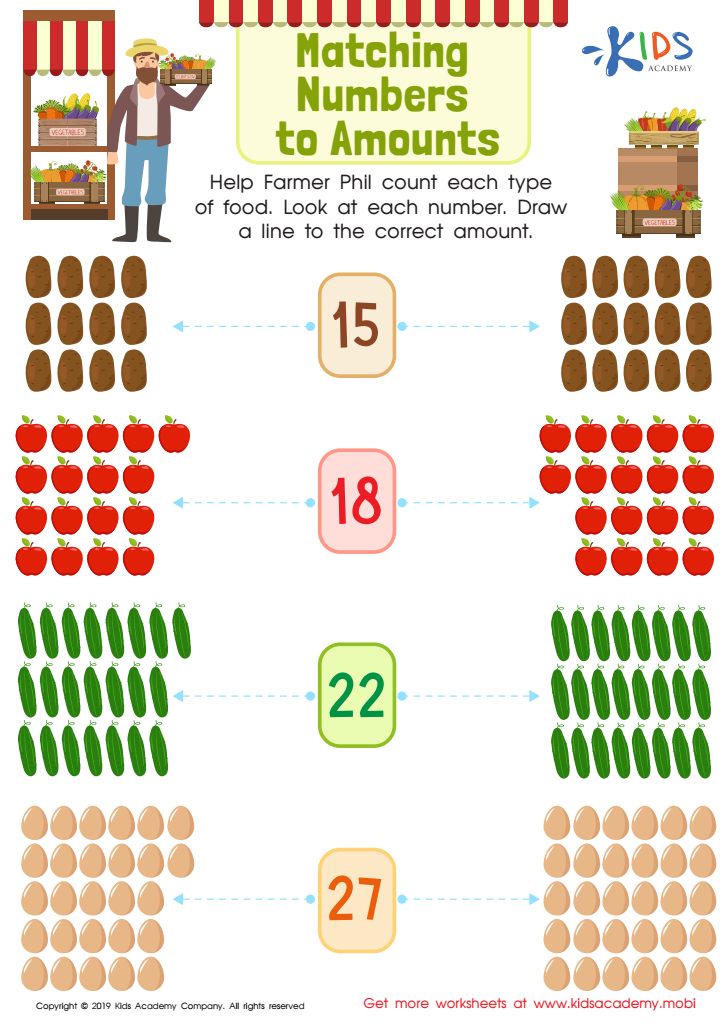
Matching Numbers to Amounts Worksheet


%20(1).jpg)





Number recognition up to 100 is an essential skill for 7-year-olds, laying the groundwork for crucial math concepts. At this age, children transition from recognizing single digits to understanding and manipulating larger numbers, which is a key developmental milestone. Parents and teachers should prioritize this because a solid grasp of number recognition boosts a child's confidence and enthusiasm for learning math.
Understanding numbers up to 100 helps children in several practical aspects of daily life, such as telling time, handling money, and measuring everyday items. It also promotes critical thinking and problem-solving skills, essential for academic achievement across various subjects. Moreover, familiarity with numbers forms the basis for arithmetic operations like addition, subtraction, multiplication, and division.
For teachers, focusing on this area enables effective lesson planning and tailored instruction that meets educational standards and benchmarks. For parents, it provides opportunities to engage in meaningful and educational activities with their children, such as counting games, reading number books, and using number-based applications, reinforcing learning outside the classroom.
Ultimately, investing in number recognition for young children supports their overall cognitive development and academic success, laying a strong foundation for more complex mathematical concepts they will encounter in the future.